
Beautiful Plants For Your Interior
Beautiful Plants For Your Interior
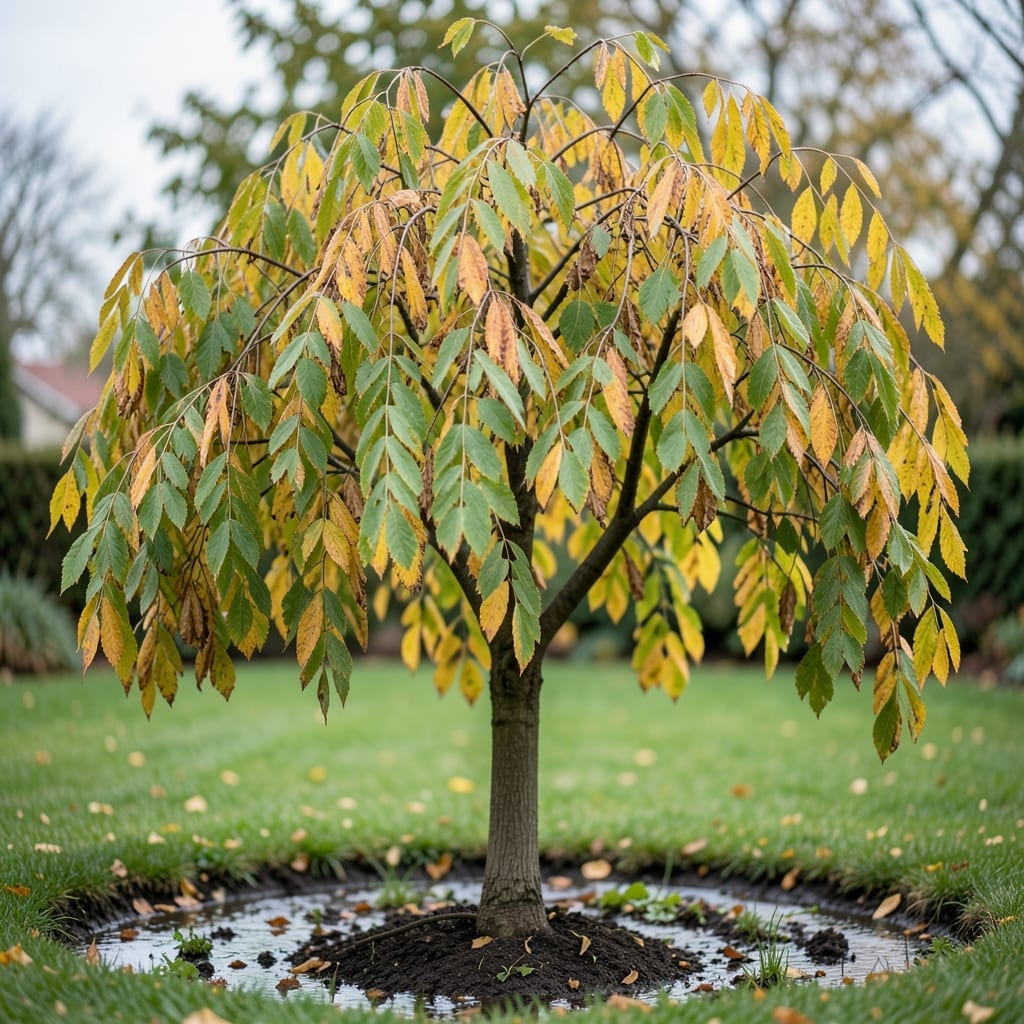
Yellowing leaves and squishy soil spell trouble for trees. I’ve watched too many well-meaning gardeners love their trees to death with daily watering sessions that do more harm than good.
Overwatering suffocates roots and invites rot. The signs—wilting, yellow leaves, and soil that stays soggy for days—aren’t always obvious until it’s almost too late. I learned this the hard way with a young maple that nearly didn’t survive.
Recovery starts with letting the soil dry out completely between waterings. Most trees only need 1-2 deep waterings per week, even in hot weather, and less during cooler months.
This approach saves struggling trees and prevents future issues. The key is watching the soil, not the calendar.
Understanding why trees suffer from too much water starts with the soil and the roots. Here’s what’s really happening beneath the surface:
When soil lacks proper drainage, water pools around the roots instead of flowing away. Clay-heavy or compacted soils are common culprits, as they retain moisture for extended periods. Without oxygen pockets, roots suffocate, leading to root rot and nutrient uptake failure.
Many gardeners assume trees need frequent watering, but most established trees thrive on deep, infrequent hydration. Shallow, daily watering keeps the topsoil soggy, discouraging deep root growth. Young trees are especially vulnerable—their underdeveloped roots can’t handle excess moisture.
Healthy roots need both water and air. Overwatering fills soil pores, pushing out oxygen. This anaerobic environment fosters harmful fungi and bacteria, which attack the tree’s vascular system. Mulch piles or heavy thatch layers can also trap moisture, worsening the problem.
Pro tip: Check soil moisture 2–3 inches deep before watering—if it’s damp, hold off!
If your tree shows signs of overwatering, act quickly to restore its health. Here’s how to tackle each issue:
Stop watering immediately and let the soil dry out. If the area stays soggy, aerate the soil with a garden fork to improve airflow. For severe cases, dig a small trench around the tree to redirect excess water. Mix in coarse sand or compost to enhance drainage long-term.
Prevention: Water only when the top 2-3 inches of soil are dry. Use a moisture meter for accuracy. 💡
Trim yellow or mushy leaves to redirect energy to healthy growth. Reduce watering frequency and ensure the tree gets partial sunlight to aid recovery. Avoid fertilizing until the tree stabilizes, as stressed roots can’t absorb nutrients effectively.
Prevention: Stick to a consistent watering schedule and observe leaf color as a health indicator. ✨
For potted trees, remove the tree and inspect the roots. Trim black, mushy roots with sterilized shears and repot in fresh, well-draining soil. For in-ground trees, apply a fungicide to combat root rot and improve soil conditions with organic matter.
Prevention: Use containers with drainage holes and avoid over-potting. 🎯
With these steps, your tree can bounce back stronger. Consistency and observation are key to keeping it thriving!
Most established trees need 1-2 deep waterings per week. Check soil moisture 2-3 inches deep first—if it’s damp, wait. Young trees may need slightly more, but always prioritize dry soil over a fixed schedule.
Yes, if caught early. Stop watering, improve drainage, and trim affected roots. For potted trees, repot in fresh soil. In-ground trees may need fungicide. Recovery takes 4-6 weeks with proper care.
Use well-draining soil with coarse sand or compost mixed in. Avoid heavy clay or compacted soil. Containers must have drainage holes to prevent waterlogging.
Excess water suffocates roots, preventing nutrient uptake. The tree can’t absorb iron or nitrogen, causing yellowing. Wilting often accompanies this as roots fail to deliver water to leaves.