
Beautiful Plants For Your Interior
Beautiful Plants For Your Interior
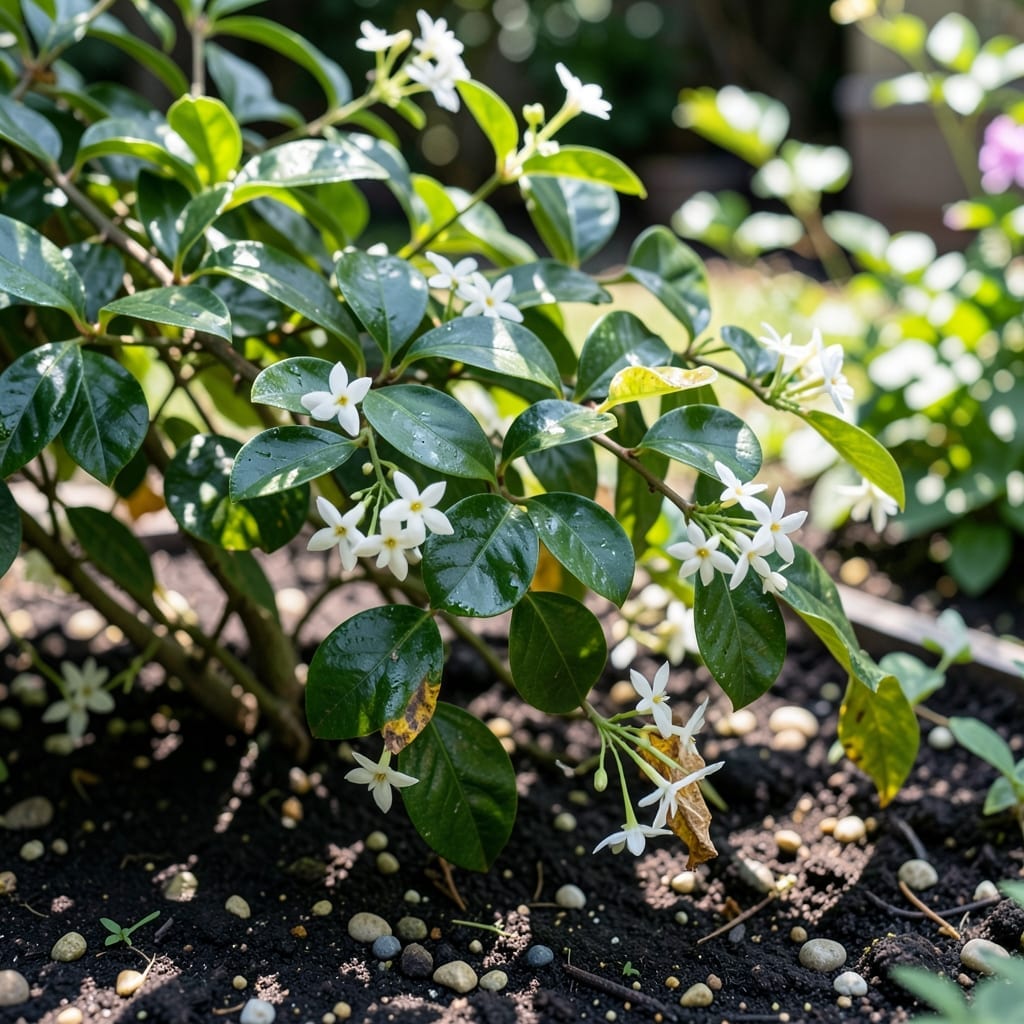
Yellow leaves and wilting on your star jasmine usually mean one thing: too much love in the watering department. I’ve been there—watching my once-lush plant turn sad and soggy after a few overzealous watering sessions.
Here’s the thing—star jasmine hates wet feet. Sitting in damp soil cuts off oxygen to the roots, which leads to rot. The first sign is often yellowing leaves, but catch it early and you can save the plant with a few simple fixes.
Recovery starts with letting the soil dry out completely between waterings. Check the top inch—if it’s dry, it’s time to water. If it’s damp, walk away. This one change can stop the damage in its tracks.
Prevention is easier than rescue. Good drainage, the right pot, and a consistent routine keep your jasmine thriving without the guesswork. Trust me, your plant will thank you.
Overwatering star jasmine often stems from a mix of environmental and human factors. Understanding the root causes helps prevent damage and restore plant health. Below are the most common reasons why this issue occurs.
Star jasmine thrives in well-draining soil and prefers to dry out slightly between waterings. Overzealous watering—especially in containers without drainage holes—leads to saturated soil, which suffocates the roots. The roots, deprived of oxygen, begin to rot, causing yellowing leaves and wilting.
Heavy, clay-based, or compacted soils retain moisture for too long. Star jasmine requires loamy, fast-draining soil to prevent waterlogging. If the soil lacks perlite, sand, or organic matter, water pools around the roots, promoting fungal growth and root rot.
Potted star jasmine is especially vulnerable if the container lacks drainage holes or is oversized. Large pots hold excess moisture, while small ones may compact the soil. Always choose containers with drainage and ensure the pot size matches the plant’s root ball.
Star jasmine in shady, humid environments evaporates water more slowly. Combined with frequent watering, this creates a perfect storm for overwatering. Ensure the plant receives bright, indirect light and good airflow to balance moisture levels.
If your star jasmine is showing signs of overwatering, act quickly to nurse it back to health. Here’s how to tackle the most common issues:
Stop watering immediately and let the soil dry out completely. Check the top 2-3 inches of soil with your finger—if it feels damp, wait a few more days. Resume watering only when the soil is dry to the touch. Prevention tip: Use a moisture meter to avoid guesswork.
Gently remove the plant from its pot and inspect the roots. Trim any black, mushy roots with clean scissors, then repot in fresh, well-draining soil. Choose a pot with drainage holes to prevent future waterlogging. Prevention tip: Add perlite or sand to the soil mix for better drainage.
Move your star jasmine to a spot with better air circulation, like a balcony or near an open window. Avoid misting the leaves, as excess humidity can worsen the problem. Prevention tip: Space plants apart to allow airflow between them.
If you notice mold or fungus, apply a natural fungicide (like neem oil) or a commercial product to the soil and leaves. Remove any affected foliage to stop the spread. Prevention tip: Avoid overhead watering to keep leaves dry.
💡 Pro Tip: Always water in the morning so excess moisture evaporates during the day. Stick to a schedule—star jasmine thrives on consistency!
Water when the top 1-2 inches of soil are dry. In warm weather, this may mean every 5-7 days, but always check the soil first. Overwatering is far more dangerous than underwatering for this plant.
Unfortunately, once leaves turn yellow from overwatering, they won’t recover. Focus on fixing the root issue and new healthy growth will appear. Remove yellow leaves to redirect the plant’s energy.
Use a well-draining mix with 50% potting soil and 50% perlite or coarse sand. This ensures excess water flows away from roots quickly, preventing rot.
Yes! Reduce watering by 30-40% during cooler months. The plant’s growth slows, so it needs less moisture. Always check soil dryness before adding water.