
Beautiful Plants For Your Interior
Beautiful Plants For Your Interior
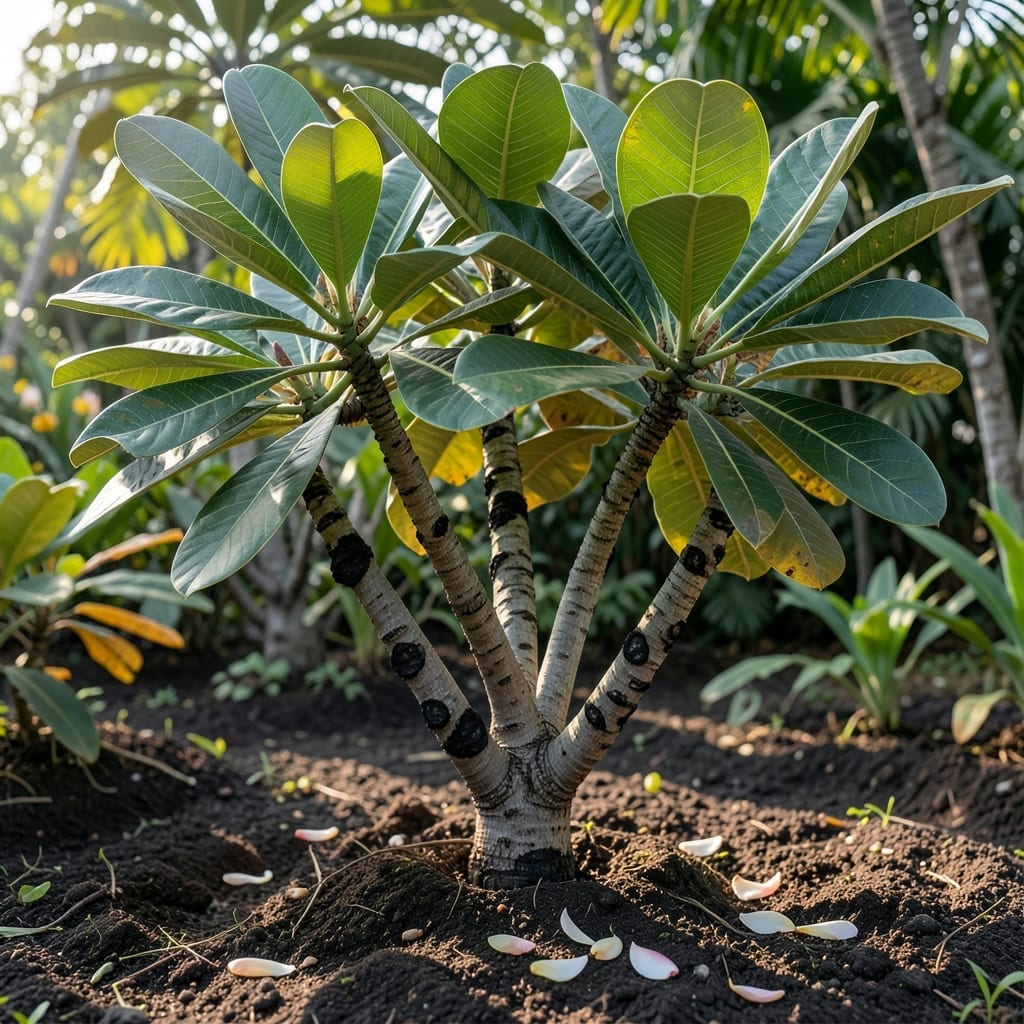
That sinking feeling when your plumeria’s stem turns to mush. I’ve lost count of how many plants I’ve saved from this exact issue—catch it early and you can still turn things around.
Overwatering doesn’t just drown roots; it invites rot that can spread startlingly fast. The first sign is usually soft, dark spots on the stem, often with a foul smell that confirms your worst fears.
Here’s the thing—plumerias thrive on neglect, not attention. They need well-draining soil, minimal water, and a pot with drainage holes. Most people kill them with kindness, not carelessness.
With quick action, you can stop the rot, salvage healthy tissue, and nurse your plant back to its tropical glory. The recovery might surprise you.
Plumeria stem rot often begins with excessive moisture, but the root causes go deeper. Here’s what’s really happening below the soil:
Plumerias are drought-tolerant succulents that thrive in dry conditions. When watered too frequently or planted in compacted, water-retentive soil, their roots suffocate. Without oxygen, root cells die, creating the perfect anaerobic environment for Phytophthora and Pythium fungi—which cause stem rot—to multiply. Actionable fix: Use a well-draining mix (50% perlite/pumice + 50% cactus soil) and water only when the top 2–3 inches of soil are bone-dry.
Soil heavy in clay or undecomposed organic matter (like fresh compost) retains moisture for too long. This traps water against the stem base, softening the tissue and inviting fungal spores. Science note: Plumeria stems store water; when submerged in damp soil, their cells burst from osmotic pressure, accelerating rot. Actionable fix: Amend soil with coarse sand or bark to improve aeration.
Fungi like Botryosphaeria and Fusarium spread rapidly in temperatures above 80°F (27°C) with high humidity. Overwatering creates a moist film on stems, allowing spores to germinate and penetrate through wounds or natural openings. Actionable fix: Avoid overhead watering, and apply a copper-based fungicide at the first sign of soft, discolored stems.
Non-porous pots (e.g., plastic or glazed ceramic) prevent evaporation, while oversized containers hold excess moisture. Actionable fix: Use terracotta pots (which wick moisture) and ensure containers have drainage holes at least ½ inch in diameter.
If your plumeria is suffering from stem rot due to overwatering, don’t panic—there are clear steps to rescue it. Below are targeted fixes for common causes, along with prevention tips to keep your plant thriving.
Stop watering immediately and let the soil dry out completely. Plumeria prefers dry conditions between waterings. Check the soil by inserting your finger 2 inches deep—if it’s damp, wait. Water only when the top 1-2 inches are dry. Use a well-draining soil mix (e.g., cactus/succulent blend) to prevent future issues.
💡 Pro Tip: Water deeply but infrequently—once every 1-2 weeks in warm weather, less in cooler months.
If the pot lacks drainage holes or uses heavy soil, repot your plumeria. Choose a terracotta pot (breathable and quick-drying) and a mix of 50% perlite/pumice + 50% potting soil. Remove the plant gently, trim any black/mushy roots, and repot in fresh, dry soil. Avoid watering for 3-5 days post-repotting.
For stem rot, use sterilized pruners to cut away soft, discolored, or foul-smelling stems until you reach healthy tissue. Disinfect tools with rubbing alcohol between cuts. Apply a copper fungicide or diluted hydrogen peroxide (1:10 ratio) to the affected area to halt further spread. Isolate the plant to protect others.
💡 Pro Tip: Boost recovery by placing the plant in bright, indirect light (no direct sun until it stabilizes).
Plumeria hates cold, wet feet. Move it to a warmer spot (above 50°F/10°C) with good airflow. Use a fan on low to circulate air and speed up soil drying. If outdoors, ensure it’s in a raised bed or container to avoid waterlogging.
Prevention
Look for soft, dark, or mushy spots on the stem, often with a foul odor. Leaves may yellow and drop unexpectedly.
Yes, if caught early. Remove all rotten tissue, treat with fungicide, and repot in fresh, dry soil. Recovery takes 4-8 weeks with proper care.
Use a mix of 50% perlite/pumice and 50% cactus soil. This ensures rapid drainage and prevents waterlogging.
Water deeply but infrequently—only when the top 2–3 inches of soil are dry. In warm weather, this is about every 10–14 days.