
Beautiful Plants For Your Interior
Beautiful Plants For Your Interior
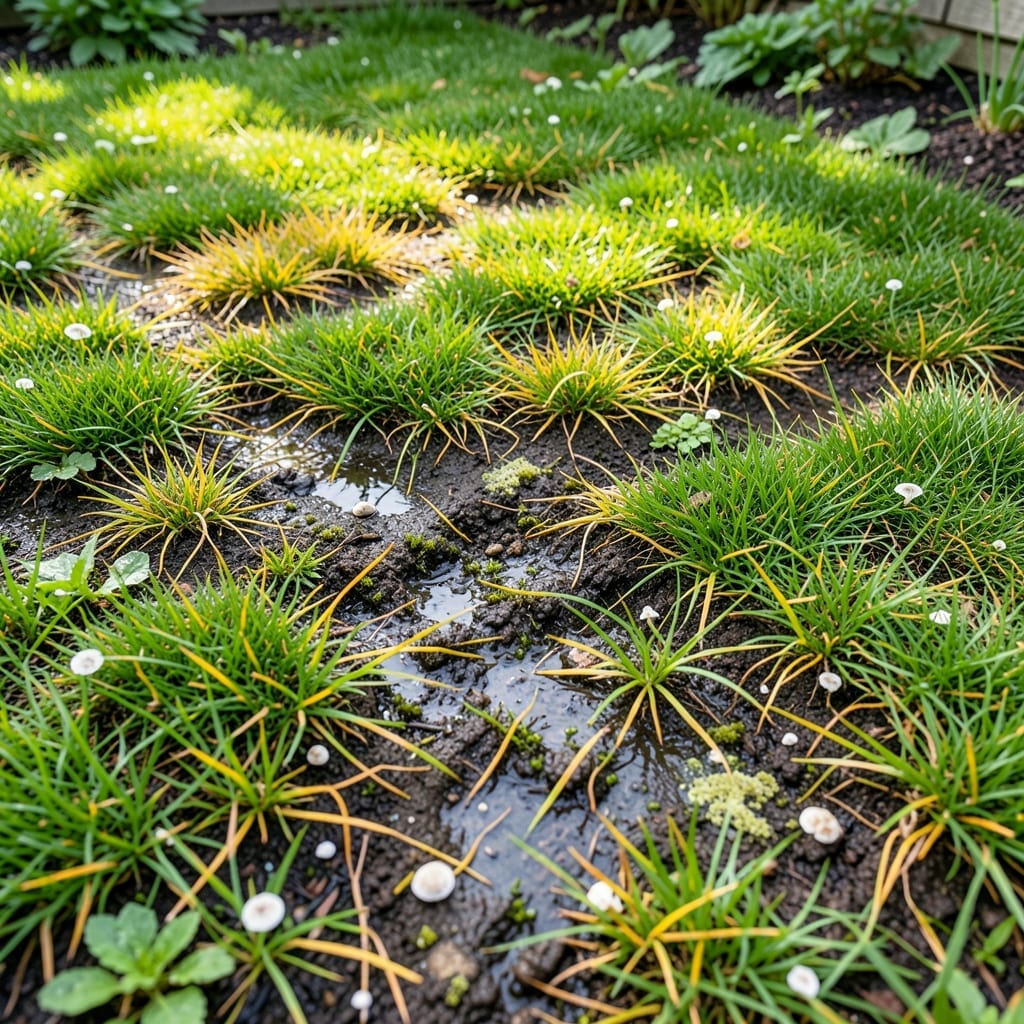
Soggy, yellowing grass after installation? I’ve been there. New turf needs moisture to establish, but too much water suffocates the roots and invites disease.
The signs are obvious once you know what to look for: spongy soil, foul odors, and grass that pulls up too easily. Catching it early makes all the difference.
Here’s the thing—reviving overwatered turf is simpler than you think. Stop watering immediately, improve drainage, and let the soil dry out. Most cases bounce back within 1-2 weeks.
Prevention is even easier: stick to a schedule, check soil moisture daily, and adjust for weather. Your lawn will thank you.
Overwatering new turf often stems from well-intentioned but misguided care. Understanding the root causes helps prevent damage and ensures healthy growth. Below are the most common reasons for this issue.
Newly laid turf requires consistent moisture to establish roots, but overzealous watering can drown the grass before it takes hold. The soil beneath fresh sod or seed often retains moisture longer than expected, especially in clay-heavy or compacted soils. When water pools or the topsoil stays soggy for days, roots suffocate due to oxygen deprivation (hypoxia), weakening the turf’s ability to anchor and absorb nutrients.
If your soil has low permeability (common in clay or poorly graded areas), water lingers at the surface instead of draining downward. This creates a waterlogged environment where roots rot. Compacted subsoil or lack of slope exacerbates the problem, as gravity can’t pull excess water away. Testing drainage with a simple percolation test (digging a hole and timing how long it takes to drain) can reveal if your soil is the culprit.
Many gardeners assume new turf needs daily watering, but frequency should decrease as roots grow deeper. Sticking to a rigid schedule—like watering twice daily for weeks—overwhelms the grass. Instead, adjust based on weather and soil moisture: Skip watering after rain, and reduce frequency once roots penetrate 2–3 inches (test by lifting a corner of sod). Automated sprinklers on timers often contribute to this issue unless manually adjusted.
High humidity, cool temperatures, or shaded areas slow evaporation, meaning water sits longer than in hot, sunny spots. Overwatering in these conditions is a common mistake. For example, turf in a north-facing yard or under trees may need 30–50% less water than a south-facing lawn. Always check soil moisture at a 2-inch depth—if it’s damp, hold off on watering.
New turf drowning in water needs quick action to bounce back. Here’s how to tackle the most common issues caused by overwatering and prevent them from happening again.
If the soil feels soggy and spongy, stop watering immediately. Aerate the turf with a garden fork or core aerator to create small holes that allow air, water, and nutrients to reach the roots. For severe cases, mix in coarse sand or compost to improve drainage. Prevention tip: Test soil moisture by sticking your finger 2 inches deep—if it’s damp, hold off on watering. 💡
Overwatered turf often turns yellow or wilts as roots suffocate. Reduce watering to 1–1.5 inches per week, including rainfall, and water deeply but infrequently (early morning is best). Use a rain gauge to track moisture. Prevention tip: Follow the “footprint test”—if grass springs back after stepping on it, it’s hydrated; if not, it’s time to water. 🎯
Excess moisture invites fungi like Pythium or Rhizoctonia. Apply a fungicide labeled for turf diseases, and remove any heavily infected patches. Improve airflow by mowing slightly shorter (but never scalp the lawn) and bagging clippings. Prevention tip: Avoid evening watering, as damp grass overnight fuels fungal growth. ✨
Overwatering stunts root development. Help roots recover by top-dressing with a thin layer of compost and applying a slow-release, low-nitrogen fertilizer. Limit foot traffic to reduce stress. Prevention tip: Water new turf lightly (just enough to keep the top inch moist) for the first 2 weeks, then gradually deepen watering as roots establish. 🌱
Look for spongy, waterlogged soil and grass that turns yellow or brown. If it feels mushy underfoot or pulls up easily, it’s likely overwatered.
Water lightly daily for the first 2 weeks, keeping the top 1 inch moist. Then, gradually reduce frequency while increasing depth to encourage deep root growth.
Yes, if caught early. Stop watering, let the soil dry, and aerate to improve drainage. Most cases bounce back within 1-2 weeks.
Water in the early morning so grass dries quickly. Avoid evening watering, and improve airflow by mowing regularly.