
Beautiful Plants For Your Interior
Beautiful Plants For Your Interior
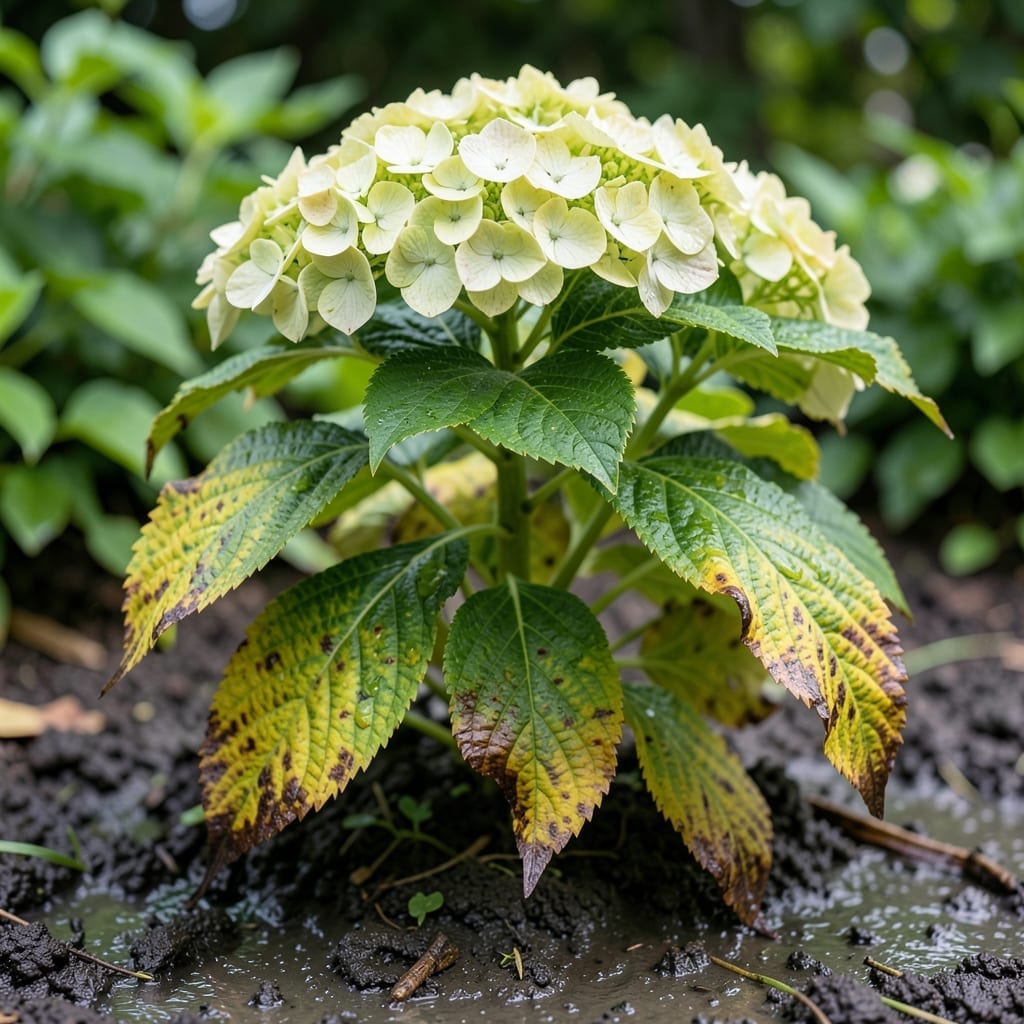
Yellow hydrangea leaves usually mean too much love with the watering can. I’ve rescued countless hydrangeas from soggy soil, and the first sign is always the same—dull, yellowing leaves that feel soft to the touch.
Overwatering suffocates roots, turning them mushy and brown. The fix isn’t complicated: stop watering immediately and let the soil dry out. Most plants bounce back within 2-3 weeks if caught early.
You’ll know it’s working when new growth appears crisp and green. The key is patience—hydrangeas hate wet feet but recover beautifully with the right conditions.
Prevention is simpler than the cure: water only when the top inch of soil feels dry. Works every time.
Overwatered hydrangea leaves often develop issues due to a few key factors. Understanding these causes can help you prevent and address the problem effectively.
Hydrangeas thrive in well-draining soil, but when waterlogged, the roots suffocate. This happens because water fills the air pockets in the soil, preventing oxygen from reaching the roots. Without oxygen, roots can’t absorb nutrients, leading to yellowing leaves and wilting.
Many gardeners assume hydrangeas need daily watering, but this is rarely necessary. Overwatering disrupts the plant’s natural balance, causing root rot. A simple rule: water only when the top inch of soil feels dry. This prevents water buildup while keeping the plant hydrated.
Containers or garden beds without proper drainage trap excess water. If your hydrangea sits in a pot without drainage holes, water accumulates at the bottom, drowning the roots. Always use pots with drainage holes or amend heavy clay soil with organic matter to improve drainage.
In humid climates or during heavy rain, hydrangeas can absorb too much moisture from the air and soil. This is especially true for bigleaf hydrangeas (Hydrangea macrophylla). If rainfall is frequent, reduce supplemental watering and ensure the soil isn’t soggy.
Reviving an overwatered hydrangea starts with addressing the root of the issue—literally. Here’s how to tackle each cause with simple, actionable steps:
With these fixes, your hydrangea should bounce back in 2–4 weeks. Consistency is key—adjust your routine and watch for new, vibrant growth!
Look for yellowing leaves that feel soft or mushy to the touch. The soil will stay soggy long after watering, and roots may appear brown and smell foul. Healthy roots are firm and white.
Yes, if you act quickly. Trim away dark, smelly roots and repot in fresh, dry soil. Use a copper-based fungicide for severe cases. Recovery takes 2-4 weeks with proper care.
Only when the top 1 inch of soil feels dry. Most hydrangeas need watering 2-3 times per week in hot weather, less in cooler months. Always check soil moisture first.
A well-draining mix with compost and perlite works best. Avoid heavy clay soils. For potted plants, ensure containers have drainage holes to prevent water buildup.