
Beautiful Plants For Your Interior
Beautiful Plants For Your Interior
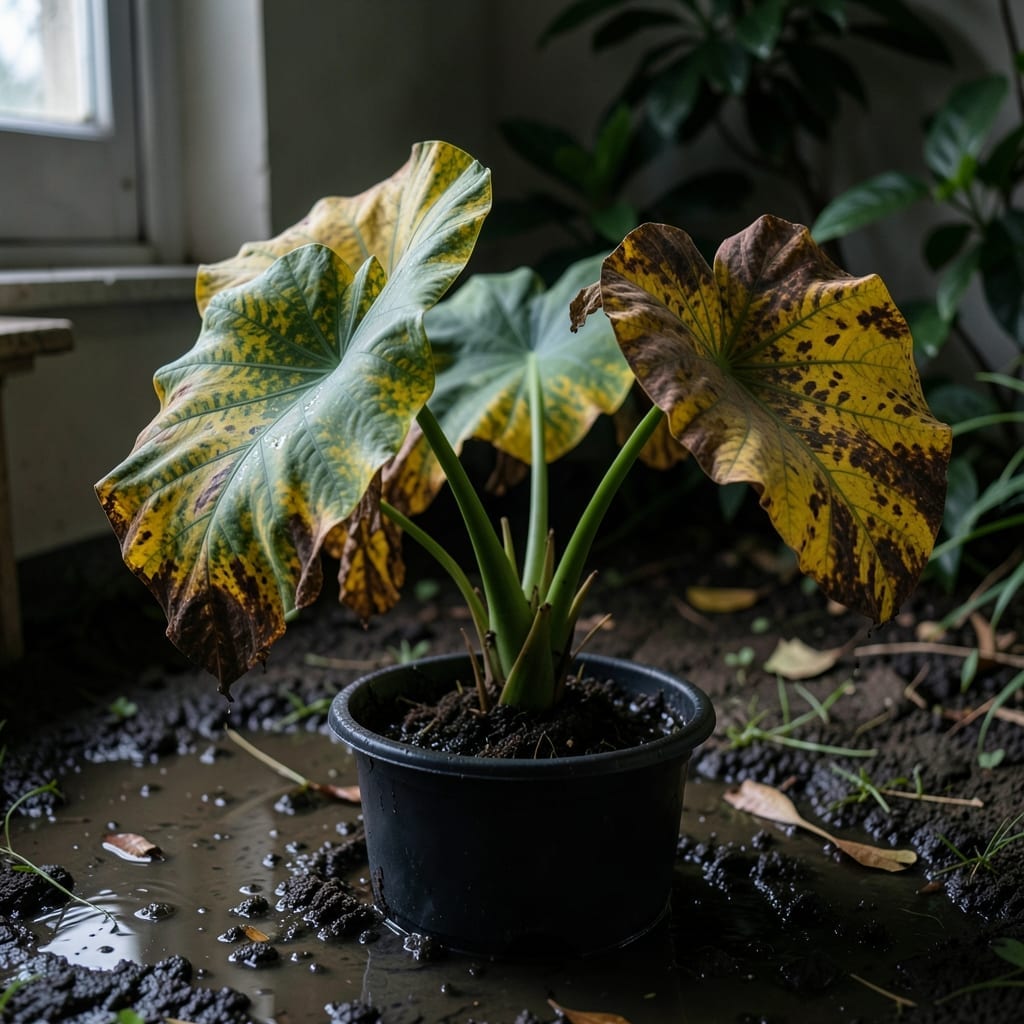
My elephant ear’s yellow leaves screamed trouble last summer. 🌱 Turns out, I was drowning it with kindness—overwatering creates the perfect storm for root rot in these tropical beauties.
The signs are unmistakable: drooping leaves, yellow edges, and soil that stays soggy for days. I learned the hard way that these plants prefer their soil to dry slightly between waterings, not stay swampy.
Here’s the thing—revival is possible with the right approach. You’ll need to adjust your watering schedule, improve drainage, and possibly trim affected roots to give your plant a fighting chance.
With these changes, your elephant ear can bounce back with those lush green leaves you love. The key is consistency and paying attention to what your plant is telling you.
Overwatering is the primary culprit behind an elephant ear plant’s decline, but it’s not just about excess water—it’s about how that water disrupts the plant’s natural processes. Below are the key scientific reasons why this happens.
Elephant ears (Colocasia or Alocasia spp.) thrive in moist but well-draining soil. When water pools around the roots due to compacted soil or lack of drainage holes, oxygen is displaced. Roots need oxygen for aerobic respiration—without it, they can’t absorb nutrients or energy, leading to root asphyxiation and, eventually, rot.
Stagnant water creates a breeding ground for pathogens like Phytophthora and Pythium, which cause root rot. These microorganisms thrive in waterlogged conditions, breaking down root tissues. As roots decay, the plant can’t uptake water or nutrients, resulting in yellowing leaves (chlorosis) and wilting.
Overwatering leaches essential nutrients (e.g., nitrogen, potassium) from the soil, leaving the plant starved. Even if nutrients are present, damaged roots can’t absorb them efficiently. This leads to deficiency symptoms, such as pale or yellow foliage, despite the soil appearing “wet enough.”
Heavy or clay-rich soils hold water tightly, preventing proper airflow. Over time, this compaction strangles the roots, reducing their ability to expand and function. Amending soil with perlite or organic matter can improve drainage and prevent this issue.
If your elephant ear plant is suffering from overwatering, act fast to revive it. Here are targeted solutions for common symptoms and their prevention:
With quick action and adjusted care, your elephant ear can bounce back to its lush, tropical glory!
Look for yellowing leaves, drooping, or mushy stems. Also check if the soil stays soggy for days or smells sour—these are classic signs of overwatering.
Remove the plant from its pot, trim black or mushy roots, and repot in fresh, dry soil. Use a clean container with drainage holes to prevent future issues.
Water when the top 2-3 inches of soil feel dry. These plants prefer moist but not waterlogged conditions, so adjust based on your home’s humidity.
Yes, if you act quickly! Trim damaged roots and leaves, repot in fresh soil, and reduce watering. With proper care, many plants recover in 2-4 weeks.