
Beautiful Plants For Your Interior
Beautiful Plants For Your Interior
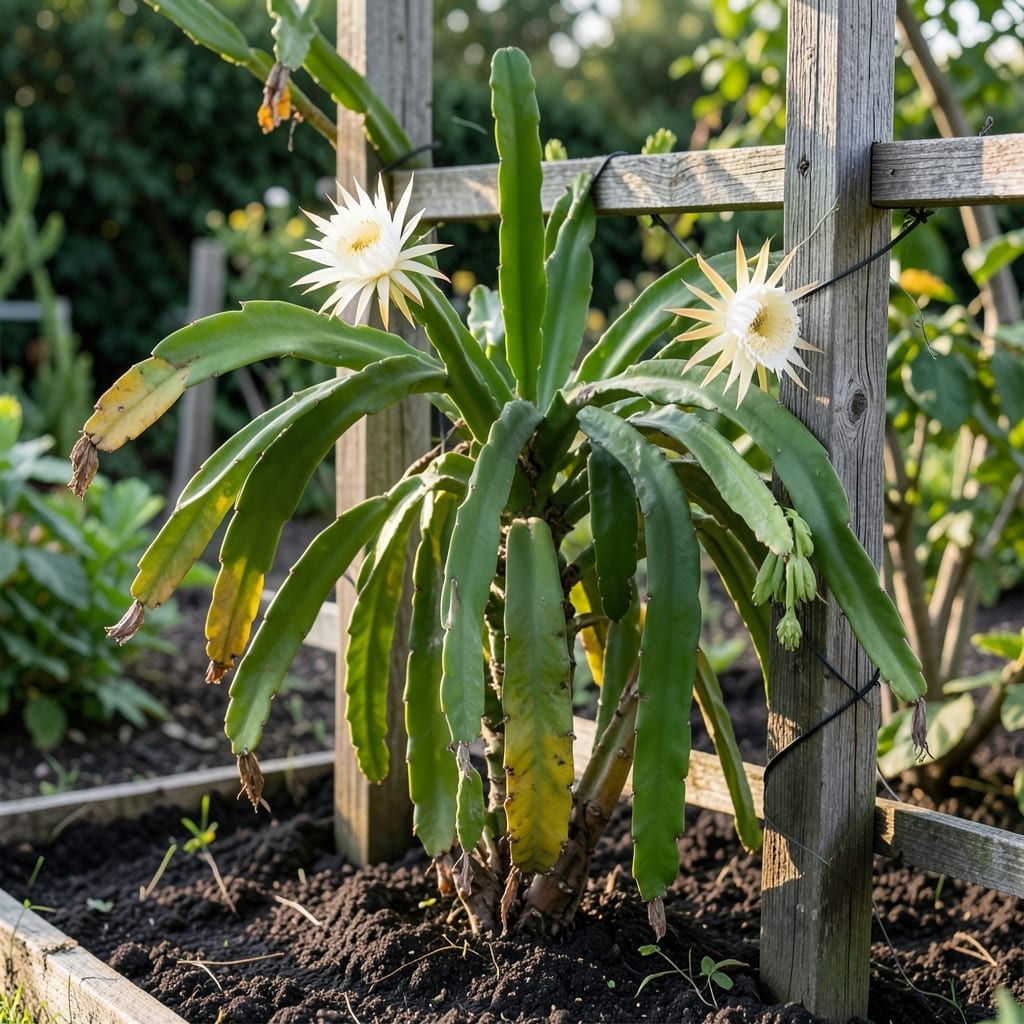
Drooping leaves and yellowing stems on your dragon fruit plant usually mean one thing—you’ve been too generous with the water. I’ve saved several of these tropical cacti from the brink by catching the signs early.
The problem starts with soggy soil that suffocates roots, but it’s fixable. You’ll need to stop watering immediately, check the roots for rot, and repot in fresh, well-draining mix. Most bounce back within 2-3 weeks if you act fast.
Prevention is simpler than the cure: water only when the top 2-3 inches of soil are bone dry. These plants thrive on neglect, not attention, and they’ll reward you with vigorous growth and future fruit.
Works for potted plants indoors or out, as long as the container has drainage holes. Let’s get your plant back on track.
Overwatering your dragon fruit plant often stems from a few common but preventable missteps. Understanding the root causes helps you adjust your care routine and prevent damage. Here’s why it happens:
Dragon fruit plants (Hylocereus spp.) are native to arid regions and store water in their thick stems. Watering too often—especially in cool or humid conditions—saturates the soil, depriving roots of oxygen. This leads to root asphyxiation and creates a breeding ground for fungal pathogens like Phytophthora and Fusarium.
Using pots without drainage holes or dense, water-retentive soil (e.g., clay or peat-heavy mixes) traps moisture around the roots. Dragon fruit thrives in well-draining, sandy or cactus-specific soil. Without proper drainage, water pools at the base, accelerating root rot.
Seasonal changes and microclimates play a role. In cooler months or high-humidity areas, the soil stays wet longer. Overwatering during dormancy (winter) or in shaded spots—where evaporation slows—exacerbates the problem. Always check the top 2–3 inches of soil for dryness before watering.
A pot that’s too large holds excess moisture, while compacted roots (from infrequent repotting) can’t absorb water efficiently. This paradoxically leads to both waterlogged soil and dehydration stress in the plant. Use a container only slightly larger than the root ball to maintain balance.
If your dragon fruit plant is showing signs of overwatering, act fast to save it. Below are targeted fixes for common symptoms, along with prevention tips to keep your plant thriving.
Fix: Stop watering immediately and let the soil dry out completely. Move the plant to a sunny spot to speed up evaporation. Trim any mushy or discolored leaves with clean scissors to redirect energy to healthy growth.
Prevention: Water only when the top 2 inches of soil feel dry. Use a moisture meter for accuracy. 💡
Fix: Gently remove the plant from its pot and inspect the roots. Trim away black, slimy, or foul-smelling roots with sterilized pruners. Repot in fresh, well-draining cactus or succulent mix. Avoid watering for 5–7 days post-repotting.
Prevention: Ensure pots have drainage holes, and use a gritty soil mix (e.g., 50% perlite or sand). Elevate pots to prevent waterlogging. ✨
Fix: Improve air circulation around the plant by moving it to a breezier location or using a small fan on low. Reduce watering frequency and avoid overhead misting.
Prevention: Maintain consistent humidity (40–60%) and water in the morning so excess moisture evaporates during the day. 🌡️
Fix: Scrape off the top layer of soil and replace it with fresh, dry mix. Sprinkle cinnamon (a natural antifungal) on the soil surface. Reduce watering and increase sunlight exposure.
Prevention: Avoid overcrowding plants and use sterile potting mix. Water at the base, not the leaves. 🎯
Look for yellowing leaves, mushy stems, or a foul smell from the soil. These are classic signs of root rot from too much moisture.
Always check the top 2-3 inches of soil first. If it’s dry, it’s safe to water. In cool weather, this might mean waiting 2-3 weeks between waterings.
Yes, if you act quickly. Remove the plant, trim off black or slimy roots, and repot in fresh, dry soil. Avoid watering for at least 5-7 days.
Use a pot with drainage holes and a well-draining soil mix. Terra cotta pots are ideal as they allow excess moisture to evaporate.