
Beautiful Plants For Your Interior
Beautiful Plants For Your Interior
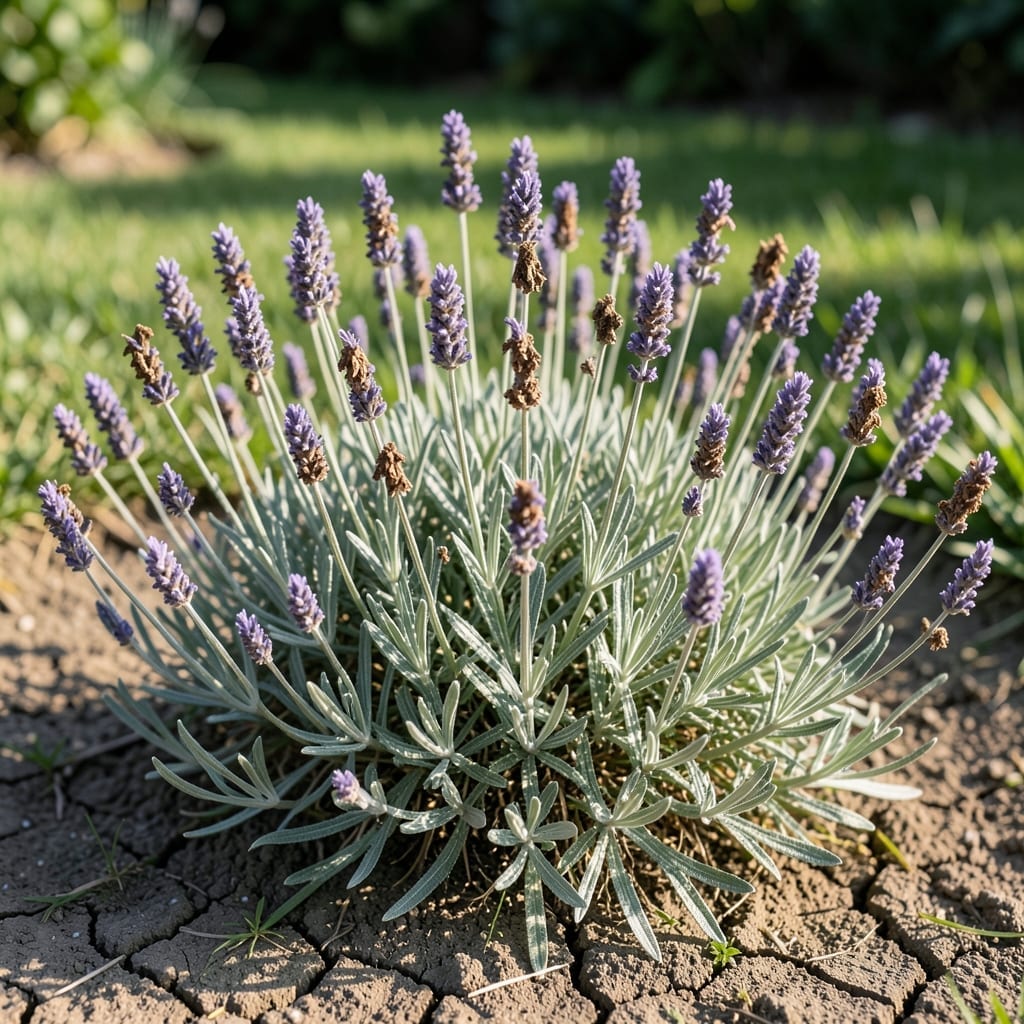
That sinking feeling when your lavender turns to mush? I’ve been there. Overwatering is the silent killer of these tough plants, turning their roots to sludge overnight.
The signs are subtle at first—yellowing leaves, wilting stems—then suddenly it’s too late. But here’s the thing: even a sad, soggy lavender can sometimes bounce back if you act fast.
You’ll need to stop watering immediately, check the roots for rot, and give the plant a fighting chance in fresh, dry soil. It’s not magic, just simple rescue steps.
Lavender thrives on neglect, not kindness. Once revived, it’ll reward you with fragrance and resilience for years.
Lavender thrives in dry, well-draining conditions, so overwatering disrupts its natural survival mechanisms. Here’s why excess moisture leads to a dead or dying plant:
Lavender roots need oxygen. When soil stays soggy, water fills the air pockets in the soil, suffocating the roots. This triggers anaerobic conditions, where beneficial soil microbes die off, and toxic byproducts (like hydrogen sulfide) build up. Without oxygen, roots rot, turning mushy and black—a classic sign of root rot.
Wet soil is a breeding ground for Phytophthora, Pythium, and other pathogens that attack lavender roots. These fungi thrive in moisture and spread rapidly, breaking down root tissues. Bacteria like Erwinia also exploit the weakened plant, accelerating decay. Once rot sets in, the plant can’t absorb nutrients or water, even if you stop watering.
Overwatering dilutes the soil’s nutrient concentration, making it harder for lavender to absorb essential minerals like potassium and phosphorus. Worse, osmotic stress occurs: roots take in too much water, causing cells to burst. This leads to yellowing leaves, wilting, and eventually, plant death.
Lavender naturally resists drought with deep roots and waxy leaves. But overwatering softens its defenses. The plant shifts energy from growth to survival, weakening stems and leaves. Pests like aphids and spider mites then move in, finishing off the already-stressed plant.
If your lavender looks lifeless from overwatering, don’t lose hope—quick action can often save it. Below are targeted fixes for each issue, with tips to keep it thriving long-term.
If the roots are mushy and brown, stop watering immediately. Gently remove the plant from its pot, trim away black or slimy roots with clean shears, and repot in fresh, well-draining soil. Use a terracotta pot to improve airflow. Wait at least a week before watering again, and only resume when the top inch of soil is bone-dry.
Prevention tip: Lavender hates wet feet! 💡 Always use pots with drainage holes and a gritty, sandy soil mix.
Yellow leaves often signal waterlogged soil. Move the plant to a sunnier spot (6+ hours of direct light daily) and ensure the soil drains quickly. If it’s in the ground, amend the area with sand or gravel to prevent standing water.
Prevention tip: Elevate potted lavender on a stand or bricks to avoid water pooling at the base. ✨
If stems are drooping but still green, prune back the affected parts to encourage new growth. Avoid fertilizing—lavender thrives in poor soil. Instead, reduce stress by keeping it in a stable, warm environment.
Prevention tip: Water only when the soil is completely dry—lavender is drought-tolerant! 🌡️
If the plant is entirely brown and brittle, it may be beyond saving. However, scratch the stem—if there’s green underneath, there’s hope. Cut back to healthy growth and follow the steps above. If not, it’s time to replace it (and adjust your watering habits!).
Prevention tip: Stick your finger in the soil before watering—if it’s damp, walk away. 🎯
Check the roots by gently removing the plant from its pot. Healthy roots are firm and white, while rotten ones are mushy, brown, or black. A foul odor is another clear sign of root rot.
Scratch the stem—if it’s green underneath, there’s a chance. Trim back dead growth and repot in dry soil. If the stem is brown inside, the plant is likely beyond saving.
Water only when the top 2-3 inches of soil are bone-dry. In most climates, this means watering every 2-3 weeks. Lavender thrives on neglect!
Use a well-draining mix of 50% potting soil and 50% perlite or sand. Terracotta pots help too by allowing excess moisture to evaporate.