
Beautiful Plants For Your Interior
Beautiful Plants For Your Interior
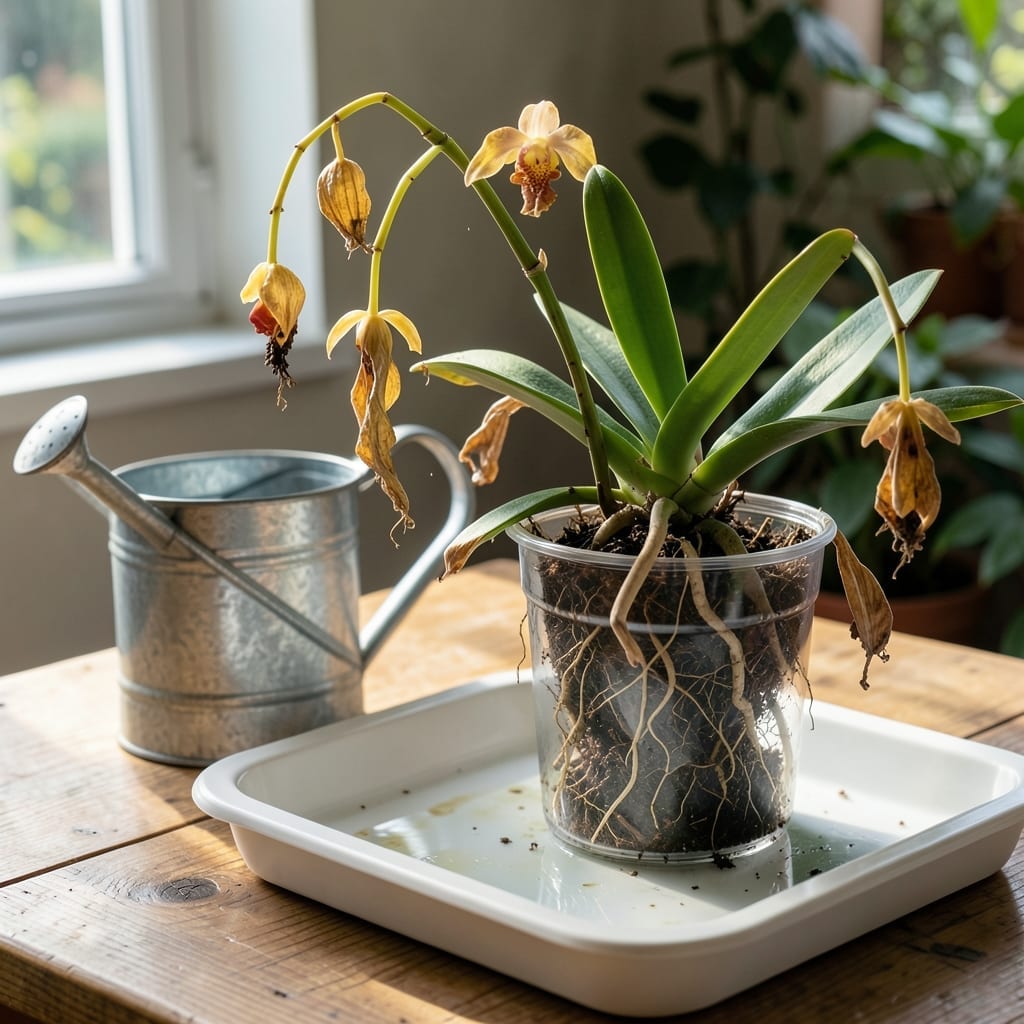
Yellow leaves staring back at you from your orchid pot? I’ve been there—watching healthy roots turn to mush because I couldn’t resist “just one more” watering. This is fixable, but time matters.
Overwatering doesn’t just drown roots—it creates the perfect breeding ground for rot. The tricky part is that symptoms often look like underwatering at first. That’s why most people make it worse before realizing what’s happening.
You’ll need to act fast: remove the plant, trim the rot, and let it dry out properly. With the right approach, even severely overwatered orchids can bounce back with new root growth in 4-6 weeks.
Prevention is simpler than cure. Once you understand the signs and adjust your routine, you’ll stop the cycle for good.
Overwatering orchids often stems from well-meaning but misguided care. Understanding the root causes can help you adjust your routine and prevent damage. Here are the most common reasons:
Orchids, particularly Phalaenopsis or moth orchids, thrive in environments that mimic their natural habitat—epiphytic conditions where roots dry out between rain showers. Watering too often (e.g., daily or every other day) saturates the potting medium, suffocating the roots and preventing oxygen uptake. This leads to root rot, as anaerobic conditions favor harmful bacteria and fungi like Phytophthora or Pythium.
Orchids require fast-draining media (e.g., bark, sphagnum moss, or perlite blends). Using dense, moisture-retentive soils (like regular potting mix) or containers without drainage holes traps water around the roots. Stagnant water accelerates cellular breakdown in root tissues, turning them mushy and brown—a classic sign of overwatering.
Orchids in humid environments (e.g., >60% humidity) or low-light conditions (e.g., north-facing windows) evaporate water more slowly. Combined with frequent watering, this creates a perfect storm for overhydration. The plant’s transpiration rate drops, leaving excess moisture in the pot. Always pair watering with the plant’s actual environmental needs, not just a fixed schedule.
Cooler temperatures (below 60°F/15°C) slow down orchid metabolism, reducing their water uptake. Watering at the same rate as in warmer months can overwhelm the plant, as the roots absorb less and the medium stays wet longer. This is especially risky in winter or for orchids near drafty windows.
Don’t panic—your orchid can bounce back with the right care. Below are targeted fixes for each overwatering symptom, plus simple ways to prevent a repeat.
Trim the damaged leaves with sterilized scissors to redirect energy to healthy growth. Hold off on watering until the top inch of the potting mix feels dry. Move the plant to a spot with bright, indirect light to help it recover faster.
Prevention tip: 💡 Water only when the roots turn silver-gray, a sign they’re thirsty.
Gently remove the orchid from its pot and rinse the roots under lukewarm water. Snip off any mushy, black, or foul-smelling roots with sterilized tools. Soak the remaining healthy roots in a diluted hydrogen peroxide solution (1 part 3% peroxide to 3 parts water) for 10 minutes to disinfect. Repot in fresh, chunky orchid mix (bark-based) and a clean pot with drainage holes.
Prevention tip: ✨ Use clear pots to monitor root health and avoid over-potting—orchids thrive in snug spaces.
If the mix stays soggy, it’s time to repot. Replace it with a fast-draining medium like fir bark, sphagnum moss, or a blend with perlite. Ensure the pot has multiple drainage holes to prevent water from pooling.
Prevention tip: 🎯 Lift the pot after watering—if it feels heavy, you’ve overdone it. Wait until it’s light before watering again.
This often signals advanced rot. Follow the root rot steps above, then reduce humidity temporarily to discourage fungal growth. Avoid fertilizing until the plant stabilizes—stressed orchids can’t process nutrients.
Prevention tip: 🌡️ Keep temperatures between 65–80°F (18–27°C) and provide gentle airflow with a fan on low.
Water only when roots turn silver-gray or the potting mix feels dry 1 inch down. Typically, this means every 7-10 days in warm conditions, less in cooler months. Overwatering is the most common mistake!
Yes, but it’s a slow process. Trim all rot, soak the base in diluted hydrogen peroxide, then place in a humid environment with bright, indirect light. New roots may appear in 4-6 weeks.
Use a chunky bark-based mix with perlite or charcoal for drainage. Avoid dense soils that hold moisture. Clear pots help you monitor root health and moisture levels.
This often signals root stress from overwatering. Yellow leaves won’t recover, but trimming them helps redirect energy. Check roots for rot and adjust your watering routine immediately.