
Beautiful Plants For Your Interior
Beautiful Plants For Your Interior
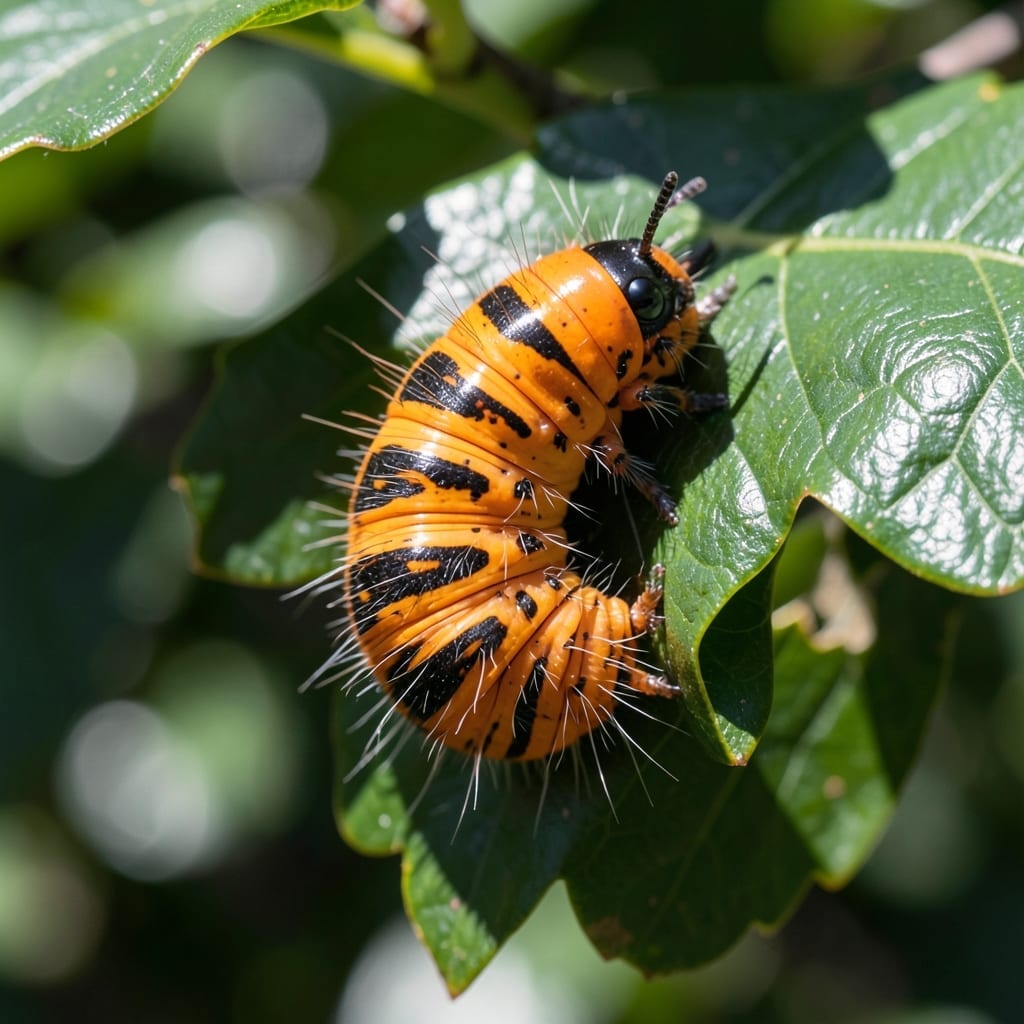
I first spotted them in late summer—bright orange and black caterpillars stripping my oak leaves bare. 🌿 These orange striped oakworms start small but grow to 2 inches long, and a few can defoliate a young tree in days.
They’re not dangerous to humans, but left unchecked, they’ll leave your oaks looking like skeleton trees. The good news? You can manage them without harsh chemicals. Hand-picking works for small infestations.
For larger outbreaks, organic options like Bacillus thuringiensis (Bt) stop them in their tracks. Timing matters—treat when caterpillars are small and actively feeding.
Prevention starts with monitoring in July and August. Keep an eye on oak leaves for those first telltale signs.
The orange striped oakworm caterpillar (Anisota senatoria) thrives due to specific environmental and biological factors. Below are the primary causes behind their appearance and proliferation in oak trees. 🌳
These caterpillars are specialized feeders on oak species, particularly white, red, and black oaks. Oaks produce tannins and other compounds that deter most pests, but the orange striped oakworm has adapted to tolerate—and even thrive on—them. Their life cycle is synchronized with oak foliage availability, making these trees their ideal habitat.
Warm summer temperatures (75–90°F) accelerate their development. Eggs laid by adult moths in early summer hatch quickly in heat, leading to synchronized outbreaks. Cooler springs may delay hatching, but prolonged warmth ensures multiple generations per season, increasing defoliation risks.
While birds, parasitic wasps, and fungi can control populations, urban and suburban landscapes often lack these predators. Pesticide use may also disrupt natural balances, allowing caterpillar numbers to surge unchecked. Encouraging biodiversity (e.g., birdhouses, native plants) can help restore ecological controls.
Drought, soil compaction, or poor nutrition weaken oak trees, making them more susceptible to infestations. Stressed trees produce fewer defensive chemicals, giving caterpillars an advantage. Proper watering, mulching, and soil care can reduce this vulnerability.
Dealing with an infestation of these leaf-munching pests? Here’s how to reclaim your oak trees without harming the ecosystem.
If you spot just a few caterpillars, the simplest solution is to remove them by hand. Wear gloves and drop them into a bucket of soapy water to prevent them from returning. Check the undersides of leaves, where they often hide.
Encourage birds, parasitic wasps, and predatory beetles—the caterpillar’s natural enemies—to do the work for you. Install birdhouses or leave leaf litter to create a welcoming habitat. Avoid pesticides, as they can harm these beneficial helpers.
For larger infestations, use neem oil or Bacillus thuringiensis (Bt), a natural bacteria that targets caterpillars without harming other wildlife. Spray in the early morning or late evening when caterpillars are most active. Reapply after rain for best results.
💡 Pro tip: If caterpillars are high in the canopy, use a long-handled pruner or pole saw to remove heavily infested branches and dispose of them immediately.
No, they don’t bite or sting. Their spines may cause mild skin irritation in sensitive individuals. Keep pets away from heavily infested areas just in case.
Eggs are tiny, round, and pale yellow, laid in clusters of 20-30 on the undersides of oak leaves. They hatch in 7-10 days, so inspect leaves regularly.
Healthy oaks usually survive defoliation, but repeated infestations can weaken them. Focus on prevention to protect long-term tree health.
They feed for 4-6 weeks before pupating in the soil. Their feeding is most intense during this period, so act quickly if you spot them.