
Beautiful Plants For Your Interior
Beautiful Plants For Your Interior
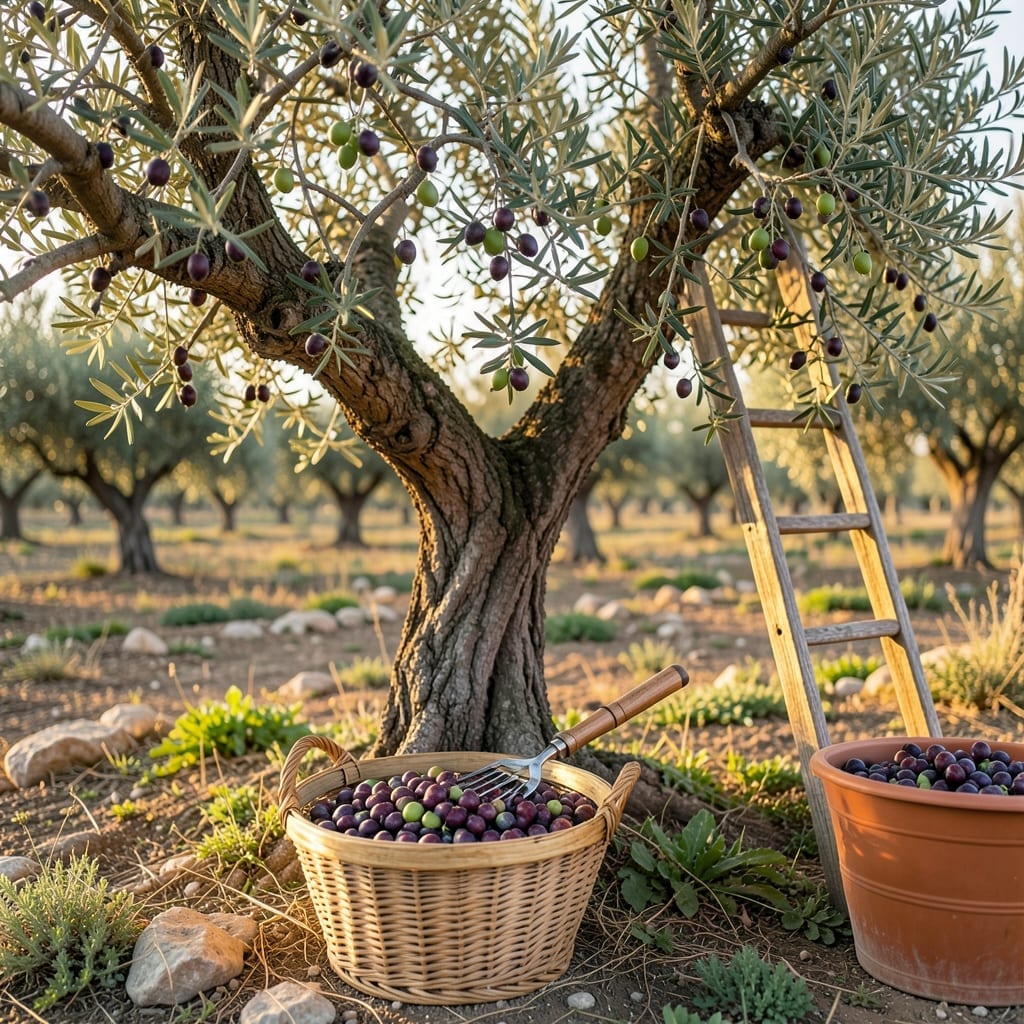
Timing your olive harvest perfectly can mean the difference between bitter, low-quality fruit and rich, flavorful 🫒 bursting with oil.
I’ve learned that knowing the ideal moment to pick ensures you capture peak ripeness for the best taste and yield. Whether you’re growing in zones 8-11 or elsewhere, this timing is everything.
You’ll discover how regional variations and weather patterns influence when to harvest your Olive. The signs of ripeness are subtle but unmistakable once you know what to look for.
Learn how to spot the perfect window for picking, and why it directly impacts the quality of your olives and the oil they produce.


I’ve found that the olive picking season varies significantly based on where you’re growing your trees. In the Mediterranean, harvest typically runs from late September to early December, while California growers often start in October and wrap up by November. ☀️
The exact timing also depends on the olive variety. For example, Arbequina olives are often ready by mid-October, while Kalamata olives may need until late November to reach peak ripeness. These differences are crucial for planning your harvest window. 🌳
| Region | Variety | Harvest Window | Ripeness Sign |
| Mediterranean | Arbequina | Late Sept – Nov | Purple-black skin |
| California | Manzanilla | Oct – Early Dec | Green to straw color |
| Greece | Kalamata | Nov – Dec | Deep purple |
| Spain | Picual | Oct – Jan | Black and glossy |
I always check for visual cues like color change—most olives transition from green to purple or black as they ripen. For table olives, I prefer picking when they’re fully colored but still firm. For oil production, I wait until they’re softer and easier to press. 🌿
In warmer climates, olives may ripen earlier due to consistent sun exposure and less rainfall. I’ve noticed that drought conditions can speed up the process, while excessive rain might delay it. Always taste-test a few to confirm they’re ready.
For Arbequina trees, I start monitoring in early October because they’re one of the earliest varieties to mature. Their small size and high oil content make them a favorite for many growers. I look for a deep purple hue and a slightly soft texture.
Manzanilla olives, popular in California, are often picked while still green for table use. This variety is prized for its mild, buttery flavor, and I’ve found they’re best harvested when the skin turns straw-colored and the flesh is firm.
Kalamata olives, a staple in Greek cuisine, need more time on the tree. I wait until they’re deep purple and almost black before picking. Their rich, fruity taste is worth the extra wait, and they’re often used for oil production.
In Spain, the Picual variety is a top choice for oil. I’ve learned that these olives can stay on the tree until January in some regions, developing a robust, peppery flavor that’s highly sought after. Their black, glossy appearance signals they’re ready.
No matter the variety or region, I always use a gentle hand-picking method or a harvesting rake to avoid damaging the trees or the fruit. This ensures the highest quality olives for both table use and oil extraction. ✂️
I’ve found that harvest timing dramatically impacts olive flavor profiles and oil content. Early picking yields peppery, bitter notes, while late harvests produce milder, fruitier olives with higher oil content. Temperature swings can also alter these characteristics significantly.☀️
The oil quality peaks when olives reach optimal ripeness, typically between September and November. Warmer climates may accelerate this, while cooler regions slow it down. I always monitor color changes and flesh firmness closely.
In my experience, rainfall before harvest can dilute oil concentration, reducing quality. I recommend picking after dry spells for the richest flavor. Morning harvesting also helps preserve aromatic compounds that degrade in heat.
For oil production, I aim for purple-black olives with a slight softness. These yield maximum oil with balanced acidity levels. However, green olives are ideal for table use due to their firm texture.🌿
Temperature fluctuations during ripening can stress trees, affecting both yield and taste. I’ve noticed that consistent warmth produces the most uniform, high-quality olives. Cold snaps, however, may require an early harvest to prevent damage.
Finally, I always test oil content by pressing a few olives. A high oil yield with complex flavors signals it’s time to harvest. This simple check ensures I never miss the perfect window for quality.✂️