
Beautiful Plants For Your Interior
Beautiful Plants For Your Interior
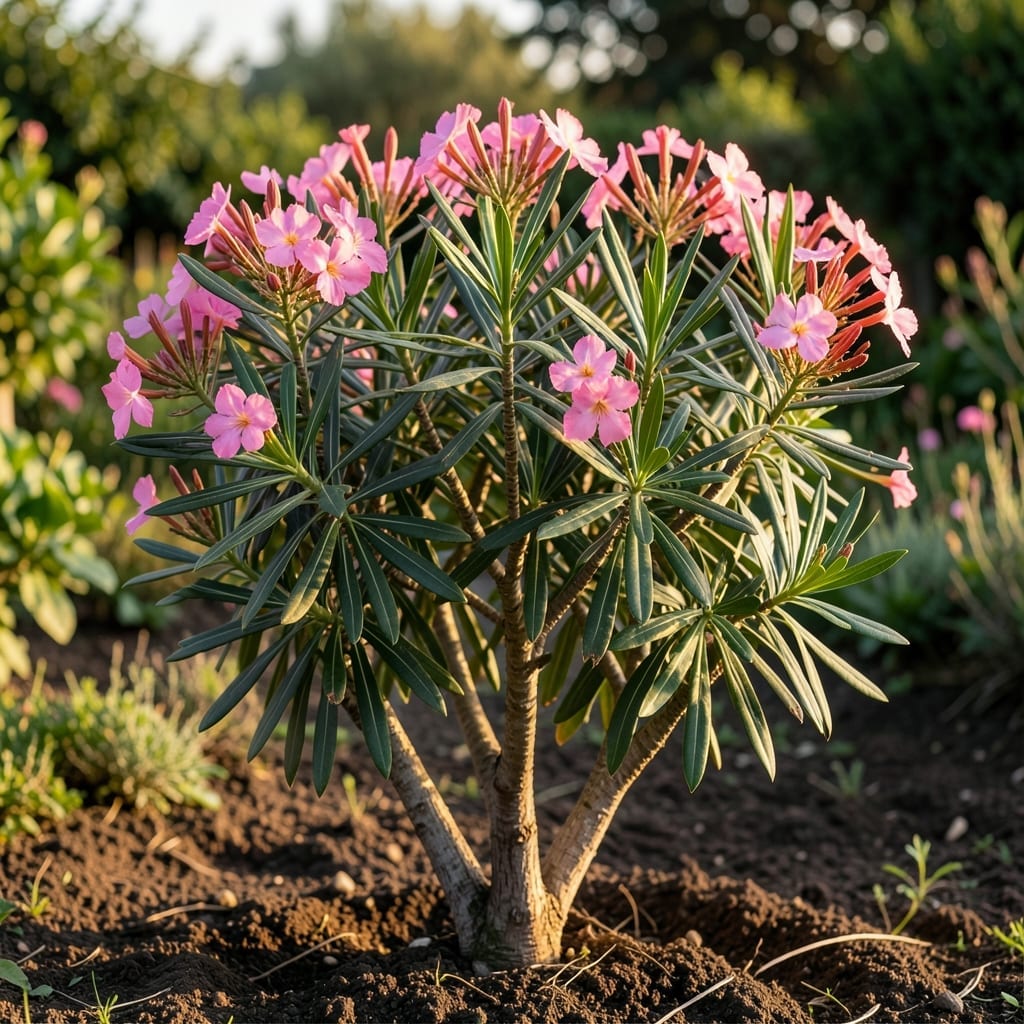
Oleander leaves tell you everything about the plant’s health—if you know what to look for. Yellowing, spotting, or wilting often signal trouble before it spreads.
I’ve learned to check the undersides for pests and watch for curly edges from overwatering. Catching issues early keeps these tough plants thriving with minimal effort.
📚 In This Guide
Here’s how to recognize and manage this plant’s foliage without risking exposure to its potent toxins.
Oleander leaves are long, narrow, and leathery, typically 4-10 inches in length with a dark green color and prominent midrib. They grow in whorls of three or more along the stem, a key identifier. The edges are smooth, not serrated, and the surface appears glossy.
I always check for a milky sap when a leaf is broken—this is a hallmark of oleander and contains the highest concentration of cardiac glycosides, the compounds responsible for toxicity. Never touch your face or mouth after handling until you’ve washed thoroughly.
Before approaching the plant, I put on long sleeves, gloves, and eye protection. Oleander toxins can be absorbed through the skin or inhaled as dust, so full coverage is critical. A disposable mask adds an extra layer of safety if you’re pruning or disturbing the plant significantly.
Even with gloves, I avoid touching other surfaces until I’ve removed them. The toxins persist on tools and clothing, so I designate a specific pair of pruners for oleander work and clean them with soap and water afterward.
If pruning is necessary, I cut stems just above a leaf node to minimize sap exposure. I place all trimmings directly into a sealed plastic bag—never compost or leave them in open trash bins where pets or children might access them. Even dried leaves retain toxicity for months.
For disposal, I check local regulations; some areas require oleander waste to be treated as hazardous. If burning is allowed, I ensure it’s done in a controlled environment, as smoke from oleander can also carry toxins.
After handling, I wash my hands, arms, and any exposed skin with soap and cold water for at least 20 seconds. Hot water can open pores, increasing absorption risk. I also wash my clothes separately in hot water with detergent to remove any residual sap.
Tools used on oleander get a scrub with soapy water and a rinse with a 10% bleach solution to break down the toxins. I store them separately from other gardening tools to prevent cross-contamination.
Symptoms of oleander poisoning include nausea, vomiting, irregular heartbeat, or dizziness. If anyone ingests any part of the plant, I call Poison Control immediately. Even small amounts can be fatal, especially to children and pets.
I keep a close eye on pets when oleander is present in the landscape. Dogs and cats are naturally curious and may chew leaves or stems. If I suspect exposure, I contact a veterinarian right away—time is critical with oleander toxicity.
These insights will help you stay safe while working around this highly toxic plant.
Identification Tip: In Step 1, focus on the combination of 4-10 inch length, dark green color, and the whorled growth pattern. No other common ornamental plant has this exact combination of traits. The milky sap is the definitive test—if you see it, you’ve confirmed oleander.
Protection Protocol: Step 2 isn’t just suggestion—it’s your safety net. Oleander toxins can penetrate skin, so the long sleeves, gloves, and eye protection create a critical barrier. I learned this the hard way after a mild skin reaction from casual handling. Disposable gear is ideal since it prevents cross-contamination.
Disposal Strategy: The sealed plastic bag in Step 3 isn’t just about neatness. Even dried oleander leaves remain toxic for months, and pets or children might investigate open trash. Check your local hazardous waste guidelines—some municipalities have specific protocols for oleander disposal that go beyond standard yard waste.
Cleanup Critical: That 20-second wash with soap and cold water in Step 4 isn’t arbitrary. Hot water opens pores, potentially increasing toxin absorption. I use a nail brush to get under fingernails where sap can collect. The 10% bleach solution for tools isn’t just cleaning—it’s chemical deactivation of the cardiac glycosides.
Yes, all parts of the oleander plant, including leaves, are highly toxic due to cardiac glycosides. Ingestion can cause severe symptoms like nausea, irregular heartbeat, or even death in humans and animals.
Wear gloves, long sleeves, and a mask to avoid skin contact or inhalation of dust. Use a shovel or pruners to collect leaves, then dispose of them in sealed bags to prevent accidental exposure.
Contact your vet or an emergency pet poison hotline immediately. Do not induce vomiting unless instructed, as this can worsen toxicity.
Yes! Consider plants like crepe myrtle, hibiscus, or butterfly bush, which are safe and provide similar aesthetic appeal without the toxicity risks.
Early signs include drooling, vomiting, diarrhea, and dizziness. Severe cases may lead to irregular heartbeat, seizures, or coma—seek medical attention right away.