
Beautiful Plants For Your Interior
Beautiful Plants For Your Interior
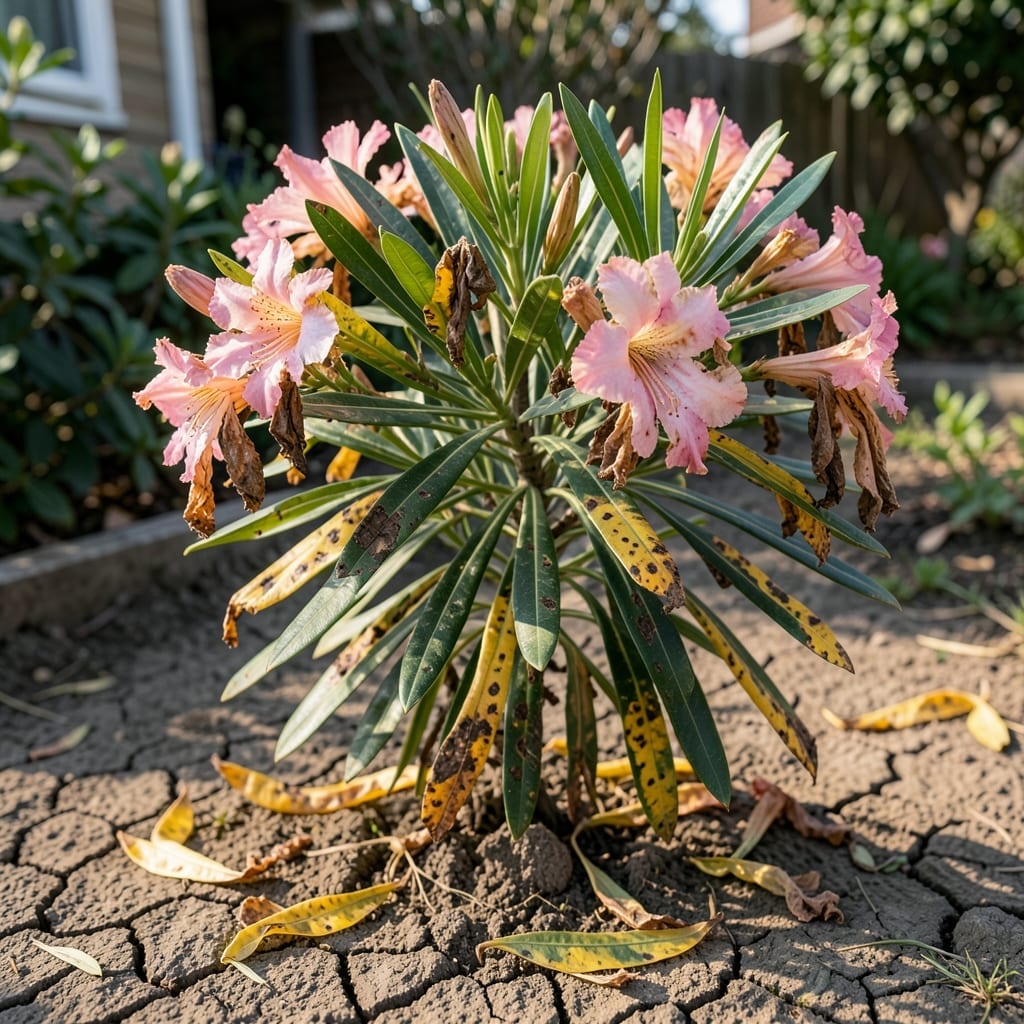
That sinking feeling when your oleander’s leaves start looking wrong. I’ve been there—watching healthy green turn to spotted yellow overnight and wondering what went wrong.
Most oleander problems announce themselves visually first. Blackened tips, powdery coatings, or weird growths all tell a story if you know how to read them. The good news? Early diagnosis means easier fixes.
You’ll learn to spot the difference between fungal attacks, bacterial issues, and environmental stress. Each has telltale signs that point to the right solution.
Works for potted plants, garden beds, or that inherited shrub you’re determined to save. Here’s how to play plant detective.
Oleander plants are hardy, but they’re not immune to diseases. Understanding the root causes helps you prevent and address issues early. Below are the primary reasons oleander diseases develop, along with the science behind each.
Fungi like Phytophthora and Botrytis thrive in damp, poorly drained conditions. These pathogens attack roots, stems, or leaves, leading to root rot, leaf spots, or wilting. Overwatering or high humidity creates the perfect breeding ground for spores, which spread rapidly through splashing water or contaminated tools.
Sap-sucking pests such as aphids, scale insects, and spider mites weaken oleanders by draining essential nutrients. Their feeding also creates entry points for secondary infections. For example, aphids excrete honeydew, a sticky substance that promotes sooty mold growth, further stressing the plant.
Extreme temperatures, drought, or sudden frost can compromise an oleander’s natural defenses. Heat stress may cause leaf scorch, while cold damage leads to blackened or mushy foliage. Poor soil quality, such as nutrient deficiencies or pH imbalances, also leaves plants vulnerable to disease.
Bacteria like Xylella fastidiosa or Pseudomonas enter through wounds or natural openings, clogging the plant’s vascular system. This disrupts water and nutrient flow, causing leaf yellowing, dieback, or cankers. Bacteria often spread via pruning tools, insects, or infected plant debris.
Improper care—such as over-fertilizing, poor pruning, or crowded planting—can stress oleanders and invite disease. Overuse of nitrogen-rich fertilizers promotes weak, disease-susceptible growth, while lack of airflow encourages fungal spores to settle and multiply.
Oleander plants can fall victim to several diseases, but with the right approach, you can nurse them back to health. Below are targeted solutions for common issues, along with prevention tips to keep your oleanders thriving.
If you notice dark or yellowish spots on the leaves, it’s likely a fungal issue. Start by removing infected leaves to prevent spread. Then, apply a copper-based fungicide every 7–10 days until the problem clears. Prevention tip: Space plants properly for airflow, and avoid overhead watering to reduce moisture on leaves. 💡
Sooty mold appears as a black, dusty coating on leaves, often caused by pest infestations like aphids or scale. Wipe leaves with a damp cloth soaked in soapy water to remove mold, then treat pests with neem oil or insecticidal soap. Prevention tip: Regularly inspect plants for pests and keep them clean. ✨
Yellowing leaves, wilting, and stunted growth may signal root rot from overwatering. Remove the plant from its pot, trim rotten roots, and repot in fresh, well-draining soil. Reduce watering and ensure the pot has drainage holes. Prevention tip: Water only when the top inch of soil is dry. 🌡️
This disease causes leaf edges to turn brown and crispy. Prune affected branches immediately and sterilize tools with rubbing alcohol. There’s no cure, so focus on supporting plant health with balanced fertilizer. Prevention tip: Avoid working with wet plants to limit bacterial spread. 🎯
With these steps, your oleander can recover and stay resilient against future issues!
Look for dark or yellowish spots on leaves, often with a fuzzy texture. Fungal issues thrive in damp conditions, so check for excess moisture or poor drainage.
This is sooty mold, usually caused by pest infestations like aphids. The pests excrete honeydew, which promotes mold growth. Treat pests first to resolve the issue.
Root rot from overwatering is a common cause. Remove the plant, trim rotten roots, and repot in fresh, well-draining soil. Reduce watering moving forward.
Prune affected branches immediately and sanitize tools. Focus on supporting plant health, as there’s no cure. Avoid working with wet plants to prevent spread.