
Beautiful Plants For Your Interior
Beautiful Plants For Your Interior
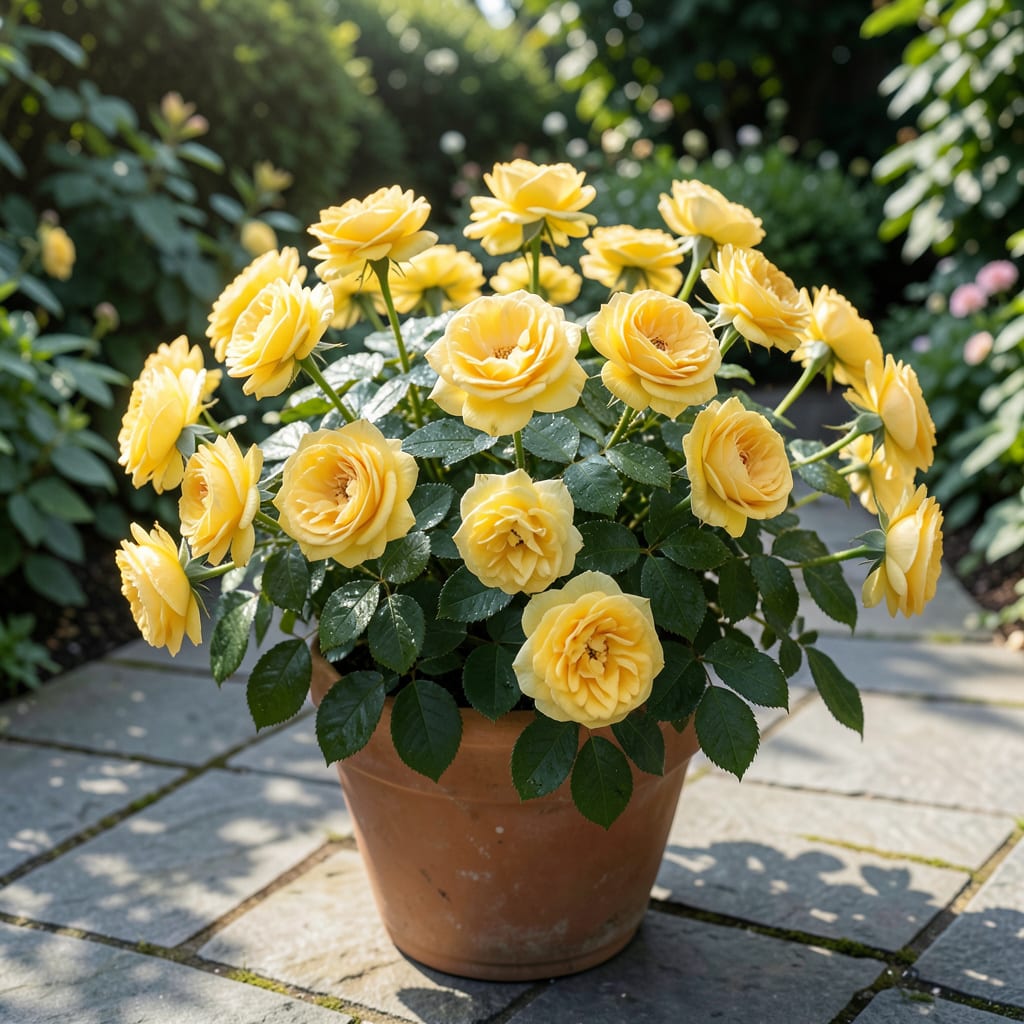
There’s something about old fashioned yellow roses that brings a garden to life. Their bright, cheerful blooms carry a history as rich as their color.
I’ve planted them in my own space, and they thrive with just a little attention—full sun, well-draining soil, and occasional pruning. They’re classic for a reason, adding timeless charm that never goes out of style.
📚 In This Guide
This method preserves their classic charm while ensuring vigorous, long-lasting blooms in your garden.
Choose a spot with full sun exposure—at least 6-8 hours of direct sunlight daily. Old fashioned roses thrive in well-draining soil with a pH between 6.0 and 6.5. Avoid low-lying areas where water pools, as soggy roots lead to rot and disease.
Test drainage by digging a 1-foot deep hole and filling it with water. If it drains within 1 hour, the location is suitable. If not, amend the soil with compost or choose a raised bed. These roses prefer slightly acidic to neutral soil, so a simple pH test kit can confirm conditions.
Loosen the soil to a depth of 18-24 inches and incorporate 2-3 inches of organic matter, such as aged compost or well-rotted manure. This improves aeration and fertility, giving the roots room to establish deeply. Old fashioned roses are hardy but benefit from rich, fertile soil.
Remove any weeds, rocks, or debris that could compete with or obstruct root growth. I always mix in a handful of bone meal per plant to provide slow-release phosphorus, which encourages strong root development and abundant blooms. Water the prepared area lightly to settle the soil before planting.
Dig a hole twice as wide and just as deep as the root ball. If planting bare-root roses, soak the roots in lukewarm water for 1-2 hours before planting to rehydrate them. Place the rose in the hole, ensuring the bud union (the swollen area where the stem meets the roots) sits 1-2 inches above soil level in cold climates or at soil level in warmer zones.
Backfill the hole with amended soil, gently firming it around the roots to eliminate air pockets. Water deeply immediately after planting, using 1-2 gallons of water per bush. This settles the soil and ensures good root-to-soil contact, which is critical for early establishment.
Apply a 2-3 inch layer of organic mulch, such as shredded bark or straw, around the base of the plant. Keep the mulch 2 inches away from the stem to prevent rot. Mulching retains moisture, suppresses weeds, and regulates soil temperature, which is especially important for classic roses.
Water deeply 2-3 times per week for the first 4-6 weeks, then reduce to 1-2 times weekly once established. Always water at the base to avoid wetting the foliage, which can invite fungal diseases. You’ll know it’s time to water when the top inch of soil feels dry to the touch.
Prune old fashioned roses in late winter or early spring, just as new growth begins. Remove dead, diseased, or crossing canes first, then shape the plant by cutting back one-third of the previous year’s growth. This encourages strong, healthy blooms and improves air circulation.
Deadhead spent blooms regularly by cutting just above a 5-leaflet leaf to promote continuous flowering. Fertilize lightly in early spring and again after the first bloom cycle with a balanced rose fertilizer. Watch for signs of pests like aphids or black spot, and address them promptly to keep your roses thriving.
These insights will help you avoid pitfalls and ensure your roses thrive with classic beauty.
Sunlight and Soil: In Step 1, the 6-8 hours of daily sunlight is non-negotiable for vibrant blooms. I learned the hard way that anything less results in leggy growth and sparse flowers. Also, don’t skip the drainage test—if water doesn’t drain within that 1 hour, your roses will suffer from root rot no matter how perfect everything else is.
Root Preparation: For bare-root roses in Step 3, soaking the roots in lukewarm water for the full 1-2 hours is critical. This rehydration step ensures the roots can immediately start absorbing moisture and nutrients from the soil, giving your roses the best possible start. I’ve seen plants struggle for weeks when this step was rushed or skipped.
Watering Wisdom: The 2-3 times per week watering schedule in Step 4 during those first 4-6 weeks is designed to help roots establish deeply. After that, reducing to 1-2 times weekly encourages the plants to grow stronger, deeper roots. Always check that top inch of soil—if it’s dry, it’s time to water, even if it hasn’t been a full week yet.
Pruning Precision: When pruning in Step 5, cutting back one-third of the previous year’s growth might seem aggressive, but it’s the secret to those lush, abundant blooms. This encourages the plant to put energy into new, healthy canes rather than maintaining old wood. And always deadhead just above a 5-leaflet leaf—this specific cut promotes the best regrowth.
Plant in early spring or fall for optimal root establishment. Avoid extreme heat or frost. These roses thrive in well-draining soil with full sun (6+ hours daily).
Water deeply 1-2 times weekly, prune dead wood in late winter, and fertilize in spring. Mulch to retain moisture and protect roots. They’re low-maintenance but love consistent care!
Yes! Try ‘Julia Child’ (disease-resistant) or ‘Graham Thomas’ (repeat blooms). Both offer classic charm with updated hardiness.
Check for insufficient sunlight, poor soil, or over-pruning. Ensure they’re not stressed by drought or disease. A balanced fertilizer can also boost blooms.
