
Beautiful Plants For Your Interior
Beautiful Plants For Your Interior
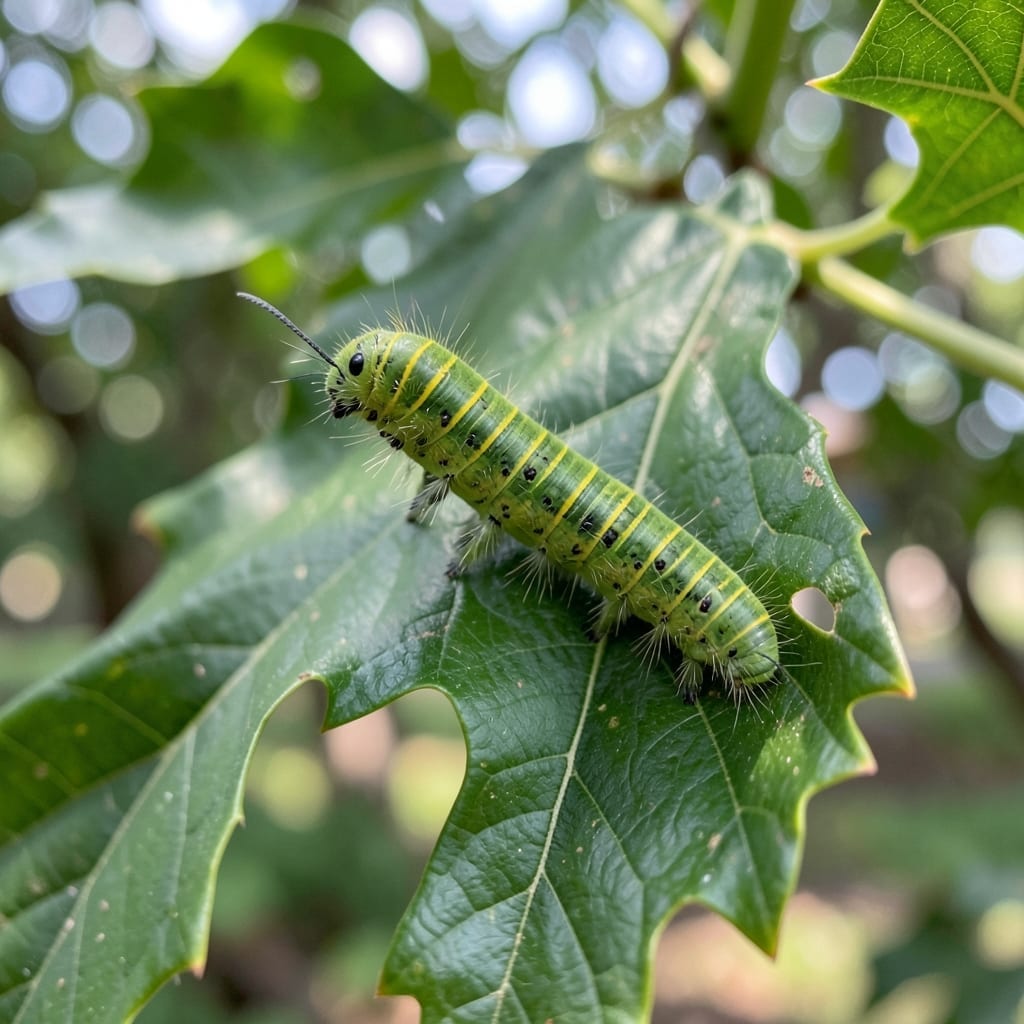
Last summer, my live oaks looked like lace curtains by July. Oak worms in Florida don’t announce themselves—they just chew through leaves until your trees look defoliated overnight.
Here’s the thing—these pests target specific oaks, especially laurel and live varieties, and their damage peaks during summer months. The good news is they rarely kill mature trees, but the aesthetic damage is real.
I’ve tested every method, and the organic approaches work just as well as chemicals—without the environmental guilt. The key is catching them early before they multiply out of control.
We’ll cover the exact signs to watch for and the 3 most effective organic treatments that restore your oaks without harsh chemicals.
Oak worms, particularly species like the Orgyia or Anisota caterpillars, thrive in Florida due to a combination of environmental and biological factors. Understanding these causes helps gardeners take targeted action.
Florida’s abundant live oak (Quercus virginiana) and other oak species provide the perfect food source for these pests. Oak worms are highly specialized, often feeding exclusively on oak leaves. The state’s warm climate and year-round oak foliage create a consistent habitat for their life cycle.
Florida’s subtropical climate accelerates the oak worm’s reproductive cycle. Mild winters allow eggs to survive, while hot, humid summers speed up larval development. This leads to multiple generations per year, increasing infestation risks.
Invasive oak worm species often face fewer natural predators in Florida than in their native ranges. Without enough birds, parasitic wasps, or other controls, their populations can explode unchecked.
Urban landscaping and monoculture planting of oaks can create dense, unbalanced ecosystems. Limited tree diversity reduces natural pest resistance, while excessive irrigation and fertilization may unintentionally boost caterpillar survival.
Dealing with oak worms in your Florida garden can be frustrating, but these practical solutions will help you reclaim your oaks without harsh chemicals. Address the issue head-on with targeted fixes and prevention tips to keep your trees thriving.
For small infestations, the simplest method is manual removal. Wear gloves and pluck worms off leaves in the early morning or late evening when they’re less active. Drop them into a bucket of soapy water to ensure they don’t return. Repeat daily until the population dwindles.
Neem oil disrupts the worms’ life cycle and repels adults from laying eggs. Mix 2 tablespoons of neem oil with 1 gallon of water and a teaspoon of dish soap (as an emulsifier). Spray thoroughly on both sides of leaves, focusing on new growth where worms feed. Reapply every 5–7 days or after rain.
This natural bacterial spray targets caterpillars (including oak worms) without harming beneficial insects. Apply Bt in the early stages of infestation for best results. Follow package instructions for dilution rates, and spray in the cool hours of the day to avoid harming bees.
Pro tip 💡: Avoid broad-spectrum pesticides—they can kill pollinators and disrupt the ecosystem. Stick to organic methods for a safer, sustainable solution.
Oak worm eggs are tiny, often yellow or white, and laid in clusters of 20-50 on leaf undersides. They’re barely visible to the naked eye—use a magnifying glass for confirmation.
In severe cases, oak worms can strip a tree of leaves in 2-3 weeks. Young trees are most vulnerable, while mature oaks usually recover. Act fast at the first signs of damage.
No, oak worms are harmless to humans and pets. They don’t bite or sting, and their hairs aren’t irritating like some caterpillars. Still, avoid handling them directly.
Apply treatments in early summer when worms are small and most vulnerable. Evening applications work best to avoid harming beneficial insects like bees.