
Beautiful Plants For Your Interior
Beautiful Plants For Your Interior
I’ll be real with you: snake plants are tough, but even they meet their match with spider mites and mealybugs. After losing two mature plants to infestations, I discovered neem oil—the all-natural solution that protects leaves and actually improves their shine. No harsh chemicals, just plant-based defense that works. The process is simpler than you’d […]
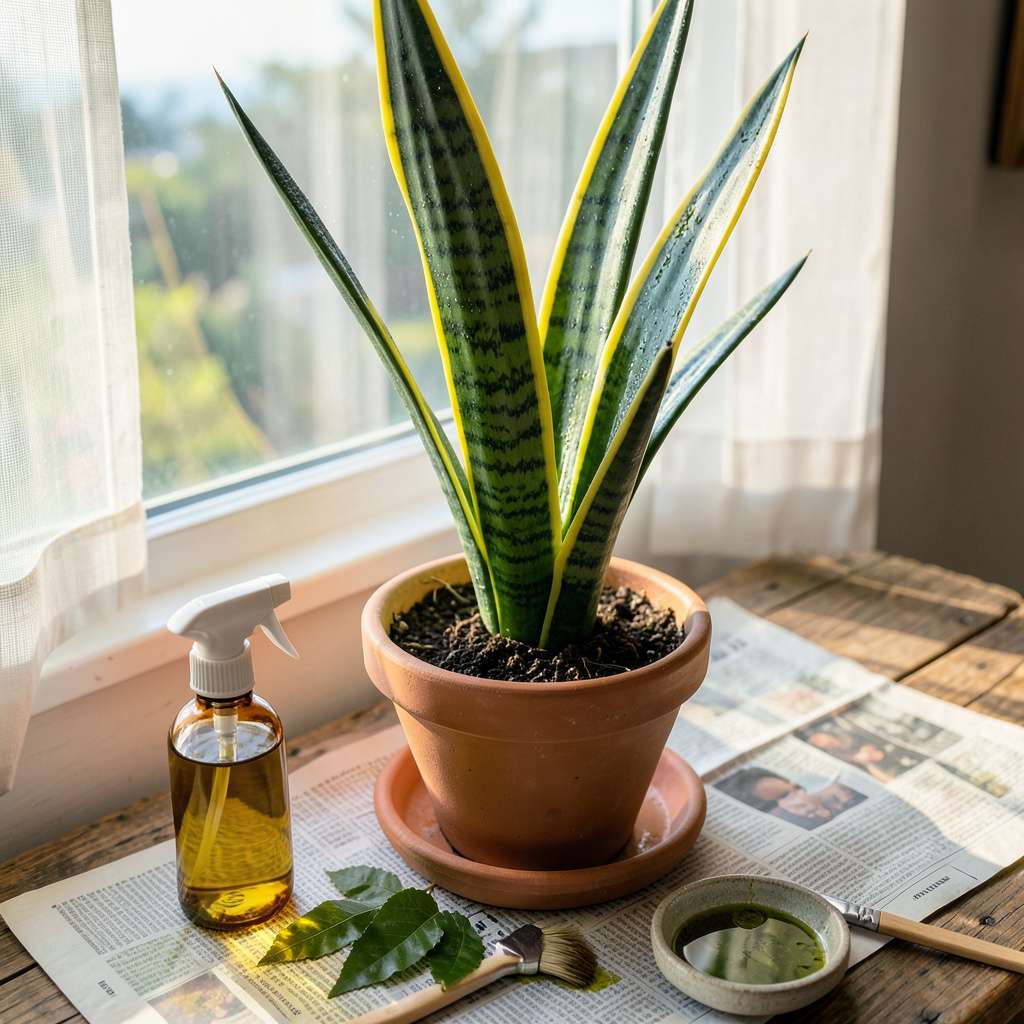
I’ll be real with you: snake plants are tough, but even they meet their match with spider mites and mealybugs. After losing two mature plants to infestations, I discovered neem oil—the all-natural solution that protects leaves and actually improves their shine. No harsh chemicals, just plant-based defense that works.
The process is simpler than you’d think. A basic spray bottle, some diluted neem oil, and 10 minutes every few weeks keeps pests away while giving leaves that deep green glow. I’ve used this method on everything from tiny desk plants to 5-foot-tall floor specimens with equal success. The key is consistency—not just when you see bugs.
What surprised me most? How the plants respond. New growth comes in stronger, existing leaves stay cleaner, and that signature snake plant resilience gets even tougher. Within 2-3 applications, you’ll notice fewer brown tips and more vibrant color—proof that prevention beats treatment every time.
Works for all snake plant varieties, from compact ‘Futura Superba’ to towering ‘Moonshine’. The same technique that saved my collection can protect yours—here’s exactly how to do it right.
📚 In This Guide
This method ensures pest-free foliage and that signature glossy finish without harming your plant.
Begin by moving your snake plant to a well-ventilated area, ideally outdoors or near an open window. Direct sunlight during application can cause leaf burn, so choose a time when the plant will remain in bright, indirect light for the next 24 hours. I always lay down newspaper or a drop cloth to protect surfaces from potential oil drips.
Inspect each leaf thoroughly, front and back, for signs of pests like mealybugs or spider mites. Pay special attention to the leaf axils where the base meets the stem—this is where infestations often begin. Gently wipe away any visible dust or debris with a dry microfiber cloth, as this can interfere with the oil’s effectiveness.
Combine 1 teaspoon of cold-pressed neem oil with 1/2 teaspoon of mild liquid soap (I use Castile) in 1 quart of lukewarm water. The soap acts as an emulsifier, helping the oil disperse evenly in water. Shake vigorously in a spray bottle until the mixture appears uniformly cloudy—this indicates proper emulsification.
Test the solution on a single leaf first, applying a small amount to the underside. Wait 24 hours to check for any adverse reactions like yellowing or spotting. Snake plants are generally tolerant, but this precaution prevents potential phytotoxicity, especially with sensitive varieties like ‘Moonshine’ or variegated types.
Spray the solution lightly but thoroughly, covering both the upper and lower leaf surfaces until they glisten slightly. Avoid saturating the soil—excess oil can clog root pores and impede water absorption. I use a fine mist setting to ensure even coverage without runoff. For large plants, work in sections to prevent the solution from drying before you finish.
Focus on the leaf undersides where pests typically hide. The neem oil works by suffocating insects and disrupting their life cycles, so complete coverage is critical. After application, let the plant sit undisturbed for 4-6 hours before returning it to its usual location. This allows the oil to penetrate pest exoskeletons effectively.
Wipe away any excess oil residue after 24 hours using a clean, damp cloth. This prevents dust accumulation and maintains the plant’s natural sheen. I’ve found that treating snake plants every 4-6 weeks prevents reinfestation while avoiding oil buildup that can clog stomata over time.
Observe your plant closely for the next week. Healthy leaves will maintain their upright posture and deep green color, while stressed plants may show curling or yellowing edges. If you notice new pest activity, repeat the treatment immediately—neem oil is most effective when applied at the first sign of infestation rather than as a last resort.
After years of treating houseplants with neem oil, I’ve learned these critical details that make all the difference in effectiveness and plant health.
Application Technique: When spraying in Step 3, use a fine mist setting and hold the bottle 8-10 inches from the plant. This creates an even, light coating without runoff. I’ve found that working in small sections—especially for larger snake plants—prevents the solution from drying before you finish. Pay extra attention to leaf undersides where pests like spider mites and mealybugs hide.
Environmental Considerations: The 24-hour indirect light requirement in Step 1 isn’t just about preventing sunburn—it’s crucial for the oil to work properly. Direct sunlight can cause the oil to heat up and potentially damage leaves. I always apply treatments in early morning when temperatures are stable and humidity is higher, which helps the solution adhere better to leaf surfaces.
Solution Preparation: For the mixture in Step 2, use lukewarm water (about 70-80°F) rather than cold. This helps the neem oil emulsify more completely with the soap. I shake my spray bottle vigorously for at least 30 seconds until the mixture turns uniformly cloudy—this ensures even distribution when applied. Always test on one leaf first; I’ve seen sensitive varieties like ‘Moonshine’ react poorly to undiluted solutions.
Post-Treatment Care: During the 4-6 hour absorption period in Step 3, keep the plant in a stable environment without drafts. After the 24-hour mark when you wipe excess oil in Step 4, use a microfiber cloth dampened with plain water—this removes residue without stripping the protective coating you want to remain. Between treatments every 4-6 weeks, I wipe leaves with a damp cloth to remove dust that could interfere with future applications.
Apply neem oil every 4-6 weeks for pest prevention or every 2 weeks if treating an active infestation. Always dilute it (1 tsp oil + 1 tsp mild soap per quart of water) and spray in the early morning or late evening to avoid leaf burn. Overuse can clog pores—stick to a schedule!
Hold off! Yellow leaves often signal overwatering or stress—not pests. Neem oil won’t fix root rot and may worsen stress. First, check soil moisture and trim damaged leaves. Only apply neem if you spot pests after resolving the underlying issue.
For pests, try insecticidal soap (1 tbsp castile soap + 1 quart water) or rubbing alcohol (dab on bugs with a cotton swab). For fungal issues, a baking soda spray (1 tsp baking soda + 1 quart water) works. Always test on a small leaf first!
Stickiness usually means undiluted oil or soap residue. Wipe leaves with a damp cloth and reapply a properly mixed solution (follow the 1:1:1 ratio—oil:soap:water). Avoid spraying in high humidity, which slows drying. Pro tip: Add a drop of dish soap to help emulsify!
No! Neem oil can cause sunburn on leaves if applied in direct sunlight. Always treat plants in low light (early morning/evening) and keep them shaded for 24–48 hours post-application. Snake plants thrive in indirect light—use that to your advantage!
Neem oil is a game-changer for keeping your snake plant thriving—naturally repelling pests while adding a healthy glow to its leaves! 🌿 With just a few simple steps, you can protect your plant without harsh chemicals and even boost its resilience over time.
Ready to give it a try? Start with a small test patch on your snake plant’s leaves, then apply a full treatment if all looks good. Your lush, pest-free plant will thank you! 😊
