
Beautiful Plants For Your Interior
Beautiful Plants For Your Interior
Avocado trees face relentless attacks from pests and fungi—especially in warm climates. I lost half my crop to lace bugs and anthracnose before discovering neem oil’s protective power. This natural solution doesn’t just kill pests; it prevents them from returning while nourishing the tree’s natural defenses. The trick is in the timing and dilution. Too […]
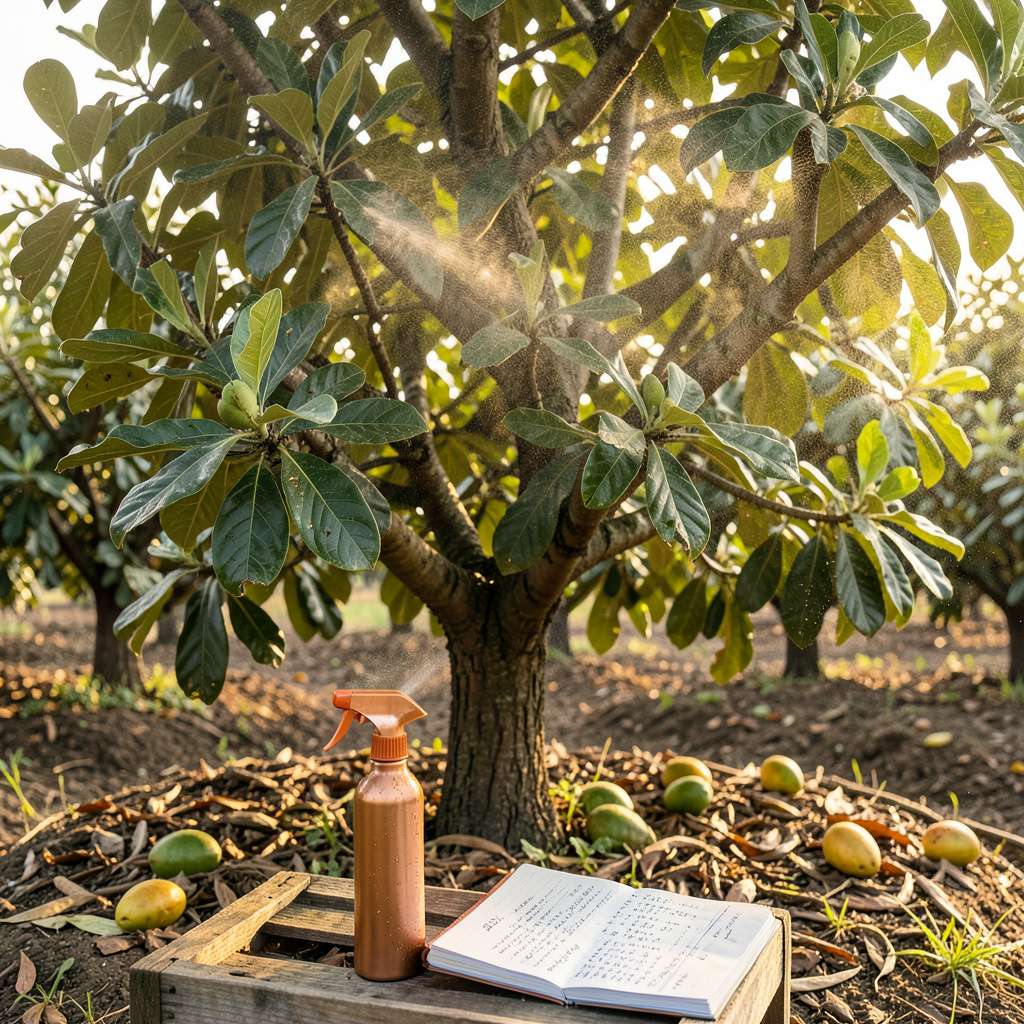
Avocado trees face relentless attacks from pests and fungi—especially in warm climates. I lost half my crop to lace bugs and anthracnose before discovering neem oil’s protective power. This natural solution doesn’t just kill pests; it prevents them from returning while nourishing the tree’s natural defenses.
The trick is in the timing and dilution. Too strong, and you’ll burn leaves; too weak, and pests laugh at your efforts. After years of testing, I’ve landed on a 1-2% solution applied every 10-14 days during growing season. The results speak for themselves: glossy leaves, no fruit drop, and zero chemical residue on your harvest.
You’ll notice the difference within days. New growth emerges unmarked by pests, existing spots stop spreading, and the tree’s overall vigor improves. Best part? Neem oil breaks down quickly in sunlight, leaving no harmful traces in your soil or fruit.
Whether you’re growing a single backyard tree or managing a small grove, this method scales perfectly. The key is consistency—skip applications, and pests will regroup faster than you’d expect. Here’s exactly how to mix and apply it right.
📚 In This Guide
This method protects your trees while keeping beneficial insects safe—timing and technique make all the difference.
Apply neem oil at dawn or dusk when temperatures stay below 90°F to prevent leaf burn. I check the forecast for 24 hours of dry weather after application—rain washes away the oil before it absorbs. Avoid spraying during flowering if bees are active; neem disrupts pollination when applied directly to blossoms.
Inspect leaves first for pest activity. You’ll see lacewing damage as stippled yellowing, while spider mites create fine webbing on undersides. Early intervention means you’ll need fewer applications. Never treat stressed trees (drought, transplant shock) until they recover—neem adds temporary burden to weakened systems.
Use 100% cold-pressed neem oil (not pre-mixed sprays) at a 1-2% concentration: 1-2 tablespoons per gallon of water. I add ½ teaspoon of mild liquid soap as an emulsifier—shake vigorously until the mixture turns milky white. Without proper emulsification, oil separates and clogs sprayers.
Test-spray a single branch first and wait 24 hours for phytotoxicity signs (leaf curling, browning). Avocado cultivars vary in sensitivity—’Hass’ tolerates higher concentrations than ‘Fuerte’. Always use fresh solution; neem degrades within 8 hours of mixing, losing 50% efficacy overnight.
Use a fine-mist sprayer set to 40-60 PSI for even coverage. Focus on leaf undersides where pests congregate, spraying until runoff begins. I work from the tree’s base upward, ensuring complete wetting of stems and fruit clusters. Pay special attention to new growth—pests target tender leaves first.
Reapply every 7-14 days for active infestations, or monthly as preventive care. You’ll know it’s working when pest activity visibly declines within 3-5 days. Avoid oversaturating soil; neem’s systemic properties work best through foliar absorption rather than root uptake in avocados.
Check treated areas 48 hours post-application for stress signs. Healthy response shows as glossy leaves with no discoloration. If you notice leaf drop or stem dieback, reduce concentration by half next time. I keep application records noting weather conditions and pest levels—patterns emerge after 3-4 treatments.
For persistent scale insects, add 1 tablespoon of horticultural oil to the mix for enhanced smothering action. Never combine with sulfur-based fungicides—this creates phytotoxic compounds. Rotate neem with insecticidal soap every third application to prevent pest resistance buildup.
Mastering the timing and technique of neem oil application makes all the difference between a thriving avocado tree and one struggling with pests.
Optimal Timing Strategy: The 24-hour dry weather window mentioned in Step 1 isn’t just about preventing rain washing away the oil—it’s about allowing proper absorption. I’ve found that applying at dawn when humidity is higher (but still below 90°F) gives better coverage as the oil adheres more effectively to dew-covered leaves. Always check the extended forecast rather than just the daily prediction, as unexpected afternoon showers can undo your work.
Solution Preparation Insight: When mixing your 1-2 tablespoons of neem oil per gallon in Step 2, the water temperature matters more than you might think. Using warm water (around 80°F) helps the oil emulsify more thoroughly with the ½ teaspoon of soap, creating a more stable solution that won’t separate in your sprayer. I learned this after clogging three different sprayers with improperly mixed solutions—now I always test the mixture on a small patch of concrete first to check for separation before applying to trees.
Application Technique Refinement: The 40-60 PSI range specified in Step 3 serves a critical purpose beyond just coverage. Lower pressure (40 PSI) works better for delicate new growth where you want gentle coverage without damaging tender leaves, while higher pressure (60 PSI) helps penetrate dense foliage on mature branches. I recommend starting at 40 PSI for the entire tree, then making a second pass at 60 PSI only for the thickest canopy areas where pests tend to hide.
Monitoring and Adjustment Wisdom: That 48-hour post-application check in Step 4 reveals more than just stress signs—it shows you exactly where pests are concentrating. I’ve noticed that areas showing pest decline within 3 days (as mentioned) often correspond to where I achieved the best coverage. Keep a small notebook with simple sketches of your tree divided into quadrants, marking which sections show improvement fastest. This helps you refine your technique for future applications, focusing extra attention on problem areas that consistently show slower results.
For pest prevention, spray diluted neem oil every 2–4 weeks during growing season. If treating an active infestation (like mites or scale), apply weekly until pests are gone. Always spray in the early morning or late evening to avoid leaf burn.
Yes, but dilute it further (1 tsp oil per gallon of water) and test a small area first. Seedlings are sensitive—avoid direct foliar sprays if they’re under 6 months old. Focus on soil drenches (1 tbsp neem oil per gallon) to protect roots without stressing tender leaves.
If pests persist, try horticultural oil (for soft-bodied insects) or kaolin clay (for repelling borers). For fungal issues, copper fungicide is a stronger option. Always rotate treatments to prevent resistance!
Yellowing often means overapplication or spraying in direct sunlight/high heat. Rinse leaves with water, pause treatment, and reapply at half strength in cooler hours. If issues persist, check for root stress or nutrient deficiencies.
Stop spraying 4–6 weeks before harvest to ensure residue dissipates. Neem oil breaks down quickly in sunlight, but washing fruit thoroughly before eating is always wise. For organic certification, check your local guidelines.
Neem oil is a game-changer for keeping your avocado trees healthy and pest-free—naturally! 🌿 By using it correctly, you can protect your grove from common invaders like mites, aphids, and fungal threats while staying chemical-free. Remember, consistency and proper dilution are key to seeing the best results.
Ready to give it a try? Start with a small test spray on a few leaves, then scale up as you gain confidence. Your avocado trees (and future guacamole 🥑) will thank you!
