
Beautiful Plants For Your Interior
Beautiful Plants For Your Interior
That moment when you notice tiny webs on your money tree’s leaves—or worse, those stubborn black spots—is every plant parent’s nightmare. I’ve been there, watching my once-vibrant Pachira aquatica struggle with pests that seemed to appear overnight. Neem oil changed everything, transforming my money tree from a battleground to a thriving, glossy-leaved centerpiece. Here’s the […]
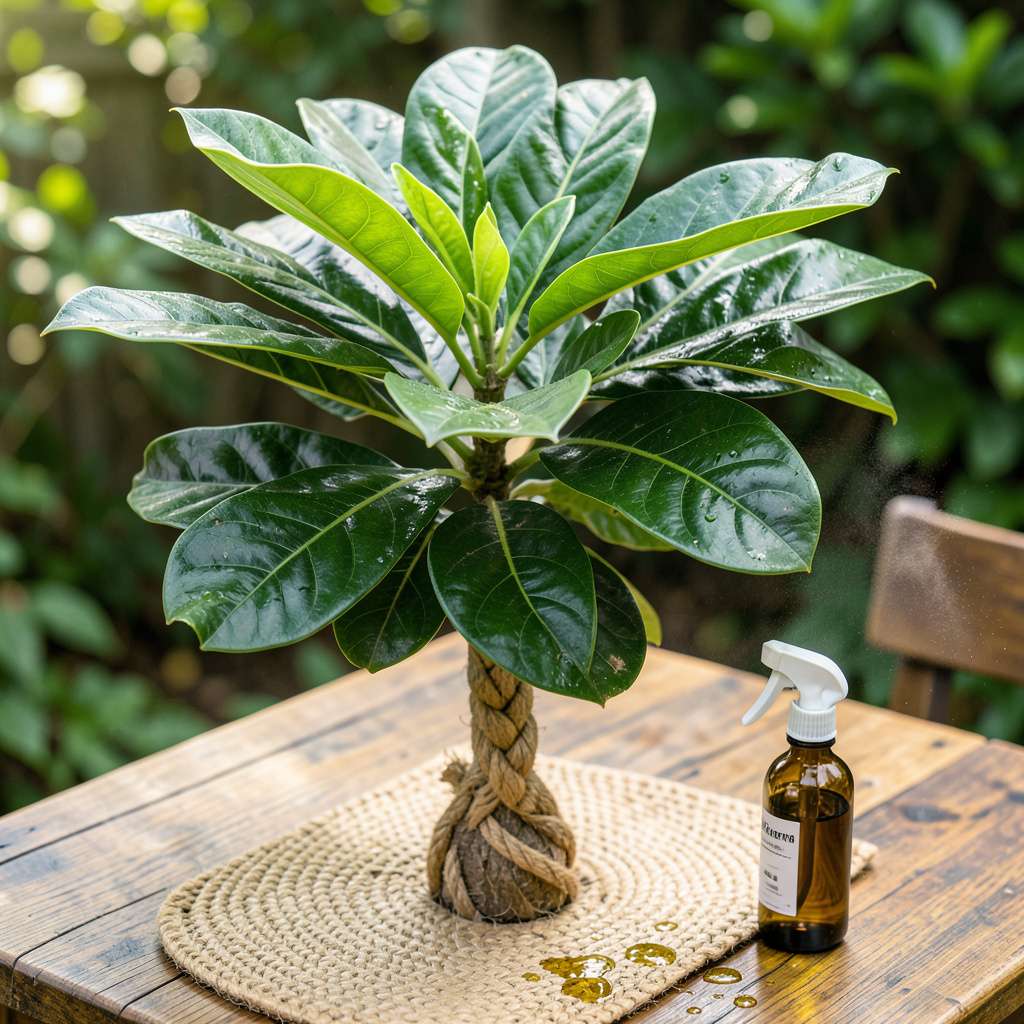
That moment when you notice tiny webs on your money tree’s leaves—or worse, those stubborn black spots—is every plant parent’s nightmare. I’ve been there, watching my once-vibrant Pachira aquatica struggle with pests that seemed to appear overnight. Neem oil changed everything, transforming my money tree from a battleground to a thriving, glossy-leaved centerpiece.
Here’s the thing—neem oil isn’t just another quick fix. It’s a game-changer that works on three levels: it smothers existing pests, disrupts their life cycles, and strengthens your plant’s natural defenses. The first time I applied it properly (after three failed attempts with the wrong dilution), I saw results within 48 hours. Spider mites vanished, and new growth emerged cleaner than ever.
What most guides don’t tell you? Timing and technique matter more than the product itself. Apply it at dusk to avoid leaf burn, focus on leaf undersides where pests hide, and maintain a consistent schedule—this isn’t a one-and-done solution. My money tree now gets this treatment every 3-4 weeks as preventive care, and it’s never looked healthier.
Whether you’re dealing with an active infestation or just want to keep your money tree in peak condition, this method works for any skill level. The supplies cost less than a fancy coffee, and the results speak for themselves: darker green leaves, sturdier stems, and a plant that actually grows instead of just surviving.
📚 In This Guide
This method protects your money tree while encouraging vibrant growth—no guesswork required.
Apply neem oil during the money tree’s active growing season, typically spring through early fall. Avoid treatment if the plant shows stress signs like yellowing leaves or drooping stems. I check my plants in the morning when stomata are open and absorption is highest.
Never apply neem oil under direct sunlight or when temperatures exceed 90°F. The combination of oil and heat causes leaf burn. I always choose overcast days or apply in the evening when the plant can process the treatment without stress.
Use 100% cold-pressed neem oil and mix it with a mild liquid soap as an emulsifier. My standard ratio is 1 teaspoon neem oil and ½ teaspoon mild soap per 1 quart of warm water. Shake vigorously in a spray bottle until the mixture becomes uniformly cloudy.
Test the solution on a single leaf first and wait 24 hours for any adverse reaction. Money trees can be sensitive to oil concentrations, so I always do this spot test. If the test leaf shows no browning or spotting after a day, proceed with full application.
Spray the neem oil mixture evenly over all leaf surfaces, including undersides where pests often hide. I use a fine mist setting to ensure complete coverage without dripping. Pay special attention to leaf axils and stem junctions—these are prime hiding spots for spider mites and scale insects.
Coat the soil surface lightly as well, since some pests like fungus gnats breed in the medium. Avoid saturating the soil to prevent root issues. I typically apply until the leaves glisten slightly but don’t have visible droplets running off.
Check your money tree daily for 3-5 days after application. You’re looking for pest activity reduction and any signs of plant stress. I keep a small notebook to track observations—it helps spot patterns over multiple treatments.
For active infestations, reapply every 7-10 days until pests are completely gone. As a preventive measure, I treat my money tree with neem oil once monthly during growing season. Always wipe leaves with a damp cloth between applications to remove dust and oil residue.
After application, keep your money tree in bright, indirect light for at least 48 hours. This allows the neem oil to work without sunlight breaking it down prematurely. I notice my plants perk up significantly when given this recovery period.
Withhold fertilization for 2 weeks post-treatment to avoid overloading the plant. Neem oil has mild systemic effects, and combining it with fertilizer can stress the roots. Instead, I focus on maintaining consistent moisture and humidity levels during this time.
After years of treating houseplants with neem oil, here’s what I’ve learned about getting it right every time.
Timing Precision: The 24-hour spot test in Step 2 isn’t optional—it’s your insurance policy. I learned this after damaging several leaves by skipping this step. Money trees react differently to neem oil concentrations, and that one-day wait reveals potential sensitivity before you commit to full treatment. Pay special attention to leaf edges during this period, as they often show stress first.
Application Technique: In Step 3, the fine mist setting makes all the difference. I use a dedicated spray bottle with an adjustable nozzle to achieve that perfect glisten without runoff. The undersides of leaves require special attention—pests like spider mites lay eggs there that you won’t see. Rotate the plant as you spray to ensure complete coverage from all angles.
Environmental Control: The 48-hour recovery period in Step 5 is when most people make mistakes. Bright, indirect light means no direct sun exposure—even morning sun through a window can degrade the neem oil’s effectiveness. I position treated plants at least 3 feet away from windows during this critical period. This also prevents the temperature from exceeding that 90°F threshold that causes leaf burn.
Long-Term Strategy: The 7-10 day reapplication window for active infestations requires discipline. I mark my calendar immediately after the first application and set phone reminders. Between treatments, wiping leaves with a damp cloth removes both dust and residual oil, allowing the plant to breathe while maintaining pest protection. This simple step dramatically improves treatment efficacy over multiple applications.
Apply neem oil every 7–14 days for pest prevention or weekly if treating an active infestation (like spider mites or mealybugs). Always dilute it (1–2 tsp per quart of water) and spray in the early morning/evening to avoid leaf burn. Reduce frequency in winter when growth slows.
Yellow leaves often signal overwatering or nutrient issues—not pests. Hold off on neem oil until you diagnose the cause (check soil moisture first!). If pests are confirmed, test-spray a few leaves and monitor for 24 hours. Neem won’t fix yellowing but can prevent further stress from bugs.
If pests persist, try insecticidal soap (for soft-bodied bugs) or horticultural oil (for scale). For fungal issues, mix 1 tsp baking soda + 1 quart water as a temporary fix. Always isolate your money tree to prevent spread and reapply treatments every 5–7 days until clear.
Stickiness usually means undiluted oil or residue. Wipe leaves with a damp cloth after 4–6 hours to remove excess. Next time, add a drop of mild dish soap (as an emulsifier) to your neem mix. Avoid spraying in high humidity—it slows evaporation and worsens stickiness.
Neem oil is low-toxicity but can irritate skin/stomach if ingested. Keep pets/kids away until spray dries (1–2 hours). Store neem oil securely, and opt for cold-pressed, 100% pure neem (no additives). For extra caution, use neem-soaked cotton balls tucked in soil instead of spraying.
Neem oil is your money tree’s best friend—keeping pests at bay while promoting vibrant, healthy growth! 🌿 With just a few simple applications, you can protect your plant from common issues and watch it thrive for years to come.
Ready to give it a try? Start with a small test spray today and observe how your money tree responds. For even better results, pair neem oil with consistent care, and you’ll have a lush, pest-free beauty in no time! 💚
