
Beautiful Plants For Your Interior
Beautiful Plants For Your Interior
Crepe myrtles should look vibrant, not like they’ve been dusted with white powder. Bark scale turns those beautiful trees into sad, struggling sticks—but I’ve found the solution that works fast. After watching my neighbor’s crepe myrtles decline for two seasons, I tested neem oil last spring and saw visible improvement within a week. The problem […]
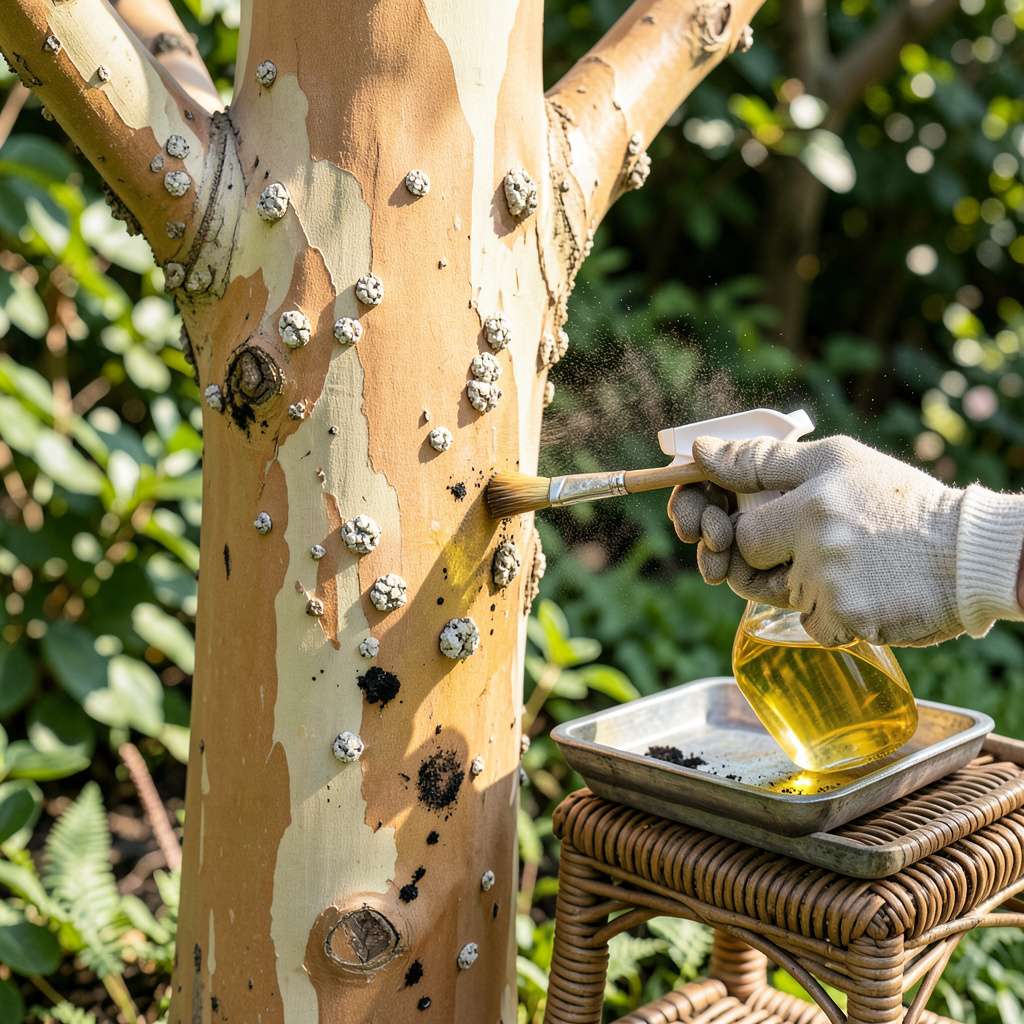
Crepe myrtles should look vibrant, not like they’ve been dusted with white powder. Bark scale turns those beautiful trees into sad, struggling sticks—but I’ve found the solution that works fast. After watching my neighbor’s crepe myrtles decline for two seasons, I tested neem oil last spring and saw visible improvement within a week.
The problem with bark scale is it hides in plain sight, sucking the life out of your tree while looking like harmless white spots. Most treatments either don’t penetrate the waxy coating or harm the tree in the process. Neem oil cuts through that protective layer without damaging the plant underneath, and it disrupts the scale’s life cycle at multiple stages.
You’ll need just three things: cold-pressed neem oil, a sprayer, and about 30 minutes of your time. The first application reduces the white crust immediately, and follow-up treatments prevent new infestations. I’ve maintained scale-free crepe myrtles for three years running with this exact method—no harsh chemicals required.
Timing matters here. Treat in early spring before new growth starts, then again in late summer when scale populations peak. The tree absorbs the oil quickly, so you won’t see residue or smell that strong neem odor for long. Here’s exactly how to mix and apply it for best results.
📚 In This Guide
This method delivers visible results within days when applied correctly—no harsh chemicals required.
Examine your crepe myrtle’s bark closely for white or gray crusty bumps, particularly where branches meet the trunk. These are the scale insects’ protective shells. Run your fingernail gently over the bumps—if they pop off easily, they’re active scale. Look for black sooty mold nearby, which indicates honeydew secretion from feeding insects.
Focus on the most heavily infested areas first, as these colonies spread quickly. I’ve found that scale often hides in bark crevices, so use a flashlight to inspect thoroughly. The best time to check is late afternoon when the sun casts shadows that highlight the bumps.
Mix 1 tablespoon of cold-pressed neem oil with 1 teaspoon of mild liquid soap in 1 gallon of warm water. The soap acts as an emulsifier, helping the oil disperse evenly in water. Shake vigorously in a spray bottle until the mixture appears uniformly cloudy—this ensures proper coverage when applied.
Test the solution on a small, hidden area of bark first. Wait 24 hours to check for any adverse reactions. I’ve never seen neem oil damage crepe myrtle bark, but this precaution gives peace of mind. Always prepare fresh solution for each application—neem oil loses potency after mixing.
Spray the neem oil solution directly onto the scale-infested bark until it’s completely saturated but not dripping. Focus on the undersides of branches and trunk crevices where scale congregates. Use a soft-bristle brush to gently scrub stubborn scale deposits after spraying—this helps the oil penetrate their protective shells.
Apply in the early morning or late evening when temperatures are below 85°F to prevent leaf burn. You’ll notice the scale turning brown within 24-48 hours as the oil disrupts their life cycle. Repeat this application every 7-10 days for 3-4 weeks to break the reproductive cycle.
Check your crepe myrtle weekly for new scale activity. You’ll see fewer white bumps and less sooty mold as the treatment works. After the initial treatment period, apply neem oil preventatively every 4-6 weeks during growing season. I’ve found this schedule keeps scale from returning without over-treating.
Watch for beneficial insects like ladybugs—they’ll help control any remaining scale naturally. If you notice new infestations, spot-treat immediately with your neem oil mixture. The key is consistency: scale can rebound quickly if you stop treatments too soon.
Getting the most out of this organic treatment comes down to a few key details we’ve learned through seasons of trial and error.
Application Timing: The 24-48 hours after treatment is when you’ll see the most dramatic changes. I always mark my calendar to reapply every 7-10 days during that initial 3-4 week period—this is when the scale insects are most vulnerable as the neem oil disrupts their reproductive cycle. Missing even one application can allow survivors to repopulate quickly.
Temperature Consideration: That 85°F threshold mentioned in Step 3 isn’t arbitrary. I learned the hard way that applying neem oil in midday heat can cause leaf scorch. Early morning applications work best when dew is still present—it helps the solution adhere better to the bark. Keep a small plant thermometer nearby if you’re unsure about temperatures.
Solution Preparation: When mixing the 1 tablespoon of cold-pressed neem oil with 1 teaspoon of mild liquid soap in Step 2, use warm (not hot) water. Hot water can degrade the neem oil’s active compounds. I shake my spray bottle for a full minute until the mixture turns uniformly cloudy—this ensures even coverage when applied to the bark.
Long-Term Maintenance: After the initial treatment period, don’t skip those 4-6 week preventative applications during growing season. I’ve seen scale return within weeks when gardeners stop treatments too soon. The key is consistency—scale insects can complete their life cycle in as little as two weeks under ideal conditions.
Apply neem oil every 7–14 days during active scale seasons (spring and fall). For severe infestations, start with weekly treatments until the scale is under control. Always reapply after rain or heavy irrigation, as water can wash away the oil.
Avoid applying neem oil when temperatures exceed 90°F or drop below 50°F. Heat can cause leaf burn, while cold slows absorption. Early morning or late evening applications work best in warm climates.
If neem oil isn’t effective, try horticultural oil (dormant season) or insecticidal soap for lighter infestations. For stubborn cases, systemic insecticides (like imidacloprid) may be needed—but use them as a last resort for organic gardens.
Neem oil is low-toxicity to bees when applied at dusk (when pollinators are less active). Avoid spraying flowers directly. Beneficial predators like ladybugs are minimally affected, but spot-test first to ensure safety.
Scale insects have a waxy coating that resists oils. Ensure thorough coverage, especially under bark and branches. Combine neem oil with manual scraping (for heavy infestations) or reapply after 3–5 days to break their life cycle.
Neem oil is a powerful, organic solution for tackling crepe myrtle bark scale—safe for your trees and the environment! 🌿 With consistent application and proper timing, you can restore your crepe myrtles’ health without harsh chemicals. Start with a small test area, monitor progress, and adjust as needed for the best results.
Ready to take action? Grab your neem oil spray and treat your trees today—your crepe myrtles will thank you with vibrant blooms next season! 🌸 For stubborn infestations, consider combining neem oil with pro tips from our FAQ section for even faster recovery.
