
Beautiful Plants For Your Interior
Beautiful Plants For Your Interior
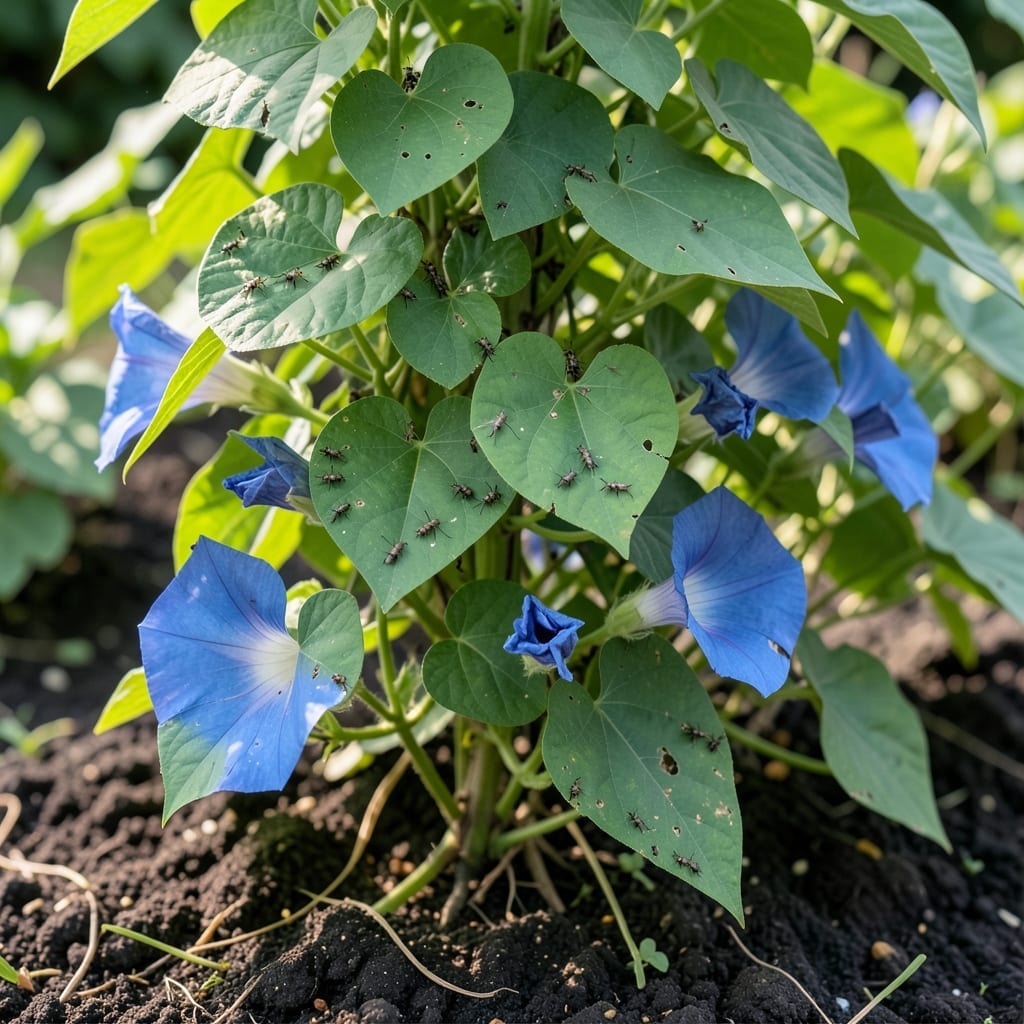
Spotted leaves on your morning glories mean trouble’s already moved in. I’ve lost entire trellises to aphids and spider mites before learning to catch them early—before they multiply into a full-scale invasion.
The first sign is usually sticky residue or tiny webs on the undersides of leaves. These pests thrive in dry conditions, so a simple daily leaf check during watering can save your vines from collapse.
Natural fixes work better than you’d expect. A blast of water dislodges aphids, while neem oil smothers mites without harming pollinators. The key is acting at the first hint of damage.
Consistency beats intensity here. A weekly inspection and immediate treatment keeps your morning glories blooming all season long.
Morning glories are a magnet for pests due to a mix of environmental, biological, and cultural factors. Understanding the root causes helps you address them proactively. Here’s why it happens:
Morning glories thrive in rich, well-fertilized soil, but excessive nitrogen can lead to tender, leafy growth that attracts pests like aphids and spider mites. These insects target soft, new foliage, which is easier to pierce and feed on. Overwatering or over-fertilizing creates an ideal breeding ground for these invaders.
Dense plantings or crowded vines restrict airflow, creating a humid microenvironment that encourages fungal diseases and pests. Whiteflies and thrips thrive in stagnant, moist conditions, while powdery mildew (often a pest magnet) spreads rapidly. Proper spacing and pruning can mitigate this risk.
Monoculture gardens (those with only morning glories) lack natural predators like ladybugs or lacewings, which keep pest populations in check. Without these beneficial insects, aphids, caterpillars, and beetles multiply unchecked. Companion planting with pest-repelling species (e.g., marigolds or basil) can restore balance.
Stressed or weakened morning glories—due to drought, nutrient deficiencies, or root damage—are more susceptible to pests. Japanese beetles and leaf miners target already struggling plants. Ensuring consistent watering, balanced soil, and proper sunlight strengthens their natural defenses.
Keeping your morning glories thriving means tackling pests head-on. Here’s how to address common invaders and prevent future infestations:
Spray a strong stream of water from a hose to dislodge aphids from leaves and stems. For stubborn cases, apply neem oil or insecticidal soap directly to the affected areas. Prevention tip: 💡 Encourage natural predators like ladybugs by planting companion flowers such as marigolds.
These tiny pests thrive in dry conditions. Mist your plants daily or place a tray of water near the base to boost humidity. For active infestations, wipe leaves with a damp cloth and apply neem oil. Prevention tip: 🌡️ Keep plants well-watered and avoid over-fertilizing, which can attract mites.
Create a copper tape barrier around pots or garden beds—these pests dislike the metal’s reaction. Alternatively, set out beer traps (shallow dishes filled with beer) to lure and drown them. Prevention tip: ✨ Remove hiding spots like debris and mulch where slugs and snails love to nest.
Hang yellow sticky traps near your morning glories to catch adult whiteflies. For larvae, spray leaves with a mix of water and mild dish soap. Prevention tip: 🎯 Introduce beneficial insects like parasitic wasps to keep populations in check.
Regularly inspect your plants for early signs of trouble, and act fast to keep your morning glories blooming beautifully!
Inspect leaves daily during watering, especially the undersides where pests hide. Weekly deep checks catch problems early before they spread.
A strong water spray dislodges many pests like aphids. For others, neem oil or insecticidal soap works well without harming pollinators.
Lack of natural predators or poor plant health invites reinfestation. Boost biodiversity with companion plants and maintain consistent care.