
Beautiful Plants For Your Interior
Beautiful Plants For Your Interior
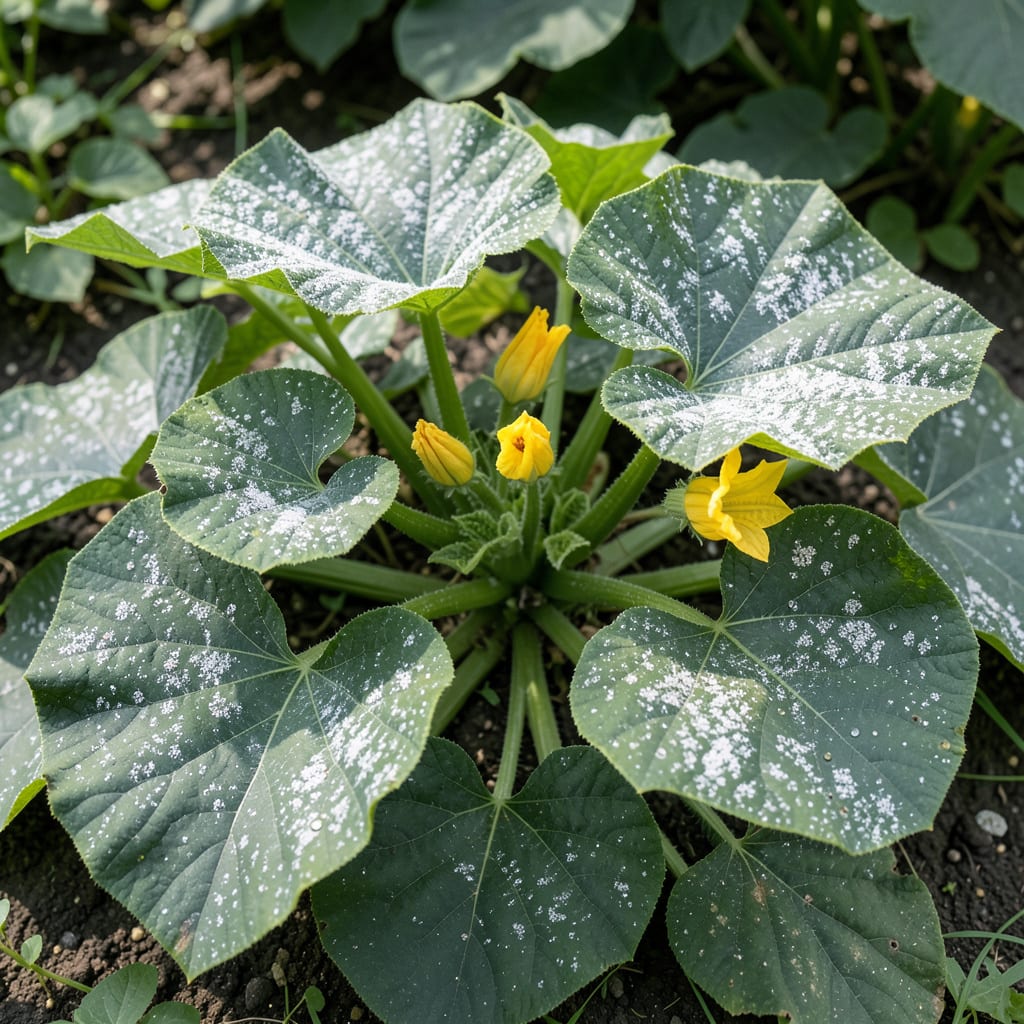
White dust on squash leaves means trouble. I spotted my first powdery mildew outbreak last July—48 hours later it had spread to half the plant.
This fungal enemy thrives in warm, dry conditions with poor air circulation. Left unchecked, it weakens plants, reduces yields, and can kill vines entirely. The good news? Neem oil offers a foolproof organic solution when caught early.
You’ll see results within 3-5 days of treatment, with leaves regaining their healthy green color. Prevention is even simpler: improve airflow, water at soil level, and space plants properly.
Works for zucchini, pumpkins, and all squash varieties. Here’s how to fight back effectively.
Powdery mildew on squash leaves thrives under specific environmental and cultural conditions. Understanding these triggers helps you prevent and manage the issue effectively.
The fungus Podosphaera xanthii, responsible for powdery mildew, flourishes in high humidity (70-90%) combined with stagnant air. Dense plantings or crowded garden beds restrict airflow, creating a microclimate where spores germinate and spread rapidly. Squash plants with overlapping leaves or those grown in shaded areas are particularly vulnerable.
Watering from above wets the foliage, providing the moisture the fungus needs to infect leaves. Unlike other fungal diseases, powdery mildew doesn’t require free water to develop—high humidity alone suffices. However, wet leaves from evening watering or frequent misting accelerate spore production and disease progression.
Some squash varieties, like zucchini and pumpkins, are genetically predisposed to powdery mildew. Additionally, stressed plants—those suffering from nutrient deficiencies (especially nitrogen or potassium) or drought—are more susceptible. Weak plants lack the vigor to resist fungal attacks, making them prime targets.
The fungus overwinters on plant debris and can travel via wind, insects, or garden tools. If neighboring plants (like cucumbers or melons) are infected, spores can easily drift to your squash. Even weeds in the Cucurbitaceae family (e.g., buffalo gourd) can harbor the pathogen, reinfecting your garden season after season.
Powdery mildew can be frustrating, but these targeted fixes will help you regain control and protect your squash plants. Here’s how to tackle each cause head-on:
Trim dense foliage to allow air to flow freely between plants. Space squash plants at least 3–4 feet apart to reduce humidity buildup. If growing in a greenhouse or under cover, use fans to keep air moving. Prevention tip: Prune regularly and avoid overcrowding from the start. 💡
Water at the base of the plant in the early morning so leaves dry quickly. Avoid overhead watering, which wets the foliage and invites spores. Drip irrigation is ideal. Prevention tip: Use a moisture meter to ensure soil isn’t soggy, and mulch to retain even soil moisture. 🌡️
Pull off severely infected leaves and dispose of them in a sealed bag—not the compost. For mild cases, spray leaves with a neem oil solution (1 tbsp neem oil + ½ tsp dish soap + 1 quart water) every 5–7 days. Apply in the evening to avoid leaf burn. Prevention tip: Inspect plants weekly and act at the first sign of white spots. 🎯
Opt for squash varieties bred for mildew resistance, like ‘Powdery Mildew Resistant Butternut’ or ‘Zucchini Elite.’ Rotate crops yearly to prevent soil-borne spores from recurring. Prevention tip: Save seeds from healthy plants to build resilience over time. ✨
Combining these fixes with consistent care will keep your squash thriving and mildew-free!
Under ideal conditions, it can cover a plant in 48-72 hours. Warm days and cool nights accelerate growth. Check leaves daily to catch it early and prevent rapid spread.
Yes, neem oil is organic and safe when used correctly. Always apply in the evening and wait 24-48 hours before harvesting. Rinse produce thoroughly before eating.
No, never compost them. The spores survive composting and can reinfect your garden. Seal leaves in a bag and dispose with household trash to prevent recurrence.
The fungus overwinters in plant debris and soil. Rotate crops yearly and remove all affected plant material in fall to break the cycle.
