
Beautiful Plants For Your Interior
Beautiful Plants For Your Interior
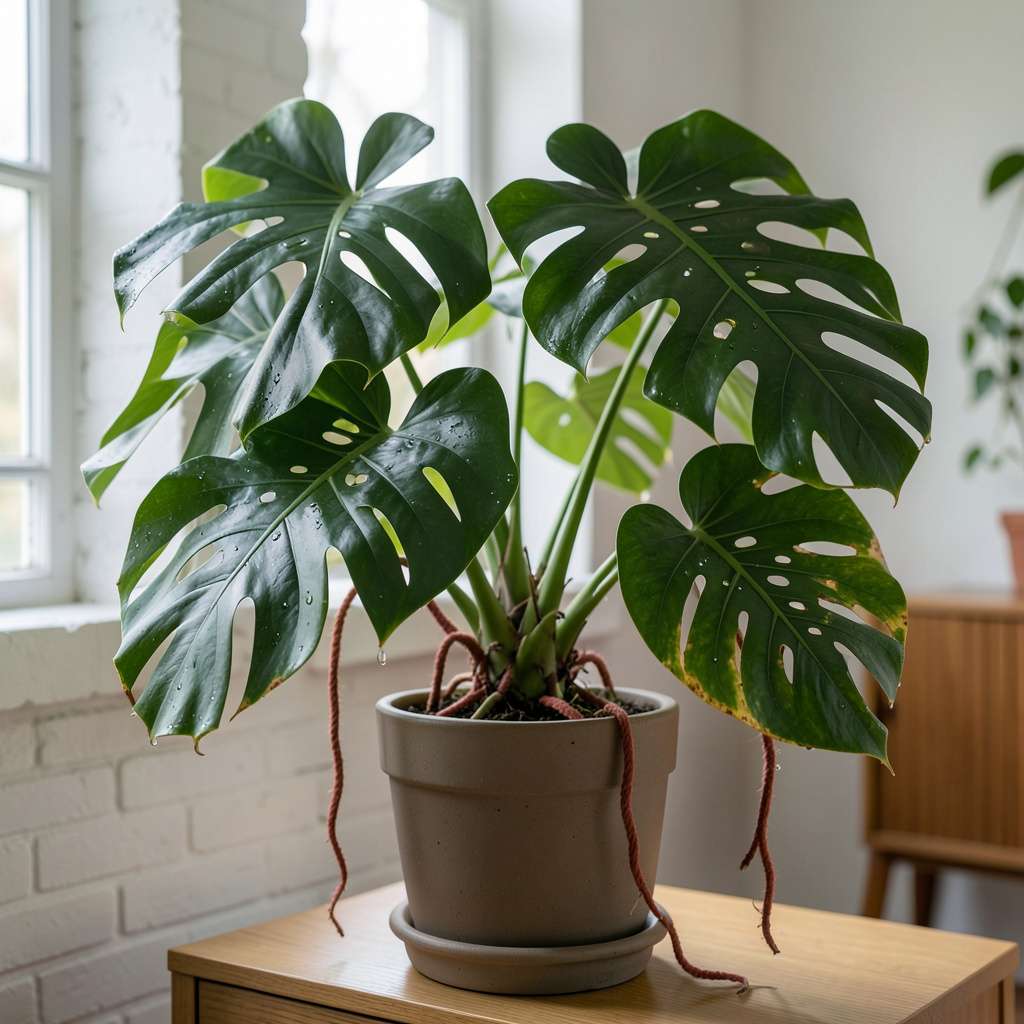
Monstera guttation is the plant’s natural process of releasing excess water through leaf tips, often appearing as droplets. It typically occurs due to high humidity, overwatering, or sudden environmental changes—not a sign of disease.
I’ve noticed this phenomenon most often in my own plants after a thorough watering or when humidity levels spike unexpectedly. 🌿 The process is actually your Monstera’s way of self-regulating—like a pressure valve releasing built-up moisture. What’s fascinating is that this happens through specialized pores called hydathodes, which are different from the stomata plants use for gas exchange. While it might look alarming at first, it’s a completely normal physiological response, especially in tropical plants like Monsteras that thrive in humid environments.
💡 In This Article
This process starts underground with root pressure building up overnight. When your Monstera absorbs more water than it can transpire through its leaves, the excess creates internal pressure in the plant’s vascular system. This pressure forces water upward through the xylem vessels—think of it like a biological plumbing system working against gravity.
The pressure can reach up to 1-2 atmospheres, which is enough to push water droplets out through specialized openings called hydathodes.
The hydathodes are microscopic pores located at the leaf margins, specifically designed for this water-release function. Unlike stomata (which regulate gas exchange), hydathodes have no closing mechanism—they’re always open. When root pressure exceeds what the plant can hold, these pores become exit points for the excess moisture.
You’ll typically notice this happening most dramatically in the early morning hours when transpiration is lowest but root pressure remains high from the previous day’s water uptake.
Environmental conditions act as triggers for this process. I’ve observed my Monsteras guttating most frequently when nighttime temperatures stay above 68°F combined with humidity levels exceeding 60%. The warmer air holds more moisture, while the plant continues absorbing water through its roots. This creates the perfect pressure imbalance.
Even well-drained soil can contribute if you’ve watered thoroughly in the evening—something I learned after seeing droplets form on my Monstera deliciosa leaves just hours after watering.
What’s particularly fascinating is how this process differs from dew formation. While dew condenses on leaf surfaces from atmospheric moisture, guttation droplets come from within the plant itself. You can test this by gently touching a droplet—guttation water will feel slightly sticky due to dissolved minerals and sugars from the plant’s sap.
This internal origin explains why the droplets often appear at the very tips and edges of leaves rather than randomly across the surface like dew would.
The composition of guttation fluid reveals why it’s not just plain water. Studies show it contains 0.1-0.5% organic and inorganic solutes including potassium, calcium, and even small amounts of sugars. This nutritional content is why some insects are attracted to guttation droplets.
In my garden journal, I’ve noted that aphids and certain beetles seem to gather more on leaves showing active guttation—nature’s way of recycling nutrients through the ecosystem.
This biological mechanism serves an important purpose beyond just water release. By pushing out excess moisture, the plant prevents root cells from becoming waterlogged and maintains proper osmotic balance. The process also helps flush out accumulated minerals and metabolic byproducts from the leaf tissues.
I’ve found that plants exhibiting regular guttation often show more vibrant growth in the following weeks, suggesting this natural “cleansing” process contributes to overall plant health when it occurs in moderation.
Not necessarily! Guttation is your plant’s natural way of releasing excess moisture. It often happens after thorough watering or when humidity spikes, but doesn’t automatically mean you’re overwatering. Check the soil—if the top 1-2 inches feel dry before your next watering, you’re likely fine.
This timing is completely normal! At night, your Monstera absorbs water but can’t release much through transpiration. By morning, root pressure builds up and forces out excess moisture through leaf tips. It’s like your plant’s morning coffee—just water instead of caffeine!
It’s not required, but gently wiping droplets can prevent mineral buildup. Use a soft, damp cloth to avoid damaging leaves. The droplets contain small amounts of sugars and minerals that might leave residue when they dry. Think of it like cleaning your plant’s windows!
Yes, the sugary residue in guttation droplets can attract insects like aphids or fungus gnats. To prevent this, maintain good air circulation around your plant and wipe leaves occasionally. If you notice pests, treat with neem oil rather than reducing water—your plant still needs proper hydration.
In moderation, guttation is actually a good sign! It shows your plant is actively moving water and nutrients. However, excessive dripping combined with yellowing leaves might indicate overwatering. Healthy guttation occurs occasionally, not constantly throughout the day.
