
Beautiful Plants For Your Interior
Beautiful Plants For Your Interior
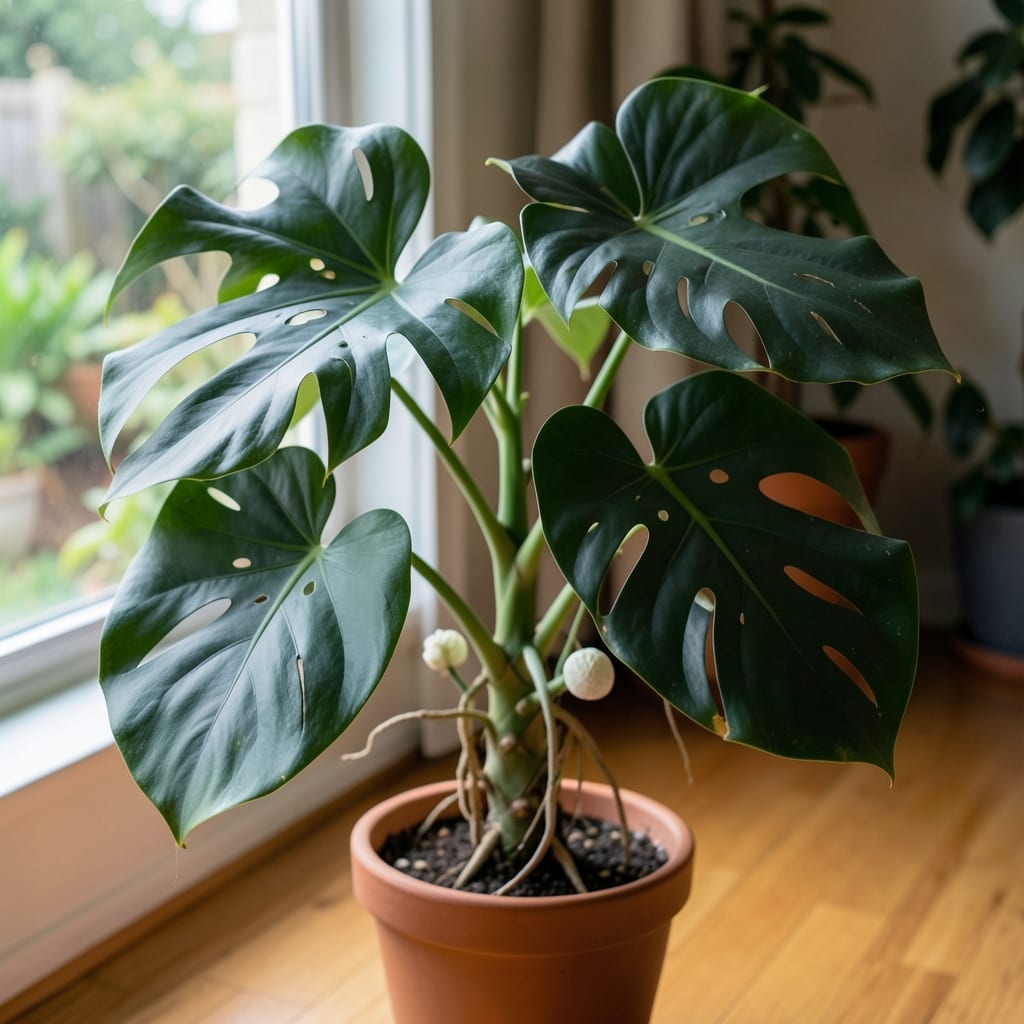
I never expected my Monstera to produce fruit until I saw that first unusual bloom. This tropical plant can bear edible fruit, but only when given the right conditions and patience.
With proper light, humidity, and a mature plant, you might harvest these rare, pineapple-like delicacies. The key is knowing when they’re safe to eat and how to handle them carefully.
📚 In This Guide
This method ensures you enjoy the tropical flavor safely without irritation or toxicity.
Monstera fruit ripens from the base upward, so inspect the bottom scales first. You’ll notice the green, hexagonal scales begin to separate slightly and reveal a creamy white interior. This is your first sign the fruit is nearing edibility.
Ripe fruit also develops a subtle, pineapple-like fragrance. If it smells sour or fermented, it’s overripe and should be discarded. Never taste the fruit if the scales are still tightly closed or the interior appears green—this indicates high oxalate content that can irritate your mouth.
Use clean, sharp pruning shears to cut the fruit from the plant when the bottom 1-2 inches of scales have loosened. Leave a 1-inch stem attached to avoid damaging the fruit. Harvesting too early risks toxicity, while waiting too long leads to mushy, overripe flesh.
Wear gloves during this process, as the unripe fruit’s sap can cause skin irritation. I always place the harvested fruit on a paper towel to catch any dripping sap, which can stain surfaces and irritate skin on contact.
Place the fruit in a well-ventilated area at room temperature (68-75°F) away from direct sunlight. The scales will continue to loosen and separate over 24-48 hours. Check it twice daily—you’ll see and smell the changes as it ripens.
Never refrigerate the fruit during this stage, as cold temperatures halt the ripening process. If the room is cooler than 65°F, ripening may take an extra day. The fruit is ready to eat when the majority of scales lift easily and the flesh beneath is soft and creamy.
Peel back the scales gently with your fingers to access the edible portion. The ripe flesh should resemble a cross between banana and pineapple in texture and flavor. Eat it fresh, but avoid the core and any unopened scales, as these contain irritating calcium oxalate crystals.
Discard any fruit that develops a bitter or soapy taste—this is a sign of improper ripeness. I like to consume the fruit in one sitting, as it doesn’t store well once opened. The experience is worth the wait, but patience is key to avoiding irritation.
Patience and observation are your best tools when working with this unique fruit.
Ripeness Timing: The 24-48 hours indoor ripening period in Step 3 is non-negotiable. I learned this the hard way after trying to rush the process—cold temperatures or impatience will leave you with unripe, irritating fruit. Check twice daily as instructed; the scales will literally tell you when it’s ready by lifting away from the flesh.
Temperature Matters: That 68-75°F range for ripening is ideal for a reason. In Step 3, if your room dips below 65°F, expect the process to stretch to 3 days. A warm, draft-free spot near (but not in) sunlight works wonders. Never refrigerate—this halts ripening completely.
Harvesting Precision: In Step 2, when only the bottom 1-2 inches of scales have loosened, that’s your cue. Cut with sharp shears, leaving the 1-inch stem intact to prevent sap leakage. I place mine on paper towels immediately—this simple step prevents stains and skin irritation from dripping sap.
Safety Check: Before tasting, confirm the flesh is creamy white, not green, and smells sweet like pineapple. If the scales are still tightly closed or the interior looks green, the oxalate content is too high. Trust your senses—this fruit won’t ripen further once harvested.
Yes, but only when fully ripe! Unripe fruit contains calcium oxalate crystals, which can irritate the mouth and throat. Wait for the scales to separate and the fruit to smell sweet.
Look for yellow-green scales falling off naturally and a strong, pineapple-like aroma. It typically takes 12-18 months to mature after flowering.
Fully ripe fruit has a tropical, custard-like flavor blending banana, pineapple, and mango notes. Underripe fruit tastes bitter and can cause discomfort.
Yes, but only when ripe. Remove the inedible core and peel away the scales. Start with a small piece to test for any lingering irritation.
Patience is key! If it’s been over a year, check for pests or disease. Sometimes, the fruit may not develop properly due to poor pollination.