
Beautiful Plants For Your Interior
Beautiful Plants For Your Interior
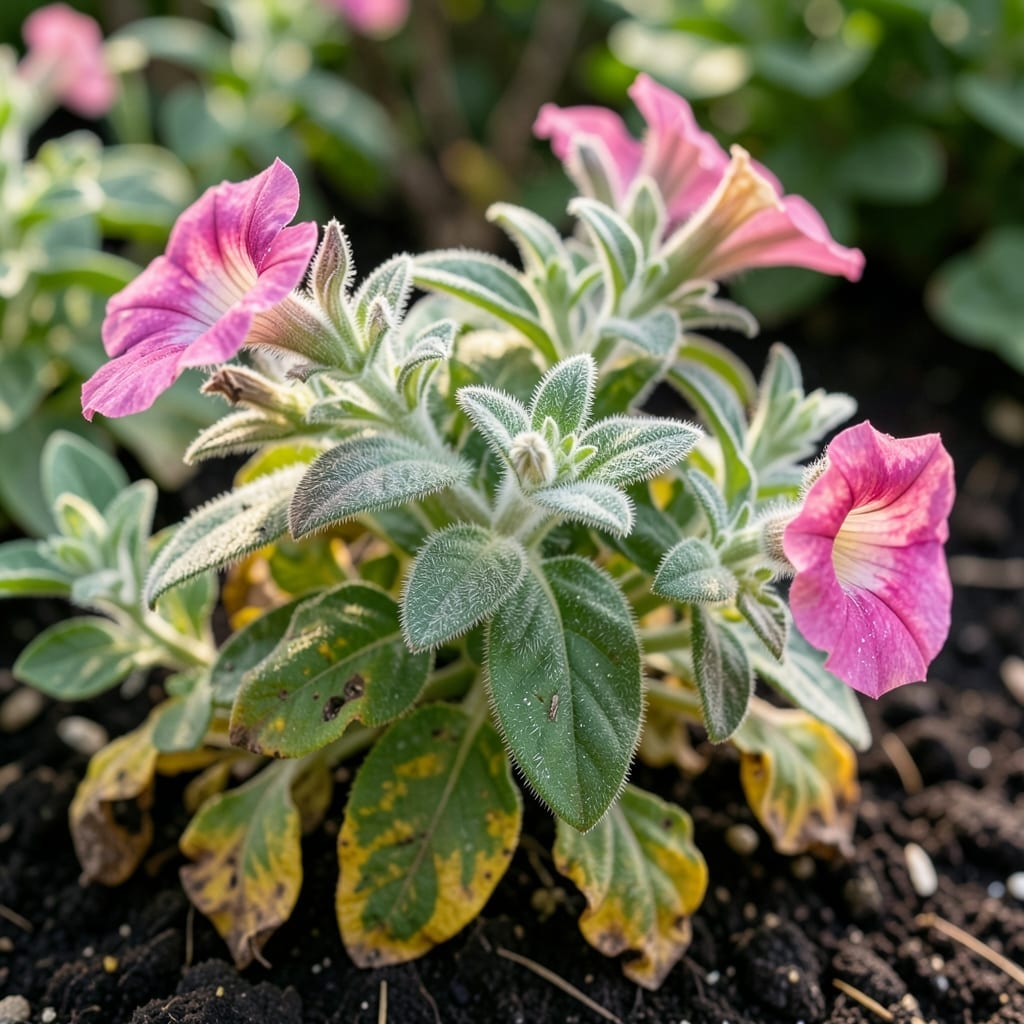
White fuzz on your petunia leaves isn’t just ugly—it’s stealing your blooms. I’ve lost entire hanging baskets to mold before learning how to stop it in its tracks.
The culprit is usually powdery mildew, but downy mildew and botrytis can also crash the party. They thrive in damp conditions with poor air flow, which is why your shade-grown petunias are often the first to suffer.
You’ll get your plants back to vibrant color with a few simple fixes: better spacing, morning watering, and a homemade spray that works in 24-48 hours. No fancy chemicals required.
Works for container plants, garden beds, and those tricky hanging baskets. Here’s exactly how to fix it and keep it from coming back.
Mold growth on petunias is often the result of environmental and care-related factors that create ideal conditions for fungal spores to thrive. Below are the primary causes, each with clear, actionable insights.
Petunias in poorly drained soil or overwatered conditions are highly susceptible to mold. Fungal spores like Botrytis cinerea (gray mold) and powdery mildew flourish in damp environments. Waterlogged roots or foliage that remains wet for extended periods (e.g., from overhead watering or high humidity) provide the perfect breeding ground. Fix: Water at the base of the plant early in the day to allow foliage to dry quickly, and ensure pots have drainage holes.
Humidity levels above 60% encourage mold spores to germinate and spread. Petunias grown in crowded spaces or greenhouses with stagnant air are especially vulnerable. Fix: Improve air circulation with spacing (12–18 inches apart) or a small fan, and avoid misting leaves in humid climates.
Dense plantings or overgrowth restrict airflow, trapping moisture around leaves and stems. This stagnation accelerates mold development, particularly in varieties with thick canopies. Fix: Prune overgrown stems regularly and space plants to allow breezes to pass through.
Mold spores can linger in unsterilized potting mix or on gardening tools, infecting healthy petunias. Reusing soil from previously diseased plants or failing to clean pruners can reintroduce pathogens. Fix: Use fresh, sterile potting mix and disinfect tools with rubbing alcohol between uses.
Excess nitrogen promotes lush, soft growth that’s more prone to fungal attacks. Over-fertilized petunias may also have weakened defenses. Fix: Use a balanced, slow-release fertilizer and follow label instructions to avoid overfeeding.
Mold on petunias can be frustrating, but with the right approach, you can restore your plants to full health. Below are targeted solutions for common causes, along with prevention tips to keep mold at bay.
If overwatering or poor drainage is the culprit, start by reducing watering frequency and ensuring your petunias are in well-draining soil. Use containers with drainage holes or amend garden beds with perlite or sand. Water at the base of the plant in the morning to allow foliage to dry quickly. Prevention tip: 💡 Avoid overhead watering to minimize moisture on leaves.
Crowded plants trap humidity, creating a mold-friendly environment. Thin out dense foliage by pruning affected leaves and stems, and space petunias at least 12–18 inches apart. If growing in containers, ensure good airflow around them. Prevention tip: ✨ Place plants in breezy areas or use a small fan outdoors to improve ventilation.
For existing mold, remove infected leaves and treat the plant with a natural fungicide. Mix 1 teaspoon of baking soda with 1 quart of water and a few drops of dish soap, then spray lightly on leaves. Neem oil is another effective option—dilute as directed and apply weekly. Prevention tip: 🌡️ Avoid wetting leaves when watering, and clean up fallen debris to reduce fungal spores.
Stressed petunias are more susceptible to mold. Strengthen them with balanced fertilizer (10-10-10) and ensure they receive 6–8 hours of sunlight daily. Over-fertilizing can also promote mold, so follow package instructions. Prevention tip: 🎯 Rotate petunias with other plants yearly to prevent soil-borne diseases.
With these steps, your petunias will thrive—mold-free and vibrant!
Look for white, powdery spots on the upper surfaces of leaves. This mold often starts on older leaves and can spread quickly if untreated. It thrives in warm, dry conditions with poor air flow.
Yes, mix 1 tablespoon of white vinegar with 1 gallon of water and spray lightly on affected leaves. Test on a small area first, as vinegar can be harsh on some plants.
Recurring mold usually means the environment still favors fungal growth. Check for overcrowding, poor drainage, or high humidity. Adjust watering habits and improve air circulation to prevent regrowth.
Yes, prune infected leaves right away to stop the spread. Use clean, sharp scissors and dispose of the debris far from your garden. Never compost moldy plant material.