
Beautiful Plants For Your Interior
Beautiful Plants For Your Interior
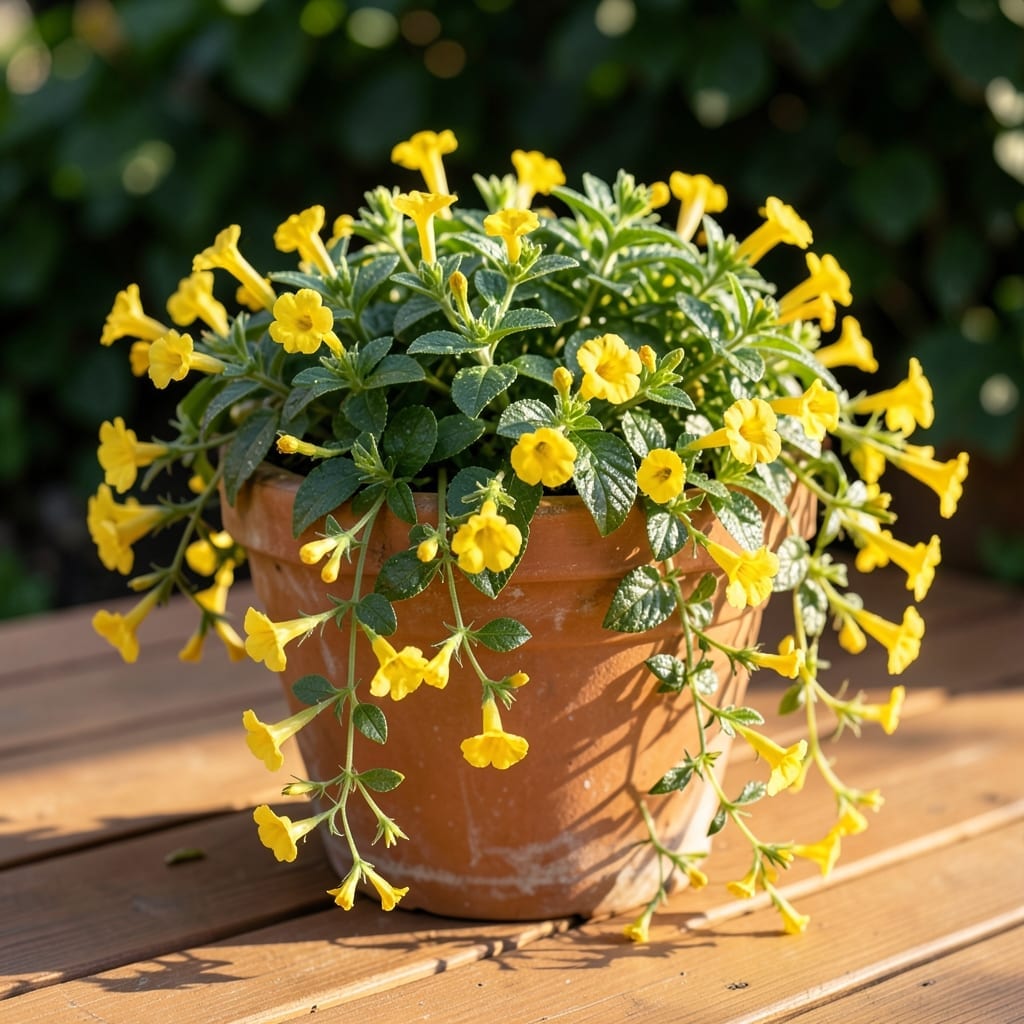
Sun-kissed cascades of bright yellow that keep blooming through summer heat. Million Bells Yellow transforms patios, borders, and hanging baskets into a pollinator paradise with minimal effort.
I’ve grown this variety for three seasons straight, and the key is full sun and well-draining soil. Water when the top inch feels dry, prune back straggly stems, and watch it explode with color all summer long.
📚 In This Guide
Here’s the method I use to get those vibrant cascades of yellow blooms thriving all summer long.
Select a spot that receives full sun for at least 6-8 hours daily. Million Bells Yellow (Calibrachoa) performs best in bright, direct light. I look for areas with morning sun exposure, which helps dry any dew quickly and prevents foliar diseases.
The soil should drain well—soggy roots are this plant’s worst enemy. If your garden has heavy clay, plant in raised beds or containers instead. Test drainage by digging a 12-inch hole and filling it with water. If it doesn’t drain within 1 hour, choose a different location.
Work the soil to a depth of 8-10 inches, removing any weeds or debris. I mix in 2-3 inches of compost to improve fertility without making the soil too rich—too much organic matter can reduce flowering.
These plants prefer slightly acidic to neutral soil with a pH between 5.8 and 6.5. A simple soil test kit can confirm this. If your soil is too alkaline, amend with a bit of sulfur a few weeks before planting.
Dig holes slightly larger than the root ball, spacing plants 8-12 inches apart. This gives them room to spread while creating that lush, cascading effect. I always water the plants in their containers first—this prevents root shock during transplanting.
Place each plant so the top of the root ball sits level with the surrounding soil. Backfill gently and press down lightly to remove air pockets. Water thoroughly after planting to settle the soil around the roots.
Water deeply at the base of the plants when the top 1 inch of soil feels dry. Million Bells Yellow has a low tolerance for drought, so don’t let the soil dry out completely. I water in the early morning to allow foliage to dry before evening.
Avoid overhead watering to prevent fungal issues. If you notice wilting during the hottest part of the day, don’t panic—this is the plant’s way of conserving moisture. Water immediately if the soil is dry, but if it’s moist, wait until morning.
Feed every 2-3 weeks with a balanced, water-soluble fertilizer (10-10-10 or 20-20-20). I switch to a low-nitrogen, high-phosphorus formula once the plants start blooming to encourage more flowers rather than foliage.
Pinch back the tips of new growth when plants are 6 inches tall to promote branching. Deadhead spent blooms regularly—this isn’t just for appearance. Removing old flowers signals the plant to produce more, extending your display through late summer.
These insights will help you avoid pitfalls and maximize your cascading yellow blooms.
The Sun Factor: Stick to that 6-8 hours of daily sun mentioned in Step 1—less than 6 hours results in leggy growth and fewer flowers. Morning sun is ideal, as it dries dew quickly, but afternoon sun works too as long as you keep soil consistently moist.
Drainage Test: That 1-hour drainage test in Step 1 is non-negotiable. If water hasn’t drained from your 12-inch hole within exactly 1 hour, your Million Bells will suffer from root rot. Raised beds or containers are your best bet for heavy clay soils.
Soil Prep Precision: When working the soil to 8-10 inches in Step 2, don’t skip removing weeds and debris. Competition for nutrients stunts growth. And remember, 2-3 inches of compost is the sweet spot—more than that can actually reduce flowering by making the soil too rich.
Pruning Timing: Pinching back at exactly 6 inches tall, as outlined in Step 5, encourages bushier growth. Do this too early or too late, and you’ll miss out on the full cascading effect. Deadheading isn’t just cosmetic—it signals the plant to produce more blooms, extending your display well into late summer.
Water regularly, ensuring well-draining soil, and provide afternoon shade in extreme heat. Mulch helps retain moisture.
Plant after the last frost in spring when temperatures stay above 50°F (10°C) for optimal growth.
Try Calibrachoa hybrids like ‘Superbells’ or Petunias for similar cascading, sun-loving blooms.
Overwatering or poor drainage may cause leaf browning. Check soil moisture and ensure pots have drainage holes.
Yes! Use a well-draining potting mix and a container with drainage. They thrive in hanging baskets or pots.