
Beautiful Plants For Your Interior
Beautiful Plants For Your Interior
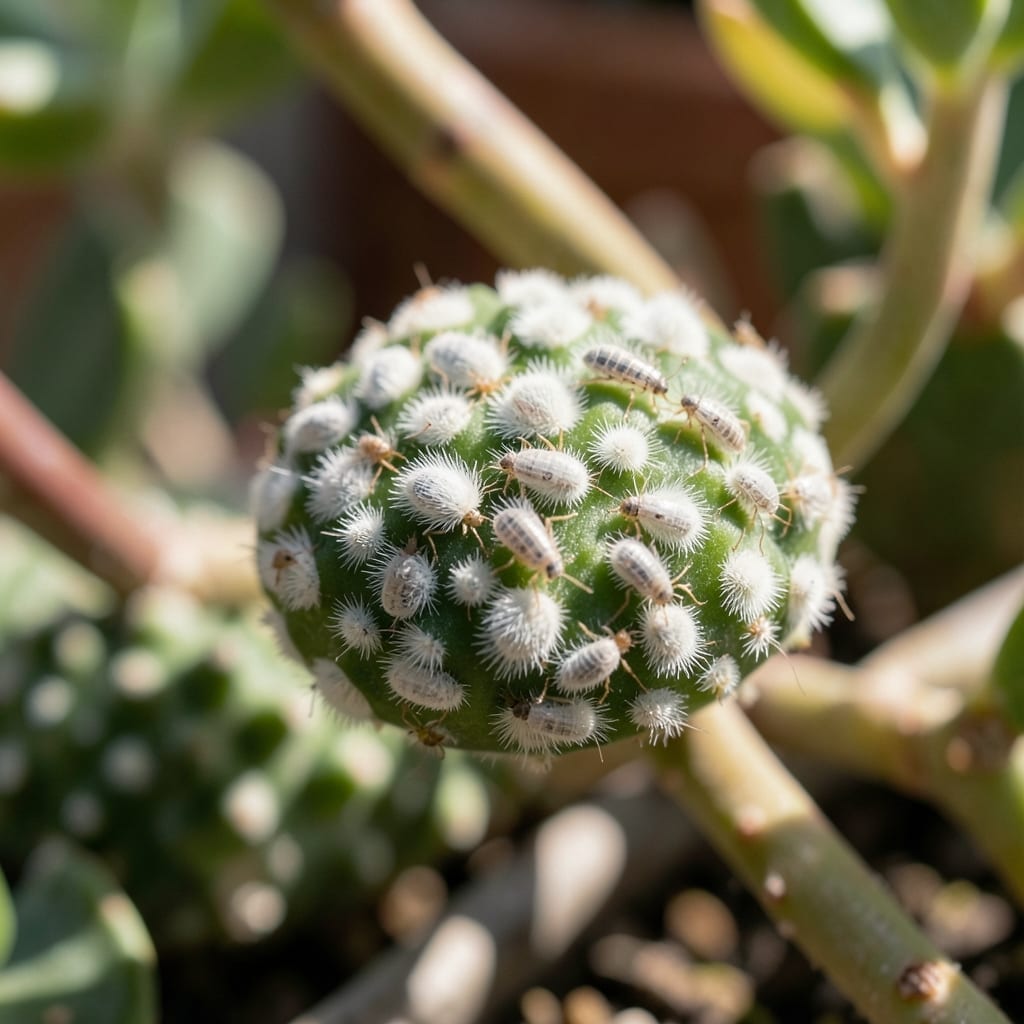
White fuzz in the crevices of your string of turtles means mealybugs have moved in. I’ve battled these pests on my own collection, and the good news is they’re beatable without harsh chemicals.
These bugs love succulents because they thrive in the same dry conditions we give our plants. The key is catching them early—before they spread to every leaf and stem. A cotton swab dipped in rubbing alcohol takes out visible bugs on contact.
Follow up with a weekly spray of diluted neem oil to break their life cycle. Your plant will bounce back with thicker growth and no chemical residue. Consistency is what wins this fight.
Prevent future outbreaks by improving airflow and checking new plants before they join your collection. Healthy succulents resist pests better than stressed ones.
Mealybugs thrive on String of Turtles due to a mix of environmental and plant health factors. These pests are drawn to stressed or weak plants, and their presence often signals underlying issues. Below are the primary causes, explained scientifically to help you address the root of the problem.
Mealybugs flourish in environments with low humidity (below 40%) or excessively high moisture. Dry air weakens the plant’s natural defenses, making it easier for pests to infest. Conversely, high humidity (above 60%) can create a breeding ground for mealybugs, especially in poorly ventilated areas. Peperomia prostrata (String of Turtles) prefers moderate humidity—aim for 40-50% to deter these pests.
Stagnant air traps moisture around the plant, encouraging mealybug growth. These pests lay eggs in undisturbed, sheltered spots (like leaf axils or soil crevices). Ensure your String of Turtles has gentle airflow—use a small fan on low or space plants apart to improve ventilation.
Excess nitrogen (from over-fertilizing) promotes soft, succulent growth—a mealybug favorite. These pests target new, tender leaves rich in sap. Switch to a balanced, diluted fertilizer (e.g., 10-10-10) and fertilize only during the growing season (spring/summer) to avoid overfeeding.
Underwatering, overwatering, or sudden light changes stress the plant, releasing volatile organic compounds (VOCs) that attract pests. Mealybugs detect these chemical signals and hone in on vulnerable plants. Maintain consistent care: water when the top inch of soil is dry, and provide bright, indirect light.
Dealing with mealybugs on your string of turtles? Here’s how to tackle the issue effectively and keep your succulents thriving.
Start by isolating the affected plant to prevent the mealybugs from spreading to other succulents. This simple step can save your entire collection.
Use a cotton swab dipped in rubbing alcohol (70% isopropyl) to gently wipe off visible mealybugs. Focus on the nooks between leaves and stems where they love to hide. Repeat every few days until the pests are gone.
Apply a neem oil solution (1 tsp neem oil + 1 liter water + a few drops of dish soap) to the plant. Spray thoroughly, ensuring coverage on both sides of the leaves. Reapply weekly for 2–3 weeks to disrupt the pests’ life cycle.
Alternatively, a soapy water spray (1 tsp mild liquid soap + 1 liter water) can suffocate mealybugs. Spray in the evening to avoid leaf burn from the sun.
With these steps, your string of turtles will bounce back—pest-free and vibrant! 🌿✨
Inspect your string of turtles weekly for early signs. Look under leaves and in leaf joints where mealybugs love to hide. Early detection makes treatment much easier.
No, vinegar isn’t effective and can damage your plant. Stick with rubbing alcohol or neem oil for safe, proven results. These methods target pests without harming your succulent.
Mealybugs often return due to missed eggs or poor prevention. After treatment, isolate the plant for 2-3 weeks and maintain good airflow. Consistency breaks their life cycle.