
Beautiful Plants For Your Interior
Beautiful Plants For Your Interior
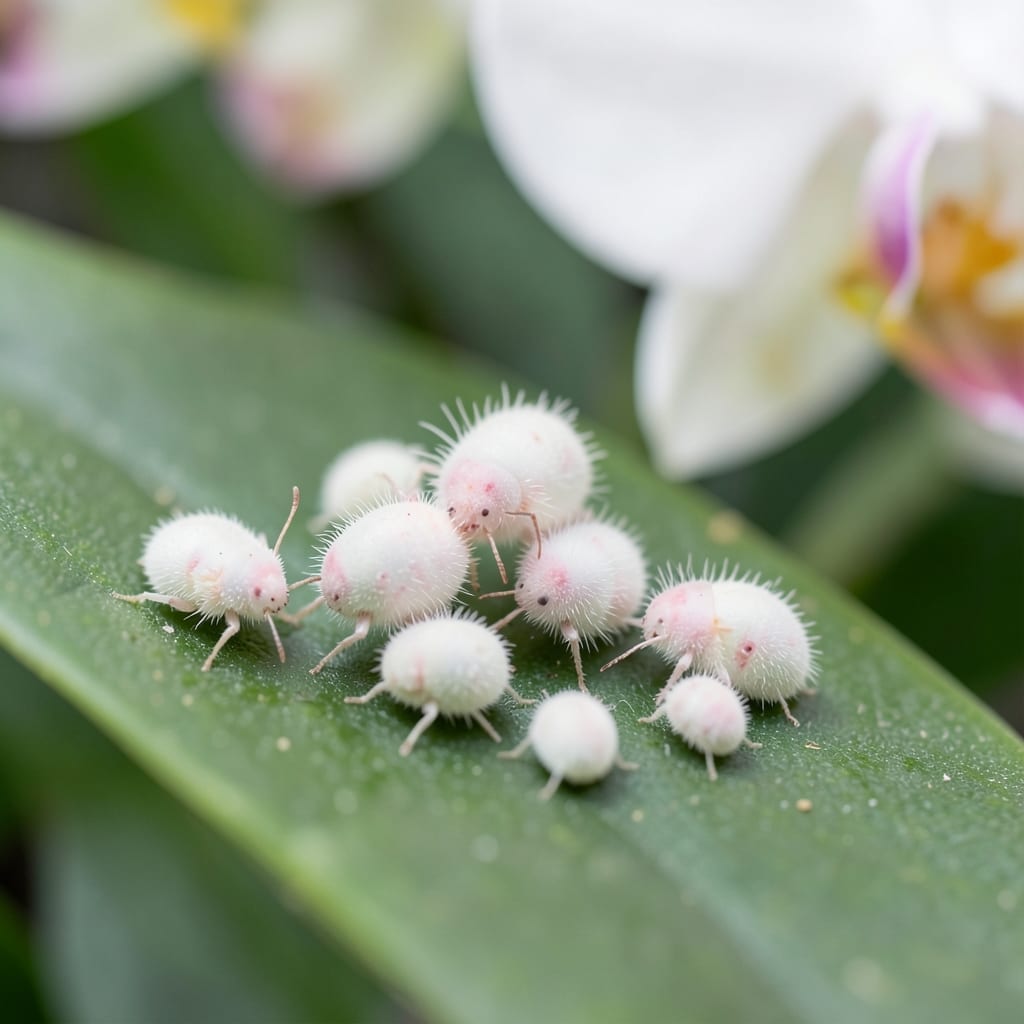
White cottony clusters on your orchid leaves mean trouble. I’ve lost count of how many plants I’ve saved by catching mealybugs early—those pests multiply fast and can weaken even the healthiest orchid.
Their damage goes beyond looks: they sap plant strength, leave sticky residue, and open the door for sooty mold. Left untreated, a small infestation turns into a full-blown crisis in 2-3 weeks.
Good news? They’re treatable. A simple mix of rubbing alcohol and water, applied carefully, can knock them out without harsh chemicals. For stubborn cases, insecticidal soap or neem oil works wonders.
Prevention is even easier—regular inspections and good airflow keep them from returning. Your orchids will thank you with stronger growth and stunning blooms.
Understanding why mealybugs target orchids helps you prevent infestations before they start. These pests thrive under specific conditions, often exploit weak plants, and spread through human activity. Below are the primary causes of mealybug outbreaks on orchids.
Mealybugs Planococcus and Pseudococcus species flourish in warm (70–80°F), low-humidity settings. Orchids grown indoors with poor air circulation or near heat sources create ideal breeding grounds. These conditions accelerate their life cycle, leading to rapid population growth.
Stressed orchids are more susceptible to pests. Overwatering causes root rot, weakening the plant’s defenses, while underwatering leads to dehydration and stress. Both scenarios emit chemical signals that attract mealybugs, which feed on the plant’s sap.
Mealybugs often hitchhike on new plants or tools. Failing to isolate new orchids for 2–3 weeks allows pests to spread undetected. Shared tools, pots, or even your hands can transfer mealybugs between plants if not sanitized.
Tightly grouped orchids limit airflow and increase humidity between plants, creating microclimates that mealybugs love. Additionally, close proximity makes it easier for crawlers (nymphs) to migrate from one plant to another.
In outdoor settings, ladybugs and lacewings keep mealybug populations in check. Indoor orchids lack these predators, allowing infestations to spiral. Without biological controls, mealybugs multiply unchecked, especially in sterile environments.
Stopping mealybugs starts with quick action and consistent care. Below are targeted fixes for common scenarios, plus prevention tips to keep your orchids pest-free.
For a few visible bugs, dab them with a cotton swab soaked in 70% isopropyl alcohol. This dissolving the bugs’ protective coating, killing them on contact. Repeat every 2-3 days for two weeks to catch any newly hatched nymphs. Pro tip: Test the alcohol on a small leaf area first to check for sensitivity.
If mealybugs have spread, use a systemic insecticide like imidacloprid or a neem oil spray. Apply neem oil in the evening to avoid leaf burn, and reapply every 5-7 days. For systemic granules, mix into the potting medium and water as usual—this targets bugs feeding on roots and foliage.
Mealybugs love hiding in leaf axils and under pots. Remove the orchid from its pot, soak the roots in lukewarm water with a drop of dish soap for 10 minutes, then rinse. Inspect and wipe down the pot and growing area with diluted bleach (1:10 ratio) to kill lingering eggs.
Consistency is key—stay vigilant, and your orchids will thank you with healthy, vibrant blooms!
Look for white, cottony clusters in leaf axils or under leaves. You might also notice sticky residue on leaves or a sooty mold developing. Check new growth and flower buds as these are favorite hiding spots.
Not if used correctly. Always test 70% isopropyl alcohol on a small leaf area first. If no damage appears after 24 hours, it’s safe to use. Apply only to pests, not the entire plant.
Inspect your orchids at least once a week, especially during warm months. Pay extra attention to new plants in quarantine. Early detection means easier treatment and less damage.
Yes! A mix of 1 teaspoon dish soap per 1 quart of water works as a gentle spray. For stubborn cases, neem oil is effective. Always treat in the evening to prevent leaf burn.