
Beautiful Plants For Your Interior
Beautiful Plants For Your Interior
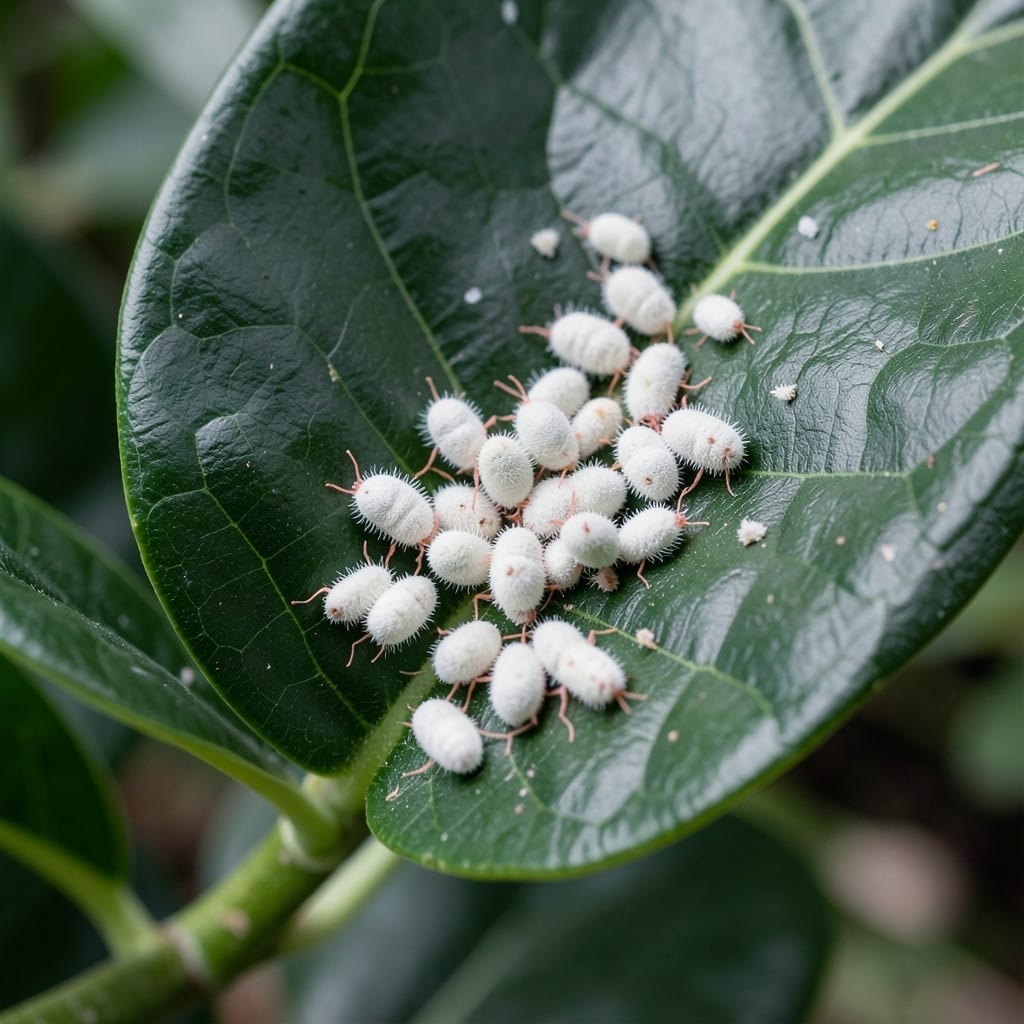
White cottony clusters on your fiddle leaf fig‘s leaves or stems mean trouble. I’ve battled mealybugs on mine, and the key is catching them early before they spread to every leaf and stem.
These pests suck plant juices, causing yellowing leaves and stunted growth. The good news? They’re slow-moving and visible to the naked eye, making them easier to spot than some other houseplant invaders.
With the right approach, you can eliminate them completely in 2-3 weeks. The solution involves isolation, thorough cleaning, and targeted treatments that won’t harm your plant.
Prevention is simpler than treatment, and I’ll share the routines that keep my fiddle leaf fig mealybug-free year-round. Your plant can make a full recovery.
Mealybugs thrive on fiddle leaf figs due to a few key environmental and care-related factors. Understanding these causes helps prevent infestations before they start.
Excess moisture creates the perfect breeding ground for mealybugs. Overwatered soil or poor drainage leads to root stress, weakening the plant and making it more susceptible to pests. Fiddle leaf figs prefer well-draining soil and a watering schedule that allows the top 2 inches of soil to dry out between waterings.
These pests favor dry, stagnant air. Fiddle leaf figs are tropical plants that thrive in 40-60% humidity. When indoor air is too dry (common in winter or air-conditioned spaces), the plant’s natural defenses weaken, inviting mealybugs to settle in.
Stagnant air traps pests and prevents natural predators from reaching them. Placing your fiddle leaf fig in a poorly ventilated area (e.g., a corner with no airflow) encourages mealybugs to multiply unchecked. A gentle fan or open window can disrupt their lifecycle.
Too much fertilizer, especially high-nitrogen mixes, promote soft, succulent growth that mealybugs love. Stick to a balanced, diluted fertilizer (e.g., 3-1-2 NPK ratio) and follow a seasonal feeding schedule to avoid overstimulating new growth.
Mealybugs often hitch a ride on newly purchased or repotted plants. Always quarantine new additions for 2–3 weeks and inspect leaves, stems, and soil for white, cottony clusters before introducing them to your fiddle leaf fig.
Mealybugs can be stubborn, but these targeted solutions will help you reclaim your fiddle leaf fig’s health. Address the issue as soon as you spot it to prevent infestations from spreading.
For a few visible bugs, dip a cotton swab in rubbing alcohol (70% or higher) and gently dab each mealybug. The alcohol dissolves their protective waxy coating, killing them on contact. Wipe down the leaves afterward with a damp cloth to remove residue. Repeat every few days until no bugs remain.
If mealybugs have spread, mix 1 part rubbing alcohol with 3 parts water in a spray bottle. Lightly mist all leaves, stems, and soil (avoid over-saturating). Let it sit for 1-2 hours, then rinse with water. For stubborn cases, use insecticidal soap or neem oil (follow product instructions). Apply weekly until the infestation clears.
Mealybugs in the soil? Remove the plant from its pot, gently rinse the roots, and soak them in a neem oil solution (1 tbsp neem oil + 1 tsp dish soap per gallon of water) for 10 minutes. Repot in fresh, sterile soil and a clean container to prevent reinfestation.
Prevention Tips:
Look for white, cottony clusters in leaf axils, under leaves, or along stems. You might also notice sticky residue (honeydew) or black sooty mold on leaves.
No, when used correctly. Dilute 70% isopropyl alcohol with water (1:3 ratio) and test on a small leaf area first. Avoid using on very young or sensitive plants.
For active infestations, treat every 3-5 days until gone, then weekly for prevention. Consistent treatment breaks their life cycle and prevents reinfestation.