
Beautiful Plants For Your Interior
Beautiful Plants For Your Interior
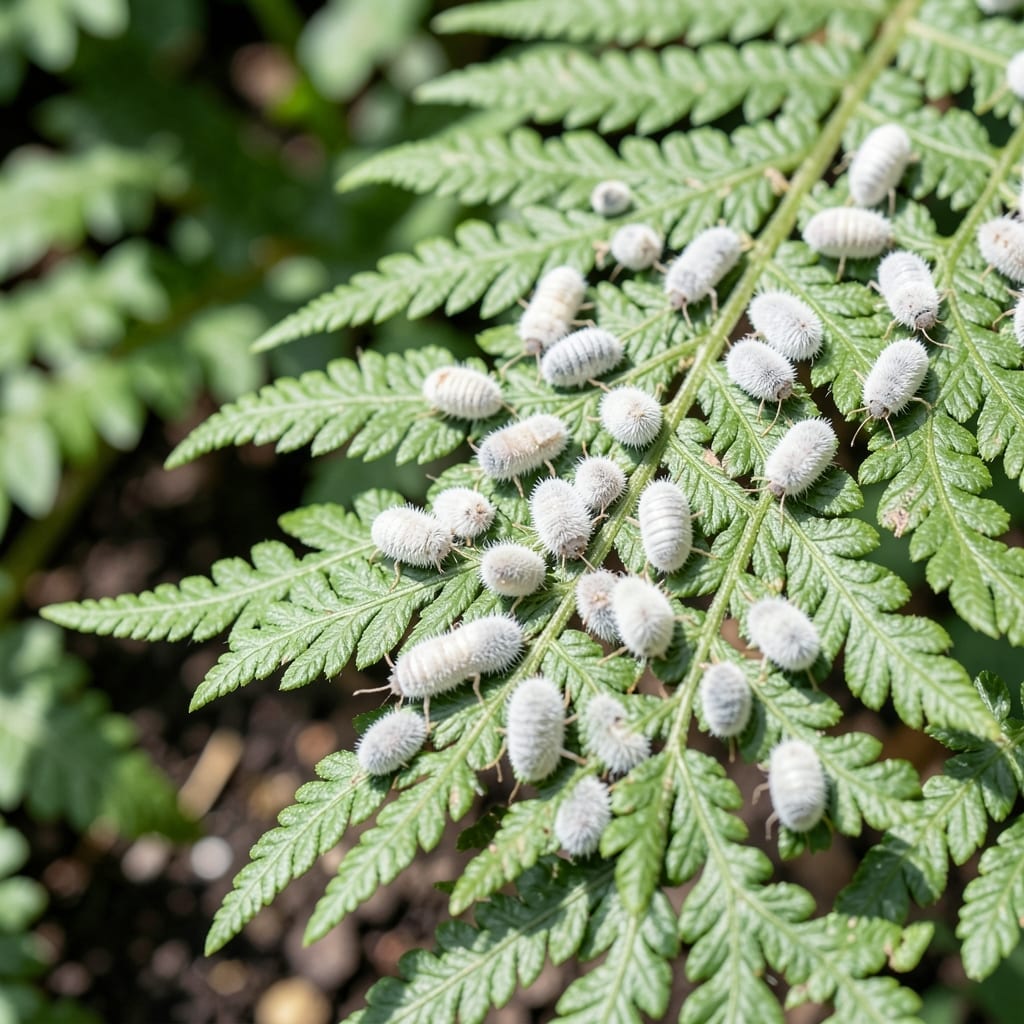
White cottony clusters on your ferns mean mealybugs have moved in. I’ve battled these pests across my entire collection, and the cottony masses always appear where ferns are most stressed.
Left unchecked, they’ll drain the life from your plants, turning vibrant green fronds yellow and brittle. The good news is that mealybugs are slow-moving and vulnerable to simple, natural treatments you likely have at home.
Within 2-3 weeks of consistent treatment, you’ll see new growth emerging clean and healthy. The key is catching them early and hitting them with a one-two punch of removal and prevention.
Works for Boston ferns, maidenhair, or any variety you’re growing. Here’s how to evict them for good.
Mealybugs thrive on ferns due to a mix of environmental and plant-specific factors. Understanding these causes helps prevent infestations and keeps your ferns healthy. Below are the most common triggers.
Ferns in dense groupings or stagnant air environments create ideal breeding grounds for mealybugs. These pests favor humid, still air where their cottony masses can spread undisturbed. Poor airflow also weakens ferns, making them more susceptible to attack. Ensure proper spacing and gentle air circulation to discourage infestations.
While ferns love moisture, overwatering or high humidity (above 60%) can attract mealybugs. These pests feed on plant sap, and damp conditions accelerate their reproduction. Avoid soggy soil and use well-draining pots. A humidity monitor can help maintain optimal levels (40–50%) for ferns while deterring pests.
Ferns under stress—from nutrient deficiencies, improper light, or physical damage—produce weaker defenses against mealybugs. Over-fertilizing (especially with nitrogen-heavy mixes) can also soften foliage, making it easier for pests to pierce and feed. Stick to balanced, slow-release fertilizers and address stress signs promptly.
Mealybugs often hitchhike via infested soil or newly purchased plants. Reusing potting mix without sterilization or skipping quarantine for new ferns can introduce pests. Always inspect new plants and use sterilized soil to prevent contamination. A 10-minute soil bake at 200°F (93°C) kills hidden eggs and larvae.
Tackling mealybugs on ferns starts with quick action and consistent care. Below are targeted fixes for common scenarios, along with prevention tips to keep your ferns thriving. 🌿
First, check your fern thoroughly for cottony white clusters, especially under leaves and along stems. If you spot mealybugs, isolate the plant to prevent spreading. Use a magnifying glass for tiny infestations.
Mix 1 teaspoon of mild liquid soap (like Castile) with 1 liter of water. Spray the solution directly on the bugs, focusing on hidden areas. Wipe them off with a damp cloth after 15 minutes. Repeat every 3–4 days until they’re gone.
Ladybugs, lacewings, and parasitic wasps love eating mealybugs. Release them in your garden or near indoor ferns for biological control. Avoid pesticides, as they can harm these helpful insects.
Dilute 1 tablespoon of neem oil in 1 liter of water with a few drops of dish soap. Spray the mixture on the fern, covering all surfaces. Neem disrupts the bugs’ life cycle—apply weekly for best results.
With patience and these steps, your ferns will be mealybug-free and lush again in no time! ✨
They appear as white, cottony clusters tucked in leaf axils or along stems. These pests resemble tiny cotton balls and often hide in hard-to-see areas.
Yes, dab 70% isopropyl alcohol on a cotton swab and apply directly to the bugs. This kills them on contact but test on a small area first to avoid damaging delicate fronds.
Repeat treatments every 3-4 days for at least 2 weeks to break their life cycle. Consistency is key since eggs and nymphs may survive initial applications.
They move slowly but can crawl or be carried by wind to nearby plants. Always isolate infested ferns and treat all plants in the vicinity.