
Beautiful Plants For Your Interior
Beautiful Plants For Your Interior
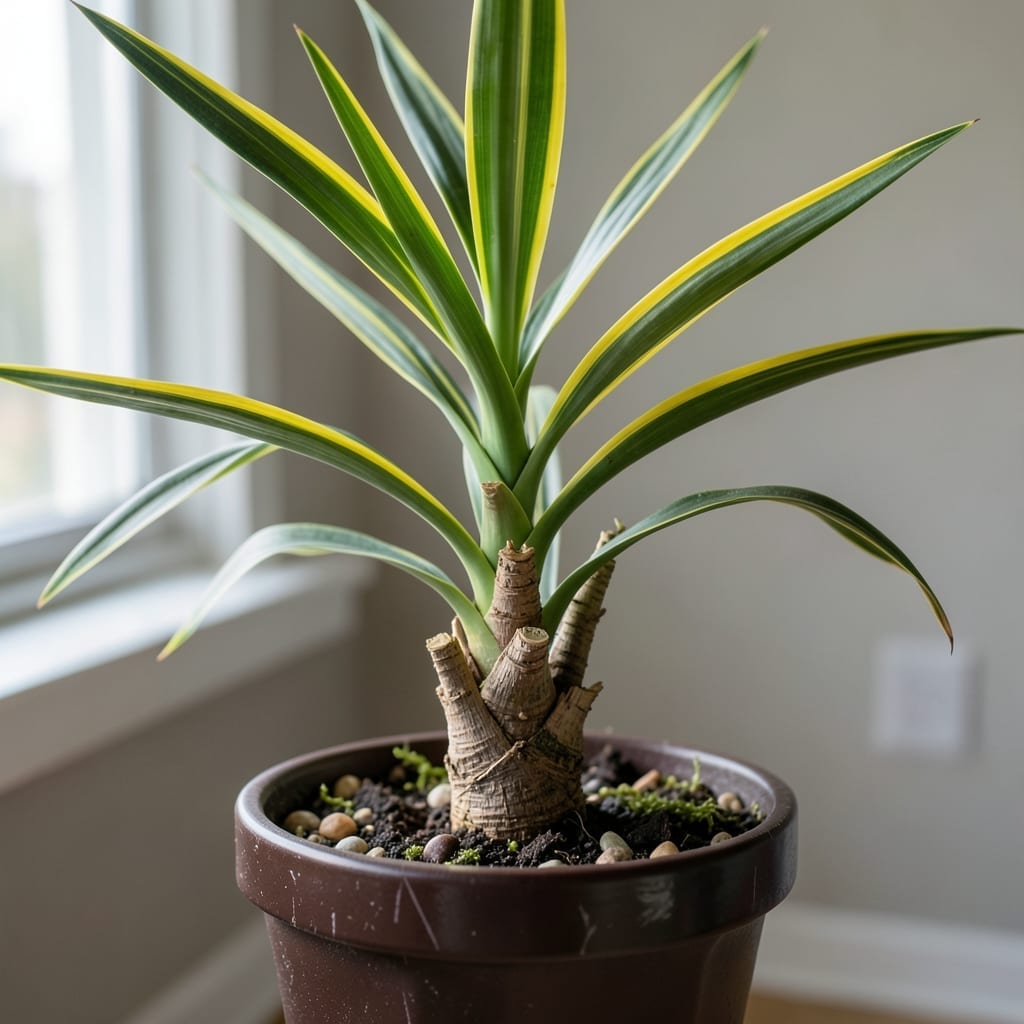
Mass cane thrives with minimal effort but rewards attention. I’ve watched mine double in size with just the right light and water balance.
This low-maintenance plant handles neglect better than most, yet responds dramatically to consistent care. You’ll see new growth within weeks when conditions are right.
📚 In This Guide
Here’s the method I use to keep these resilient plants thriving with minimal fuss.
Place your mass cane in bright, indirect light for optimal growth. A north or east-facing window works best, as direct sunlight can scorch the leaves, leaving ugly brown patches. I’ve found that a spot 3-5 feet from a window often strikes the perfect balance between light and protection.
If your space lacks natural light, supplement with a full-spectrum grow light for 10-12 hours daily. Watch for signs of light stress: pale or yellowing leaves mean too much light, while leggy growth or small leaves indicate too little.
Water when the top 1-2 inches of soil feel dry to the touch. Mass cane stores moisture in its stems, so it’s far more tolerant of underwatering than overwatering. I stick my finger into the soil to check—if it feels dry at that depth, it’s time to water.
Use room-temperature water and pour slowly until it drains from the bottom of the pot. Empty the saucer after 15-20 minutes to prevent root rot. Drooping leaves often signal thirst, but if they don’t perk up within a few hours of watering, you may be dealing with overwatering instead.
Mass cane thrives in 40-50% humidity, typical of most homes. If your air is particularly dry, especially in winter, mist the leaves lightly or place a tray of water and pebbles near the plant. Avoid grouping it with other plants if they’re prone to pests, as mass cane can attract spider mites in dry conditions.
Keep the temperature between 65-80°F during the day and no lower than 55°F at night. Cold drafts from windows or doors can shock the plant, causing leaf drop. I rotate my mass cane occasionally to ensure even growth, as it tends to lean toward the light source.
Prune yellow or brown leaves at the base using clean, sharp scissors. This isn’t just about aesthetics—removing damaged foliage redirects energy to healthy growth. I also wipe the leaves with a damp cloth every 2-4 weeks to remove dust, which can block light absorption.
If your plant becomes top-heavy, trim back the tallest canes to encourage bushier growth. Cut just above a leaf node, and use the trimmings for propagation if desired. Real talk: this plant bounces back quickly, so don’t be afraid to shape it to your preference.
Feed your mass cane with a balanced liquid fertilizer diluted to half strength every 4-6 weeks during spring and summer. Skip fertilizing in fall and winter, when growth slows. Over-fertilizing leads to salt buildup in the soil, which can burn the roots and cause leaf tips to brown.
Repot every 2-3 years or when roots emerge from the drainage holes. Choose a pot only 1-2 inches larger in diameter—too much space can lead to overwatering issues. Fresh potting mix gives the plant a nutrient boost, but avoid heavy soils that retain too much moisture.
These details will help you keep your mass cane thriving with minimal effort.
Light Positioning: For Step 1, that 3-5 feet from a window sweet spot is crucial. Too close and you risk scorch marks, too far and your plant becomes leggy. I learned this after moving mine four times before finding the perfect balance.
Watering Precision: In Step 2, the 15-20 minutes saucer-emptying window prevents root rot. Set a timer—it’s easy to forget. Also, that finger test for the top 1-2 inches of soil never fails me, even after years of overthinking watering schedules.
Temperature Awareness: The 65-80°F daytime range in Step 3 is ideal, but watch for drafts. I lost a few leaves before realizing my AC vent was creating a cold spot below 55°F at night. A simple thermometer nearby solved the problem.
Water your mass cane when the top 1-2 inches of soil feel dry. Typically, this means watering every 7-10 days, but adjust based on humidity and light. Overwatering can cause root rot, so ensure good drainage!
Yellow leaves often indicate overwatering or poor drainage. Check the soil moisture and ensure the pot has drainage holes. If the soil is soggy, reduce watering and trim affected leaves.
Yes, mass cane tolerates low light but grows best in bright, indirect light. In dim conditions, growth may slow, and leaves can lose their vibrant color. Rotate the plant occasionally for even growth.
Try snake plants, pothos, or ZZ plants—all are low-maintenance and thrive in similar conditions. These alternatives also purify the air and adapt well to indoor environments.
Brown tips usually signal low humidity or fluoride in tap water. Use filtered or distilled water, mist the leaves, or place a humidity tray nearby to keep the air moist.