
Beautiful Plants For Your Interior
Beautiful Plants For Your Interior
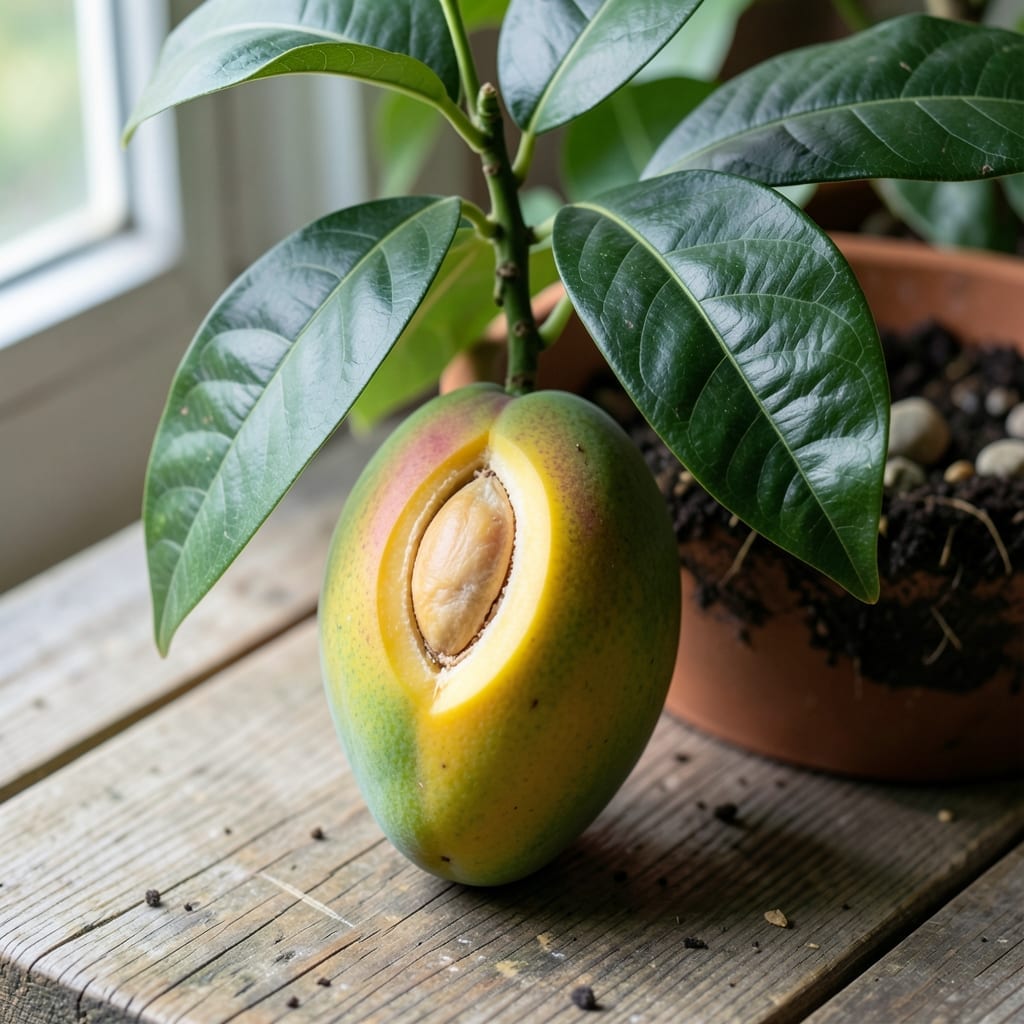
That first crack in a mango seed means life is ready to begin. I split my first one on a whim and now have a 2-foot tree thriving in a pot on my patio.
The split seed method skips the long soak and speeds up sprouting by exposing the embryo directly to moisture and warmth. Most people wait too long to plant after splitting—don’t make that mistake.
Within 2-3 weeks, you’ll see a taproot emerge, followed by leaves that smell faintly like mangoes when crushed. The tree grows surprisingly fast in its first year.
Works for any mango variety, though some sprout faster than others. Here’s exactly how to split and plant for best results.
A mango seed splitting in half is a natural phenomenon, often signaling the start of germination. Below are the primary causes, explained with scientific clarity to help you understand—and even encourage—the process.
As the seed absorbs water, the embryo inside swells, creating internal pressure. The hard seed coat (endocarp) eventually cracks under this force, allowing the radicle (embryonic root) to emerge. This is the plant’s way of breaking dormancy and kickstarting growth. Actionable tip: Soak seeds in water for 24–48 hours to soften the coat and trigger splitting.
Overwatering or prolonged soaking can cause the seed to absorb too much moisture too quickly. The rapid expansion weakens the seed’s structural integrity, leading to a split. While moisture is essential for germination, balance is key. Actionable tip: Use a damp (not soggy) paper towel for germination to control hydration.
Extreme or sudden temperature changes can stress the seed, causing the outer shell to contract or expand unevenly. In warm climates (ideal for mangoes: 70–100°F), seeds are more likely to split naturally. Actionable tip: Maintain a stable, warm environment (e.g., a seedling heat mat) to promote even splitting without shock.
Some mango seeds have thinner or pre-damaged coats due to genetic factors, pests, or rough handling. These are prone to splitting prematurely. Actionable tip: Inspect seeds for cracks before planting; discard any with deep fissures or mold to avoid poor germination.
If your mango seed has split in half, don’t toss it just yet! With the right approach, you can still coax new life from it. Below are practical fixes for common splitting scenarios, plus tips to prevent future issues.
If the seed is split but the two halves remain connected by the husk or a bit of flesh, plant it whole. Bury it about 1 inch deep in well-draining potting mix, keeping the soil moist but not soggy. The seed may still germinate if the inner kernel is undamaged.
When the seed has fully split into two distinct pieces, check each half for a healthy, firm kernel. Discard any soft or moldy halves. Plant the viable piece(s) with the flat side down, just like a whole seed, and keep the soil warm (around 75°F). Germination may take longer, so be patient.
If you spot mold or a foul odor, the seed may be compromised. Soak it in a 1:10 hydrogen peroxide-to-water solution for 10 minutes to disinfect, then rinse and dry it before planting. If the damage is severe, it’s best to start fresh with a new seed.
With a little TLC, even a split mango seed can grow into a thriving tree! 🌳
Yes! If the inner kernel remains firm and healthy, a split seed can still germinate. Plant it 1 inch deep in moist, well-draining soil and keep the temperature around 75°F.
Check for a plump, white or light-colored kernel. If it’s soft, dark, or smells bad, it’s likely no longer viable. Healthy kernels should feel solid to the touch.
No, leave them connected if possible. If fully separated, plant the half with the kernel flat-side down. This mimics natural growth conditions for better results.
With proper care, you’ll typically see a taproot in 2-3 weeks. Leaves follow shortly after. Patience and consistent warmth are key to success.