
Beautiful Plants For Your Interior
Beautiful Plants For Your Interior
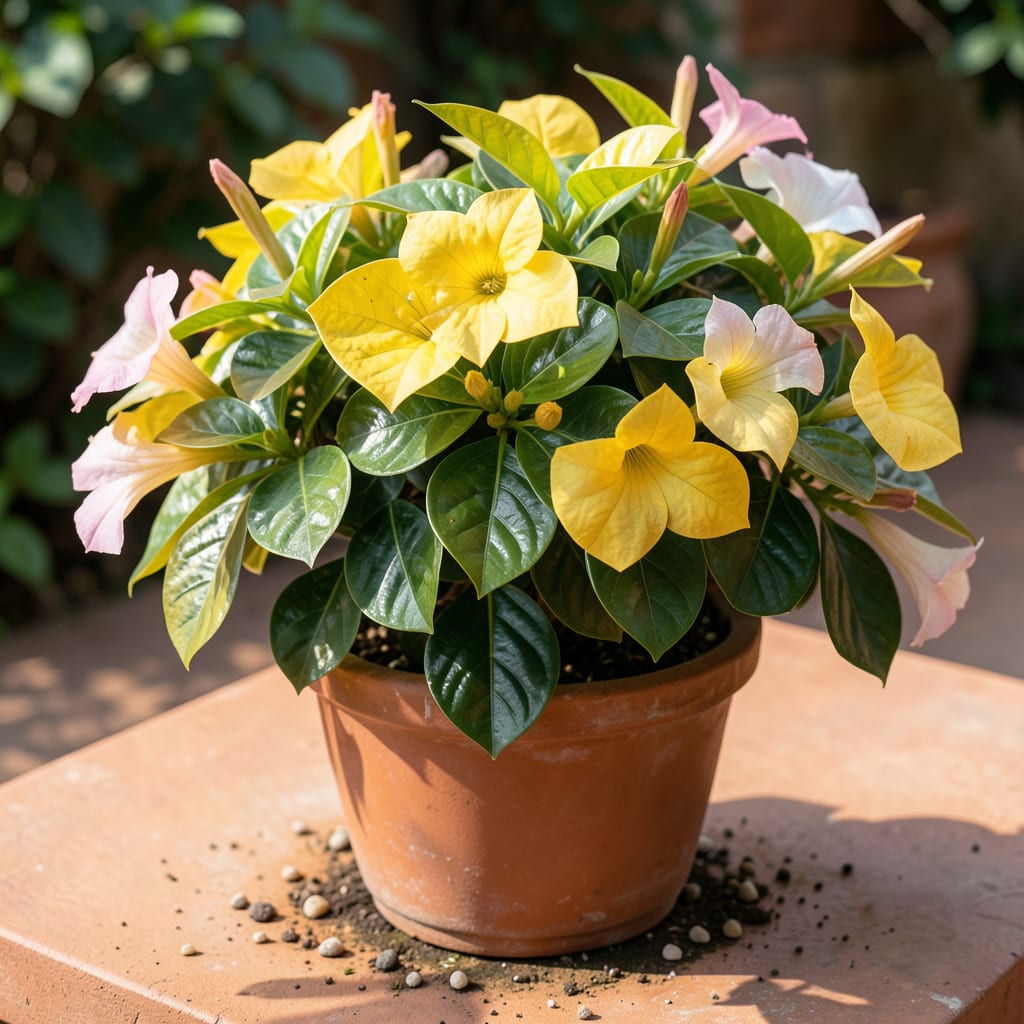
Yellow leaves on your mandevilla aren’t a death sentence—they’re a cry for help. I’ve rescued countless vines from this exact issue, and the fix is usually simpler than you’d think.
Overwatering tops the list of culprits, but sunlight and nutrients play their parts too. The key is diagnosing which factor your plant needs adjusted. Most cases clear up within 2-3 weeks of the right care.
You’ll notice the difference quickly: new growth returns to that vibrant green you love, and the plant perks up like it just woke from a long nap. No fancy equipment required—just observation and adjustment.
Works for potted plants, garden beds, and even hanging baskets. Here’s how to pinpoint and fix the problem.
Yellow leaves on your mandevilla often signal underlying stress. Here are the most common causes, explained with science-backed clarity:
Mandevillas hate soggy roots. Overwatering suffocates the root system, preventing oxygen uptake and leading to root rot (often caused by Phytophthora or Pythium fungi). Roots turn mushy, unable to absorb nutrients like nitrogen, which triggers chlorosis (yellowing). Action: Let the top 1-2 inches of soil dry out between waterings, and ensure pots have drainage holes.
These tropical natives thrive in bright, indirect light. Too little light (e.g., deep shade) slows photosynthesis, causing chlorophyll breakdown and yellowing—especially in lower leaves. Conversely, intense direct sun (especially in hot climates) can scorch foliage, leading to photooxidative stress and bleached, yellow patches. Action: Aim for 6+ hours of dappled sunlight daily; use shade cloth if needed.
Yellow leaves often indicate a lack of nitrogen (uniform yellowing, starting with older leaves) or iron (interveinal yellowing—veins stay green). Mandevillas are heavy feeders; poor soil or lack of fertilizer depletes these essential nutrients. Action: Use a balanced, water-soluble fertilizer (e.g., 10-10-10) every 2-4 weeks during growing season, or add chelated iron for iron deficiency.
Sap-sucking pests like spider mites, aphids, or scale drain the plant’s fluids, reducing its ability to transport nutrients. Their feeding also introduces toxins, causing stippling (tiny yellow spots) or widespread yellowing. Action: Inspect leaf undersides; treat with neem oil or insecticidal soap at first signs.
Mandevillas prefer 60–80°F (15–27°C). Exposure to cold drafts (below 50°F/10°C) or heat spikes (above 90°F/32°C) disrupts cellular function, leading to yellowing and leaf drop. Action: Move potted plants indoors during cold snaps and provide afternoon shade in extreme heat.
Here’s how to tackle the most common causes of yellow leaves on your mandevilla, with practical fixes and prevention tips to keep your plant thriving.
If soggy soil is the culprit, stop watering immediately and let the top 1-2 inches of soil dry out. Check the roots: if they’re mushy or brown, trim the affected parts and repot in fresh, well-draining soil. Use a pot with drainage holes to prevent waterlogging.
Prevention tip: 💡 Water only when the topsoil feels dry, and always empty the saucer after watering.
Too much direct sun can scorch leaves, while too little causes yellowing. Move your mandevilla to a spot with bright, indirect light (east or west-facing windows are ideal). If outdoors, provide afternoon shade in hot climates.
Prevention tip: 🌡️ Rotate the plant weekly to ensure even light exposure.
Yellow leaves with green veins often signal a magnesium or iron deficiency. Apply a balanced, water-soluble fertilizer (10-10-10 or 20-20-20) every 2-4 weeks during growing season. For magnesium, add Epsom salt (1 tbsp per gallon of water) monthly.
Prevention tip: ✨ Test soil pH (ideal: 6.0–6.5) and amend if too alkaline or acidic.
Inspect leaves for spider mites, aphids, or scale. Wipe them off with a soapy water solution (1 tsp mild soap per quart of water) or use neem oil. For severe infestations, apply insecticidal soap weekly until pests are gone.
Prevention tip: 🎯 Mist leaves regularly to deter pests and keep humidity up.
Stagnant air can encourage fungal issues. Place your mandevilla in a well-ventilated area and avoid crowding it with other plants. Prune dense foliage to improve circulation.
Prevention tip: 🔥 Run a fan on low near indoor plants for gentle airflow.
Water when the top 1-2 inches of soil feel dry. Overwatering is the top cause of yellow leaves, so ensure pots have drainage holes. A good rule: less water, more often observation.
Unfortunately, no. Once leaves turn yellow, they won’t regain their green color. Focus on fixing the underlying issue to prevent new leaves from yellowing. Healthy new growth is your success indicator.
Use a balanced, water-soluble fertilizer like 10-10-10 or 20-20-20 every 2-4 weeks. For magnesium deficiency, add 1 tablespoon Epsom salt per gallon of water monthly.
Yes, prune yellow leaves to redirect the plant’s energy to healthy growth. Use clean scissors and remove leaves at the stem base. This also improves airflow and reduces pest risks.
