
Beautiful Plants For Your Interior
Beautiful Plants For Your Interior
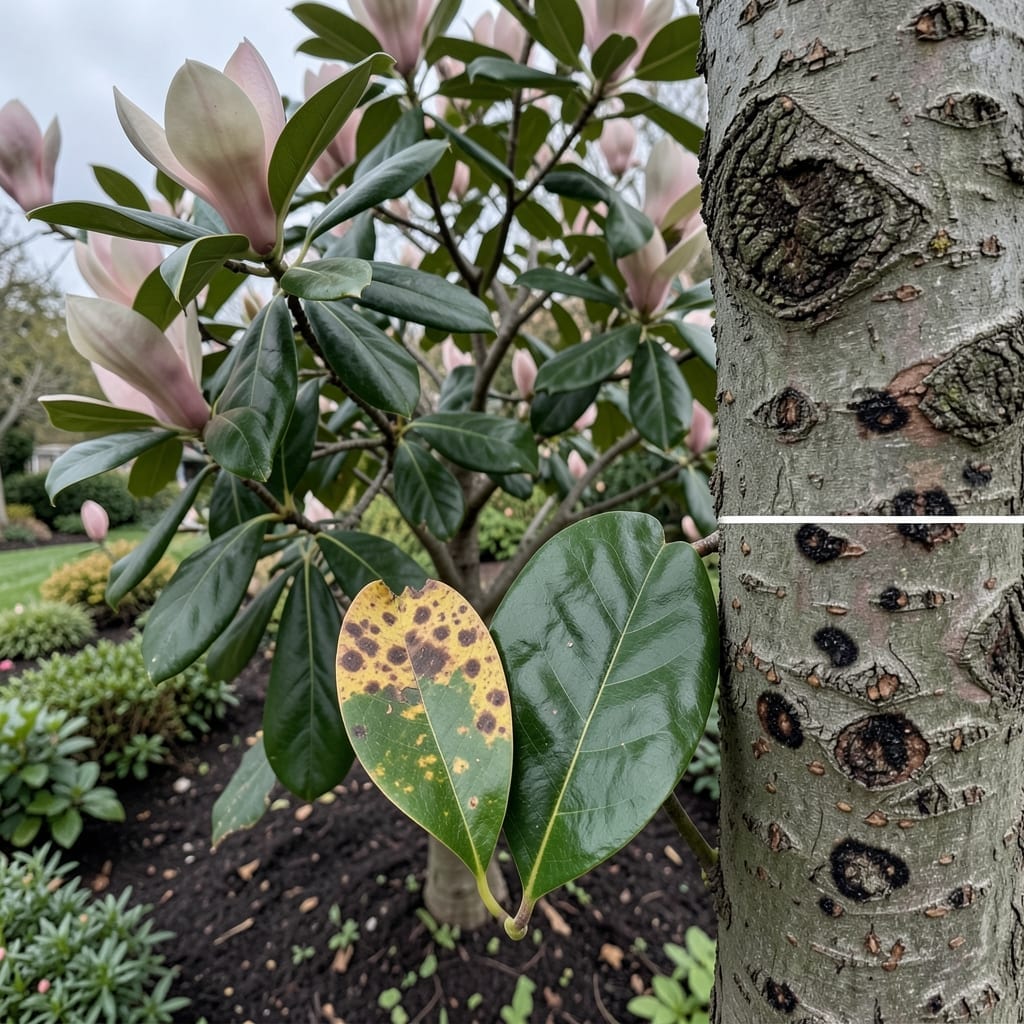
Nothing worse than watching your magnolia’s glossy leaves turn spotty or black. I’ve dealt with my share of sick trees, and the key is catching problems before they spread.
Most issues start with stress—too much water, poor drainage, or the wrong location. Yellowing leaves, powdery mildew, and leaf spots are your tree’s way of asking for help. The good news? Many problems fix with simple adjustments to care.
You’ll learn to spot the early warning signs and take action before damage becomes permanent. A little attention now prevents years of decline later.
Works for established trees and new plantings alike. Here’s how to keep them thriving.
Magnolia trees are beloved for their stunning blooms and lush foliage, but they’re not immune to diseases. Understanding the root causes can help you prevent and address issues before they escalate. Here’s why these problems occur:
Fungi thrive in warm, humid environments, making magnolias in poorly ventilated or overly wet conditions prime targets. Common fungal diseases like powdery mildew and leaf spot spread through spores carried by wind or water. Overhead watering and dense canopies trap moisture, accelerating fungal growth.
Pests such as scale insects, aphids, and magnolia borers weaken the tree by feeding on its sap or boring into the bark. These wounds create entry points for diseases, while the pests themselves can introduce pathogens. Stress from pest damage reduces the tree’s ability to fend off infections.
Extreme weather—drought, waterlogging, or temperature swings—stresses magnolias, lowering their immunity. Poor soil drainage can lead to root rot, while nutrient deficiencies (e.g., lack of iron or magnesium) make trees more susceptible to disease. Compacted or contaminated soil also harms root health.
Improper pruning, lack of sanitation, or planting in unsuitable locations can trigger disease. Dirty tools spread pathogens between cuts, and failing to remove fallen leaves or debris allows fungi to overwinter. Planting magnolias too close together limits airflow, fostering disease-friendly conditions.
By addressing these causes—improving drainage, monitoring pests, and practicing good hygiene—you can keep your magnolia thriving. 🌿
When your magnolia tree shows signs of trouble, quick and targeted action can restore its health. Below are practical solutions for the most common problems, along with prevention tips to keep your tree thriving.
If you notice brown or black spots on the leaves, act fast to prevent spreading. Remove infected leaves by hand (wear gloves!) and dispose of them in sealed bags—not compost. Apply a copper-based fungicide or neem oil to the tree, following label instructions. Prevention tip: 💡 Improve air circulation by pruning dense branches, and avoid overhead watering to reduce moisture on leaves.
For sticky residue (honeydew) or visible pests, mix insecticidal soap or horticultural oil with water and spray thoroughly, especially under leaves. Repeat every 7–10 days until pests are gone. Prevention tip: ✨ Encourage beneficial insects like ladybugs by planting companion flowers nearby.
Yellowing leaves and wilting often signal root rot from soggy soil. Stop watering immediately and check drainage. If the soil stays wet, amend it with compost or sand. For severe cases, trim affected roots and repot (if potted) in fresh, well-draining soil. Prevention tip: 🌡️ Water deeply but infrequently, and ensure the planting area has proper slope or drainage.
Browned, crispy leaves after cold snaps? Prune dead branches in early spring to stimulate new growth. Apply a layer of mulch (2–3 inches) around the base to insulate roots. Prevention tip: 🎯 Wrap young trees in burlap or use frost cloth before winter hits.
Look for yellowing leaves, brown spots, or sticky residue on foliage. These often indicate fungal infections or pest activity early on.
Yes, if caught early. Stop watering, improve drainage, and trim affected roots. Severe cases may require repotting in fresh soil.
Check leaves and branches weekly during growing season. Early detection prevents minor issues from becoming major problems.