
Beautiful Plants For Your Interior
Beautiful Plants For Your Interior
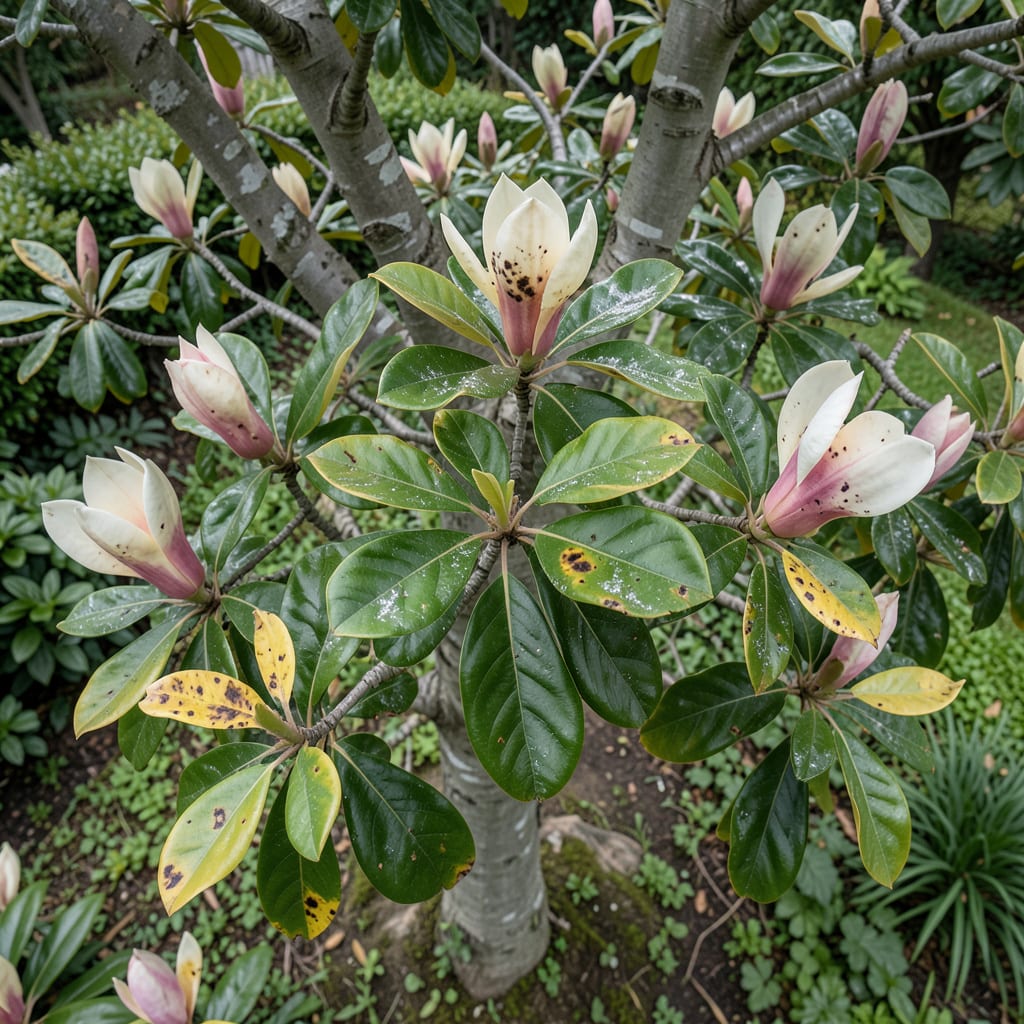
That sinking feeling when your magnolia’s leaves start looking wrong is all too familiar. I’ve stood under countless trees, squinting at spots and discoloration, trying to figure out what went awry.
Turns out, most issues show clear visual signs—black spots, powdery coatings, or wilting leaves that scream for attention. The key is catching these early before they spread to the whole canopy.
With the right photos as reference and a few simple treatments, you can nurse your tree back to health. Most problems are fixable if you act fast and target the root cause.
From fungal invaders to environmental stress, here’s how to diagnose and treat what ails your magnolia.
Magnolia trees are beloved for their stunning blooms and lush foliage, but they’re not immune to diseases. Understanding the root causes helps you prevent and treat issues effectively. Here’s why these problems occur:
Extreme weather conditions—like drought, excessive rain, or poor drainage—weaken magnolias, making them vulnerable to fungal and bacterial infections. Waterlogged soil, for example, encourages Phytophthora root rot, while drought stress can trigger leaf scorch or powdery mildew. Action: Ensure proper irrigation and improve soil drainage with organic matter.
Fungi are the most common culprits behind magnolia diseases. Botryosphaeria canker thrives in wet conditions, causing sunken, oozing lesions on bark. Powdery mildew (caused by Erysiphe spp.) appears as white, powdery spots on leaves, often in high humidity. Action: Prune infected branches, increase air circulation, and apply fungicides like copper-based sprays preventatively.
Insects like magnolia scale, aphids, or thrips weaken trees by sucking sap, leaving behind sticky honeydew that attracts sooty mold. Scale insects, in particular, create entry points for secondary infections. Action: Use horticultural oil or insecticidal soap to control pests and reduce disease risk.
Improper planting depth, over-fertilization, or mechanical damage (e.g., lawnmower wounds) stress magnolias and invite pathogens. Action: Plant at the correct depth, avoid excessive nitrogen, and protect the trunk from physical injury.
By addressing these root causes, you can keep your magnolia thriving and disease-free. Early intervention is key—monitor your tree regularly and act at the first sign of trouble.
When your magnolia tree shows signs of disease, prompt action can restore its health. Below are practical solutions for common issues, paired with prevention tips to keep your tree thriving.
If you notice brown or black spots on leaves, prune affected branches immediately to stop the spread. Collect and dispose of fallen leaves to eliminate fungal spores. Apply a copper-based fungicide in early spring as a preventive measure. Prevention tip: 💡 Improve air circulation by spacing plants properly and watering at the base to keep foliage dry.
For blighted leaves with water-soaked spots, remove infected parts and sterilize pruning tools with rubbing alcohol between cuts. Avoid overhead watering to reduce bacterial spread. Treat with bactericide sprays containing copper. Prevention tip: 🌡️ Disinfect garden tools regularly and plant disease-resistant magnolia varieties.
If sticky residue or black sooty mold appears, scrape off scale insects with a soft brush or cloth. Apply horticultural oil or insecticidal soap to smother pests. Repeat applications every 7–10 days until the infestation clears. Prevention tip: ✨ Encourage natural predators like ladybugs and avoid excessive nitrogen fertilization.
Yellowing leaves and wilting may signal root rot. Stop watering immediately and check soil moisture. Amend heavy soil with compost to enhance drainage. For severe cases, treat with a fungicide drench. Prevention tip: 🎯 Plant magnolias in well-draining soil and avoid overwatering.
For frost-damaged branches, prune dead wood in late winter before new growth starts. Apply a thick layer of mulch around the base to insulate roots. Prevention tip: 🔥 Use burlap wraps for young trees in harsh climates to shield them from freezing temperatures.
Look for dark spots, powdery coatings, or wilting leaves. Fungal issues often appear as circular lesions or discoloration on foliage.
Improve air circulation, water at the base, and remove fallen leaves. Apply fungicide preventatively in early spring.
Stop watering immediately and amend soil for better drainage. For advanced cases, a fungicide drench may help, but recovery isn’t guaranteed.
