
Beautiful Plants For Your Interior
Beautiful Plants For Your Interior
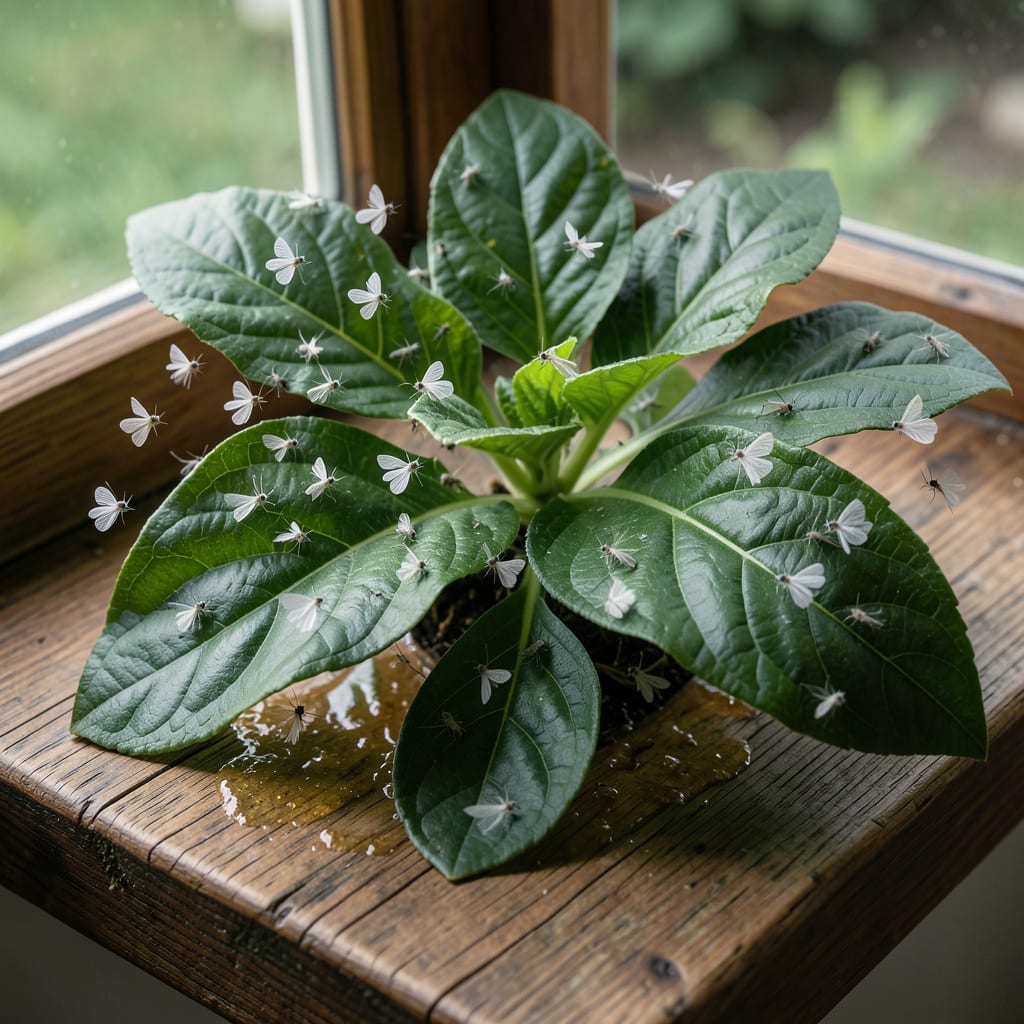
I spotted those tiny white clouds hovering over my tomatoes last summer. They multiply fast, but natural solutions can stop them in their tracks without harsh chemicals.
Yellow sticky traps catch adults, while a strong spray of water knocks them off plants. Neem oil works too—just apply at dusk to protect beneficial insects. These methods clear infestations in days.
📚 In This Guide
Here’s the method that works in days, not weeks, using only what you already have around the house.
Start by confirming you’re dealing with whiteflies, not fungus gnats or aphids. Whiteflies are tiny, moth-like insects that scatter in a cloud when disturbed. I check the undersides of leaves first—that’s where they cluster to feed and lay eggs. Look for sticky honeydew residue on surfaces below the plants, a sure sign they’ve been active.
Shake a few leaves gently over a white sheet of paper. If tiny white insects resemble bits of lint but fly away, you’ve got whiteflies. This step prevents wasting time treating the wrong pest. The faster you confirm, the faster you can act.
Prune away and immediately discard any leaves or stems covered in whiteflies or their nymphs (which look like tiny white scales). I use a sealed plastic bag to transport the clippings directly to the trash—never compost them, as the pests will survive and reinfest. This reduces the population dramatically before they spread further.
For severe cases on annual plants, I pull the entire plant if it’s beyond saving. It’s a tough call, but it prevents the infestation from jumping to healthy neighbors. With perennials, focus on removing the worst-affected foliage first.
Set up yellow sticky traps near affected plants. Whiteflies are irresistibly drawn to the color yellow, and the sticky surface captures them on contact. I place traps just above plant level, as adults tend to fly upward when disturbed. Replace traps when they’re covered—usually every 3-5 days during active infestations.
This method works surprisingly fast. You’ll see a noticeable reduction in flying adults within 48 hours. For outdoor gardens, I use larger yellow cards or even paint wooden stakes yellow and coat them with petroleum jelly as a DIY alternative.
Mix 1 tablespoon of mild liquid dish soap with 1 quart of water in a spray bottle. Shake well and spray the solution directly on both sides of leaves, focusing on the undersides where whiteflies hide. The soap disrupts their cell membranes, killing them on contact without harsh chemicals.
I apply this in the early morning or late evening when temperatures are cooler to prevent leaf burn. Reapply every 2-3 days for 2 weeks to break the life cycle. You’ll know it’s working when you see dead insects on leaves and soil within hours of application.
Release beneficial insects like ladybugs, lacewings, or parasitic wasps that target whiteflies. I order these online or find them at garden centers. One ladybug can consume hundreds of whitefly eggs and nymphs in its lifetime. Release them at dusk when whiteflies are less active and temperatures are cooler.
For best results, I combine this with the other methods. The predators handle what the soap and traps miss. You’ll see a dramatic drop in whitefly numbers within 1-2 weeks as the beneficial insects establish themselves and reproduce in your garden.
Small details make a big difference when tackling these pests quickly.
The Identification Step: Confession: I skipped the white paper test in Step 1 for years and kept treating the wrong pests. Always shake leaves over white paper—whiteflies will stand out against the background like tiny cotton specks that fly when disturbed. This saves you from wasting time on ineffective treatments.
Trapping Timing: For best results with Step 3, replace yellow sticky traps every 3-5 days as instructed. Whiteflies multiply rapidly, and full traps stop working. I place new traps before the old ones are completely covered to maintain continuous protection during the critical 48-hour period when you’ll see the first reduction.
Soap Solution Precision: In Step 4, the 1 tablespoon soap to 1 quart water ratio is non-negotiable. Too much soap can burn your plants, while too little won’t kill the pests. Shake your spray bottle vigorously before each use—the soap settles quickly. And always apply in cooler temperatures to prevent leaf damage.
Predator Release Protocol: Step 5 works best when you release beneficial insects at dusk, as mentioned. Whiteflies are less active then, giving your ladybugs or lacewings a better chance to establish themselves. I learned the hard way that releasing them in bright sunlight just sends them flying away before they can start working.
These tiny pests, often whiteflies, thrive in warm weather and are drawn to plants. They multiply quickly, especially in gardens or near decaying organic matter. Check for overwatered plants or compost piles, as these attract them.
Use a mix of neem oil or insecticidal soap sprayed on plants. Traps with yellow sticky paper or a vinegar-water solution also work. Remove infested leaves to prevent spreading.
Whiteflies peak in spring and summer when temperatures rise. They’re less active in colder months but can survive indoors or in mild climates year-round.
Yes! They suck sap from leaves, causing yellowing or wilting. They also spread diseases and leave sticky honeydew, which attracts mold. Act fast to protect your garden.
For severe infestations, introduce beneficial insects like ladybugs or lacewings. If all else fails, consider organic pesticides but avoid harsh chemicals to protect pollinators.
