
Beautiful Plants For Your Interior
Beautiful Plants For Your Interior
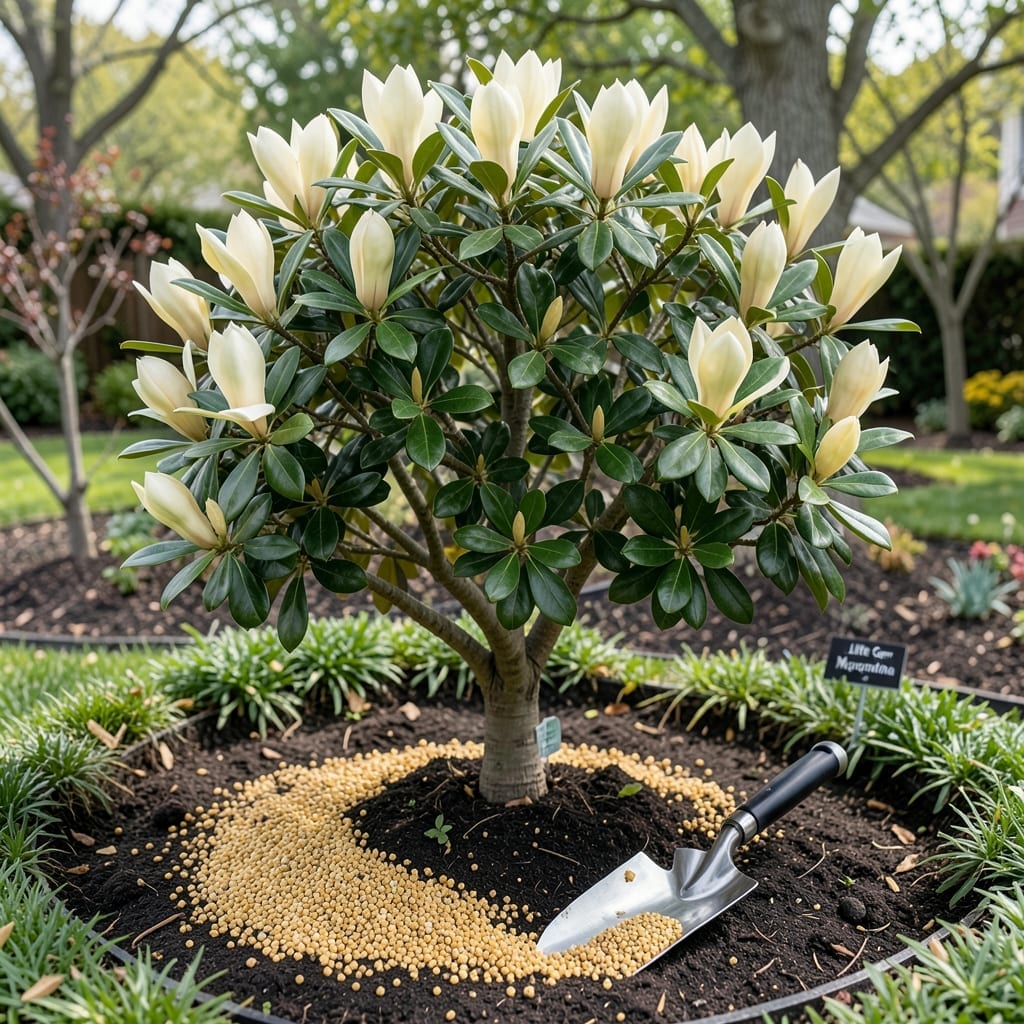
There’s nothing quite like watching your 🌳 Little Gem Magnolia burst into glossy, fragrant blooms. But that show-stopping display only happens with the right nutritional support.
Many gardeners unknowingly starve their magnolias by using the wrong fertilizer or skipping feedings altogether. The result? Weak growth and sparse flowers that never reach their full potential.
Discover how to select and apply the best nutrients to transform your tree into the lush, vibrant centerpiece your landscape deserves.
Choosing the right fertilizer for your Little Gem Magnolia can transform its growth. This compact evergreen thrives with balanced nutrition tailored to its needs as an acid-loving plant.
I’ve found that slow-release granular fertilizers work best, as they provide consistent feeding over time. Organic options like compost or cottonseed meal can also boost soil health and support vibrant blooms.
| Fertilizer Type | NPK Ratio | Best For |
|---|---|---|
| Slow-Release Granular | 10-10-10 | Balanced growth |
| Acid-Loving Plant Feed | 12-4-8 | Acidic soil needs |
| Organic Compost | Varies | Soil health boost |
| Liquid Fertilizer | 20-20-20 | Quick nutrient uptake |
For optimal results, I recommend using a slow-release 10-10-10 fertilizer in early spring. This encourages steady growth without overwhelming the plant with sudden nutrient surges.
Acid-loving plant feeds with an NPK ratio of 12-4-8 are another excellent choice. These are specifically formulated to meet the needs of plants like magnolias that prefer slightly acidic soil conditions.
If you prefer organic gardening, compost or cottonseed meal can be worked into the soil around the base of your magnolia. These natural options improve soil structure while providing essential nutrients.
Liquid fertilizers can be useful for a quick boost, especially during the growing season. However, they require more frequent application and should be used in addition to, not instead of, slow-release options.
Remember, over-fertilizing can be just as harmful as under-fertilizing. Always follow the manufacturer’s instructions and consider getting a soil test to determine your magnolia’s specific needs.
In my experience, the best approach is to combine slow-release granules with an occasional organic top-dressing. This ensures your Little Gem Magnolia gets both immediate and long-term nutritional support.
Finally, don’t forget that proper watering is essential for fertilizer effectiveness. Always water your magnolia deeply after applying fertilizer to help distribute the nutrients to the root zone.
🌳Timing your Little Gem Magnolia fertilization is just as important as choosing the right product. I always recommend feeding in early spring as new growth appears, giving your tree the nutrients it needs for the growing season ahead.
A second application in late spring or early summer can help sustain growth. However, avoid fertilizing after mid-summer to prevent stimulating new growth that could be damaged by winter frost.
For application, I prefer the broadcast method for granular fertilizers. Simply sprinkle the recommended amount around the drip line of your magnolia, avoiding direct contact with the trunk.
Always water deeply after applying fertilizer to help nutrients reach the root zone. This is especially important for dry climates or during periods of drought stress.
A common mistake I see is over-fertilizing, which can lead to leaf burn or excessive foliage growth at the expense of blooms. Stick to the recommended rates and remember that less is often more with magnolias.
For liquid fertilizers, follow the package instructions for dilution rates. These can be applied as a soil drench or foliar spray, but take care to avoid getting liquid on the blooms.
Finally, consider a soil test every few years. This will reveal any nutrient deficiencies and help you fine-tune your fertilizing approach for the healthiest possible Little Gem Magnolia. 🌳