
Beautiful Plants For Your Interior
Beautiful Plants For Your Interior
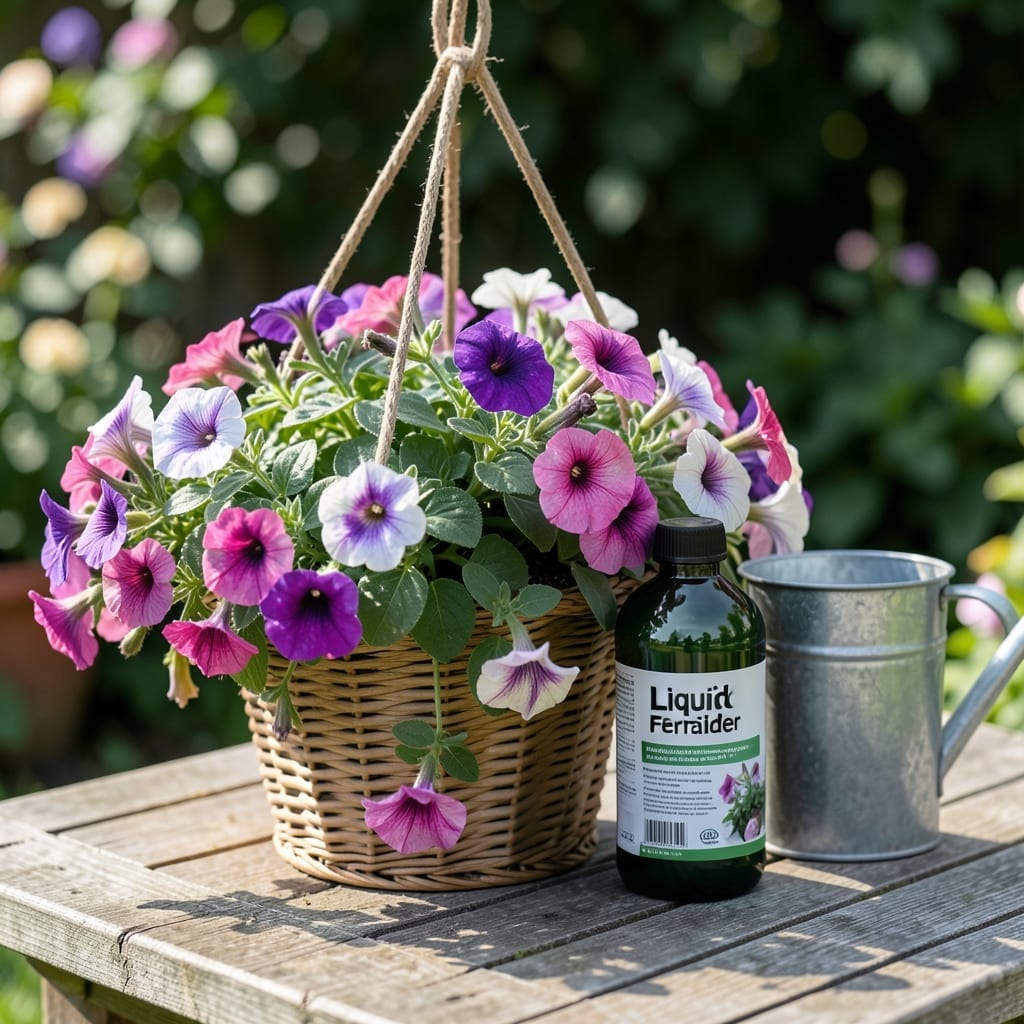
Hanging baskets burst with color and life when fed the right nutrients. I’ve seen lackluster 🪴 transform into vibrant displays with just one simple change to their care routine.
Liquid fertilizer delivers a fast-acting boost that granular options can’t match. It’s the secret to keeping your Hanging Baskets thriving all season long, especially when they need it most.
Discover how to use this game-changer effectively, from perfect timing to ideal dilution. Your baskets will thank you with lush blooms and robust growth.
I’ve found that hanging baskets demand more frequent feeding than ground plants. Their confined space and rapid drainage mean nutrients wash away quickly, leaving plants hungry.
That’s where liquid fertilizer shines—it delivers an immediate nutrient boost that roots can absorb fast. Unlike granular options, it won’t sit unused in the soil.
| Fertilizer Type | Pros | Cons |
|---|---|---|
| Liquid Fertilizer | Fast absorption, precise control | Frequent application needed |
| Granular Fertilizer | Long-lasting, less frequent use | Slower release, risk of runoff |
Hanging baskets also suffer from nutrient leaching every time you water. Liquid fertilizer replaces what’s lost, keeping your petunias or fuchsias in peak condition.
I prefer liquid feeds for their versatility. You can adjust the NPK ratio weekly to match your plants’ changing needs—more phosphorus for blooms or nitrogen for foliage.
The application precision is unmatched. With a watering can, I target the root zone directly, avoiding waste. Granular fertilizers often miss the mark in hanging baskets.
Another advantage is the ability to foliar feed. A light spray on leaves gives plants an extra boost, especially during heat stress or drought conditions.
I’ve noticed that organic liquid fertilizers like fish emulsion or seaweed extract work wonders. They improve soil health while feeding plants, which is crucial in limited basket space.
Drainage holes in hanging baskets mean nutrients escape fast. Liquid fertilizer compensates by providing instant nourishment that plants can use immediately.
For best results, I apply liquid fertilizer every 7-10 days during the growing season. This frequent feeding keeps up with the rapid growth of trailing plants like ivy or lobelia.
I always dilute liquid fertilizer to half-strength for hanging baskets. It prevents root burn while still delivering the nutrients they crave. This small step makes a big difference in their overall health and bloom production 🌿
I always recommend matching your liquid fertilizer to the plant type in your hanging baskets. Different blooms have different hunger levels and nutritional needs throughout the season.
A balanced 10-10-10 NPK works wonders for most annual flowers like petunias and geraniums. It supports both foliage growth and flower production evenly.
🌱 Best Liquid Fertilizer Types
| Fertilizer Type | Best For | Key Benefit |
| Balanced 10-10-10 | Petunias, Geraniums | Even growth & blooms |
| High-Phosphorus 7-9-5 | Fuchsias, Begonias | Boosts flower production |
| Fish Emulsion | Trailing Ivy, Ferns | Gentle organic feed |
For heavy bloomers like fuchsias and begonias, I switch to a high-phosphorus formula such as 7-9-5. The extra phosphorus encourages more vibrant blooms and stronger root systems.
If you prefer organic options, fish emulsion or seaweed extract work beautifully. They’re gentle yet effective, perfect for trailing plants like ivy or lobelia that need consistent nourishment.
I’ve had great success with water-soluble powders too. Brands like Miracle-Gro offer specialized formulas for blooming plants that dissolve instantly in my watering can.
Remember that slow-release liquids can be a good middle ground. They feed for 2-4 weeks while still offering the precision of liquid application. This reduces your maintenance schedule.
For edible hanging baskets like strawberries or herbs, I always choose organic liquid fertilizers. They’re safe for consumption and won’t leave harmful residues in your harvest 🌿