
Beautiful Plants For Your Interior
Beautiful Plants For Your Interior
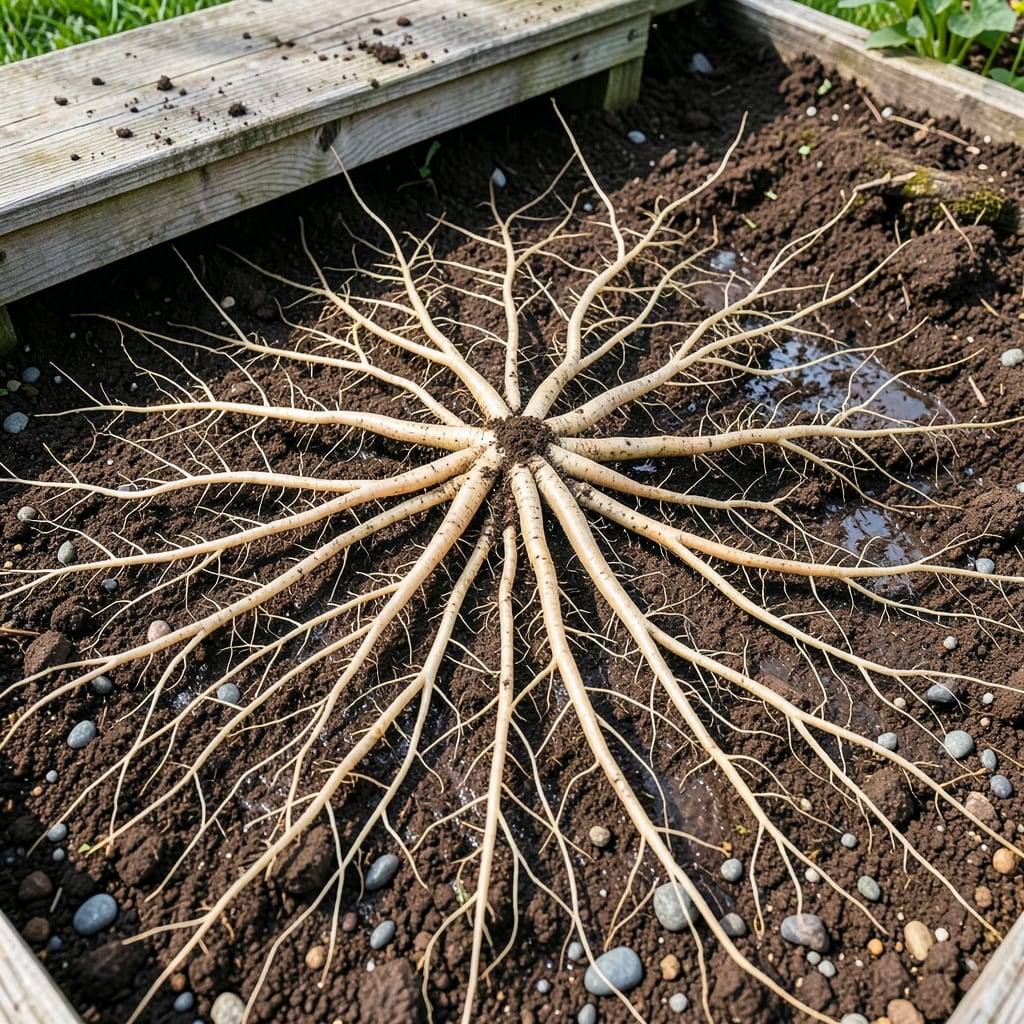
Lemon tree roots surprised me with their shallow yet wide reach. Most stay within 12-24 inches of soil, spreading outward far beyond the canopy.
Understanding this pattern helps prevent common mistakes. Proper spacing and soil prep encourage healthy growth and prevent root competition with nearby plants.
📚 In This Guide
Here’s the method I use to observe and nurture strong, healthy root development in citrus.
Lemon trees develop a fibrous root system that spreads widely rather than growing deep. The majority of roots stay within the top 12-18 inches of soil, extending outward far beyond the tree’s canopy drip line. This shallow growth pattern means they’re particularly sensitive to soil compaction and waterlogging.
I’ve found that the feeder roots—the fine, hair-like structures that absorb water and nutrients—concentrate in the top 6 inches of soil. This is why mulching properly makes such a dramatic difference in lemon tree health. The roots will grow toward areas with better moisture and aeration.
Lemon tree roots exhibit flush growth in spring and early summer when soil temperatures reach 65-75°F. During this period, you’ll notice new white root tips emerging if you gently examine the soil surface. The tree directs energy toward root expansion before the canopy growth spurt begins.
In winter, root growth slows significantly or stops altogether when soil temperatures drop below 50°F. This dormancy period is normal and actually helps the tree conserve energy. Avoid fertilizing during this time, as the roots can’t effectively absorb nutrients.
While lemon trees primarily develop lateral roots, they do produce a small taproot that anchors the tree. This central root typically grows 2-3 feet deep in ideal conditions. The lateral roots, which branch from the taproot, can extend 3-4 times the width of the tree’s canopy in mature specimens.
The most active absorption occurs at the root tips where root hairs form. These delicate structures are easily damaged by rough cultivation, which is why I always hand-weed around lemon trees rather than using mechanical tools. Even light damage can set back growth for weeks.
Because the root system is so shallow, lemon trees require frequent, light watering rather than deep, infrequent soaking. I water when the top 1-2 inches of soil feels dry to the touch, applying enough to moisten the top 12 inches where most roots reside. Drip irrigation works best to deliver water directly to the root zone.
When planting, I dig the hole twice as wide as the root ball but only as deep. This encourages lateral root spread in the loose, amended soil. The tree will establish faster and develop a stronger foundation for future growth and fruit production.
Here’s what I’ve learned from years of nurturing lemon trees and their unique root systems.
Soil Depth Awareness: Since the majority of roots stay within the top 12-18 inches of soil, avoid deep tilling or compacting this zone. The feeder roots, concentrated in the top 6 inches, are especially vulnerable. Use surface-level cultivation to preserve their delicate structure.
Seasonal Timing: Take advantage of the flush growth period in spring and early summer when soil temperatures hit 65-75°F. This is when roots expand most aggressively, so it’s the ideal time for planting, transplanting, or fertilizing. Conversely, avoid fertilizing below 50°F, as dormant roots won’t absorb nutrients efficiently.
Planting Technique: When planting, dig the hole exactly twice as wide as the root ball but no deeper. This encourages lateral expansion, which lemon trees naturally favor. A wider hole also prevents root circling, a common issue that restricts growth over time.
Watering Precision: Because the roots are shallow, water when the top 1-2 inches of soil feels dry, ensuring moisture reaches the 12-inch depth where most roots reside. Drip irrigation is ideal—it delivers water directly to the root zone without wetting the foliage, reducing disease risk.
Lemon tree roots typically grow 3–5 feet deep, with most staying in the top 1–2 feet of soil. Dwarf varieties have shallower roots, while standard trees may extend deeper for stability and nutrients.
Yes, if planted too close (under 10–15 feet from structures). Their aggressive roots can crack pavement or disrupt pipes. Always plant lemon trees a safe distance away to prevent damage.
Water deeply 1–2 times a week, allowing the top 2–3 inches of soil to dry between waterings. Overwatering leads to root rot, while underwatering stresses the tree. Adjust based on climate and soil drainage.
Well-draining, slightly acidic (pH 6.0–7.0) loamy soil is ideal. Avoid heavy clay or soggy conditions. Amend with compost or sand to improve drainage and root health.
Exposed roots often signal erosion, shallow planting, or compacted soil. Cover them with a 2–3 inch layer of mulch (not soil) to protect them and retain moisture.
