
Beautiful Plants For Your Interior
Beautiful Plants For Your Interior
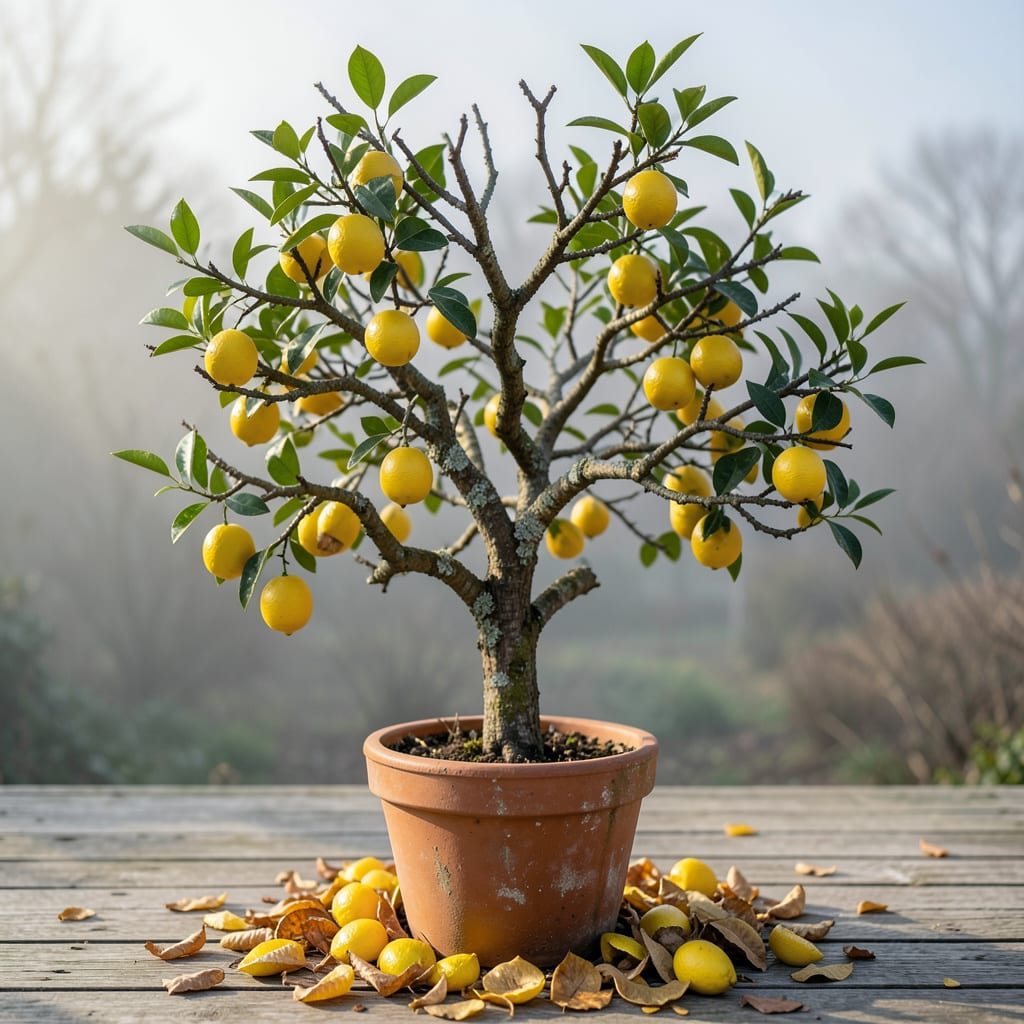
Watching your lemon tree drop leaves in winter feels like losing a good friend. 🌱 I’ve been there—cold drafts, overwatering, or just the season itself can trigger this. The good news? It’s often fixable with a few tweaks.
First, check for cold stress or soggy roots. Move potted trees indoors near a sunny window, reduce watering, and watch for pests. With the right care, your citrus can bounce back stronger by spring.
📚 In This Guide
Here’s how I nurse my citrus back to health when cold weather takes its toll.
First, check your tree for yellowing leaves, dry brittle branches, or soft black spots—these signal different problems. I run my fingers along the stems to feel for life; green, firm wood means the plant can recover. Brown, shriveled stems may be dead and need pruning.
Look at the roots through the drainage holes. If they’re mushy and dark, you’re overwatering. If the soil is bone-dry and pulling from the pot edges, underwatering is the issue. Move the pot to a spot with bright, indirect light and away from cold drafts or heat vents.
Using clean pruners, I remove any completely brown leaves or stems that snap when bent. Cut back to ¼ inch above a live bud or branch junction. This isn’t just tidying up—it prevents fungal spread and redirects energy to healthy growth.
Don’t prune more than 20% of the tree at once, even if it looks bad. Citrus can’t recover from aggressive cuts in winter. Sterilize your pruners with rubbing alcohol between cuts to avoid spreading disease. I do this over a trash can to contain the mess.
Winter means slower growth, so I water only when the top 2 inches of soil feel dry. Stick your finger in—if it comes out clean, it’s time. Use room-temperature water and water deeply until it runs from the drainage holes, then empty the saucer after 30 minutes.
Lemon trees need humidity in dry indoor air. I place the pot on a pebble tray filled with water (not touching the roots) or run a humidifier nearby. Mist the leaves lightly every 2-3 days with distilled water to prevent leaf scorch. Watch for new leaf growth—that’s your sign the balance is right.
These trees need 8-12 hours of light daily in winter. A south-facing window works, but I supplement with a full-spectrum grow light 6-12 inches above the canopy for 10-12 hours. Without enough light, leaves drop as the tree conserves energy.
Keep the room between 65-75°F during the day and no colder than 50°F at night. Sudden temperature swings cause stress. If your tree is near a window, move it away at night when glass gets cold. I use a small space heater on low to maintain steady warmth.
Skip heavy fertilizing in winter—it can burn stressed roots. Instead, I use a diluted citrus fertilizer at half strength every 4-6 weeks. Look for a formula with micronutrients like iron and zinc, which prevent yellowing.
Within 2-3 weeks, you should see new growth at the tips or blossoms forming. If leaves continue dropping, recheck light, water, and temperature. Here’s the thing—citrus are tough. Even a nearly bare tree can bounce back with consistent care. I’ve revived trees that looked like sticks by spring.
Small adjustments make a big difference when nursing your citrus back to health.
The Moisture Balance: Stick to the top 2 inches of soil rule from Step 3—this simple finger test prevents both overwatering (mushy, dark roots) and underwatering (bone-dry soil pulling from the edges). I learned this the hard way after losing a tree to root rot.
Pruning Precision: In Step 2, that ¼ inch above a live bud cut isn’t arbitrary. Cutting too close can damage the bud, while too far leaves dead wood that invites disease. And remember: never exceed 20% of the tree in one pruning session, no matter how tempting.
Light Positioning: For Step 4, keep your full-spectrum grow light 6-12 inches above the canopy as specified. Too high and your tree gets leggy; too low and you risk leaf burn. I use a simple chain hanger to adjust height as my tree grows.
Temperature Consistency: The 65-75°F daytime and 50°F minimum nighttime range is critical. Sudden drops below 50°F shock the system, while heat above 75°F can dry it out. A small space heater on low near your tree works wonders for stability.
Winter leaf drop is normal for lemon trees in colder climates. They shed leaves to conserve energy, but excessive loss may indicate stress from cold, overwatering, or poor drainage. Protect it with mulch or a frost cloth if temps dip below 30°F (-1°C).
Check for green, flexible stems—dormant trees have life under the bark. If branches are brittle and dry, it may be dying. Scratch the bark; green means it’s alive. Dormant trees regrow leaves in spring, while dead ones won’t.
Yes! Reduce watering to every 2-3 weeks, as cold soil retains moisture longer. Overwatering can cause root rot. Always check the top 2 inches of soil—if dry, water lightly. Potted trees need even less, as they dry out slower indoors.
Avoid heavy pruning until late winter or early spring, just before new growth starts. Light trimming to remove dead or diseased branches is fine. Pruning too early can stimulate new growth that’s vulnerable to frost damage.
Use frost cloths, blankets, or move potted trees indoors near a sunny window. Mulch heavily around the base to insulate roots. For in-ground trees, string lights can add warmth. Avoid plastic covers—they trap moisture and cause rot.
