
Beautiful Plants For Your Interior
Beautiful Plants For Your Interior
Tired of painful surprises in your lawn? These ten prickly weeds not only disrupt your grass but can also pose risks to pets and children. Learn to identify and safely remove them before they spread.
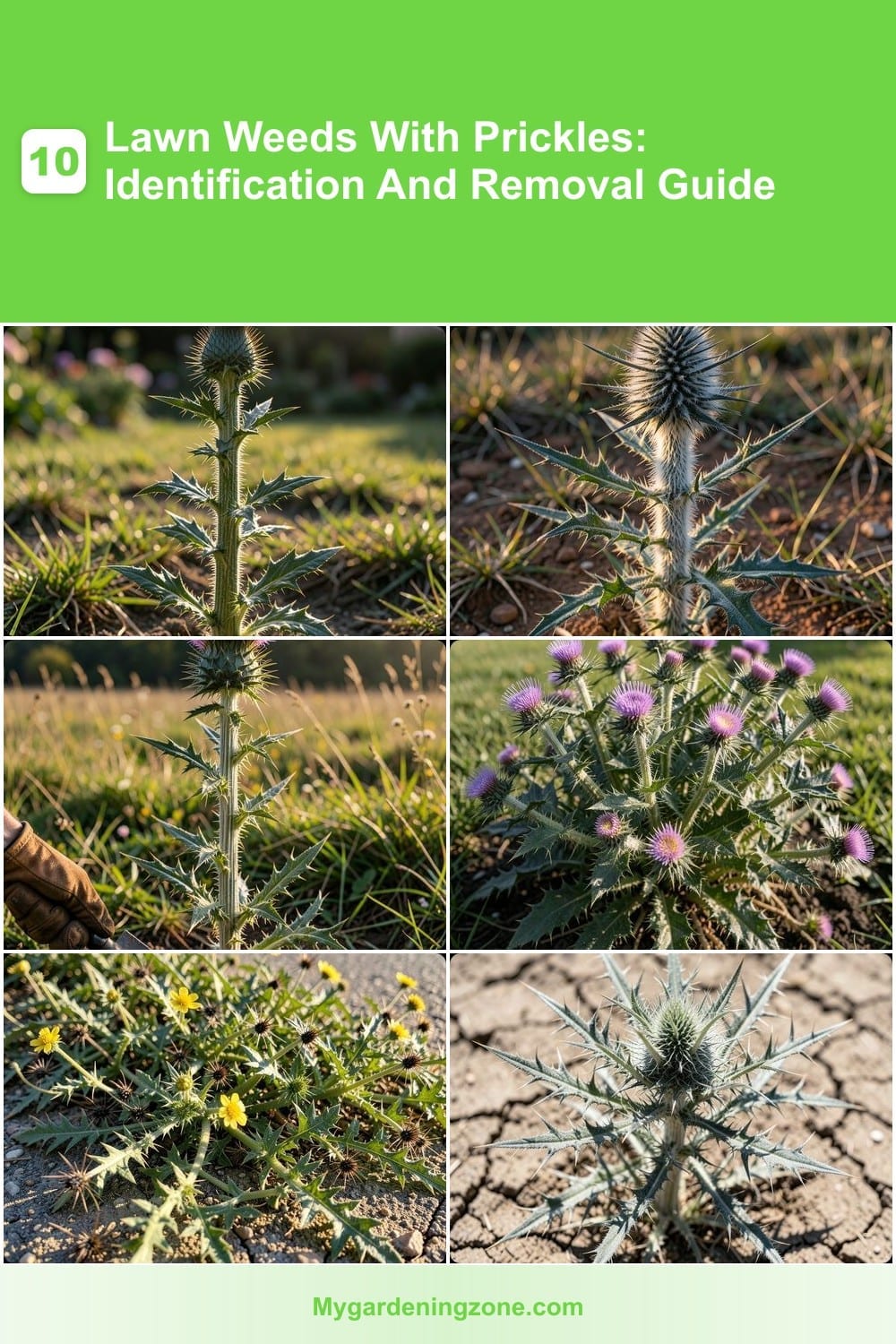
Watch out for bull thistle—this aggressive biennial turns your lawn into a hazard zone with its sharp spines on leaves and stems. It thrives in disturbed soils, making it a common unwelcome guest in gardens and yards.
Removing it can be tricky since it spreads quickly and establishes deep roots. Early identification is key, as pulling it before it seeds prevents future headaches. Use thick gloves and long sleeves when handling this hard-to-eradicate invader.
Ideal for gardeners dealing with persistent weeds, tackling bull thistle early saves time and pain later. 🌿
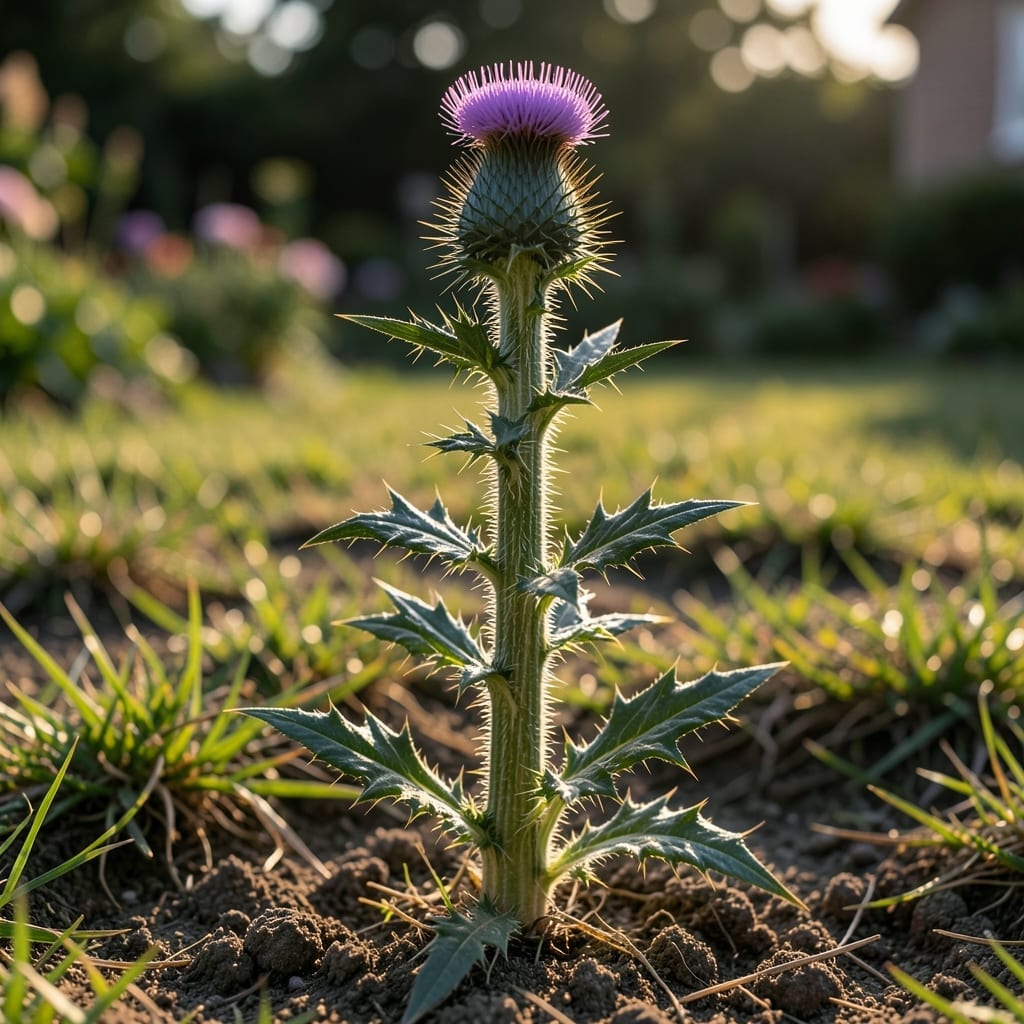
Don’t let its soft appearance fool you—Scotch thistle hides long, sharp spines under dense, wool-like hairs. These painful prickles can puncture skin and even bicycle tires, making it a serious hazard in any yard.
This invasive species thrives in poor soil, often outcompeting grass and other plants. Its deep taproot makes removal difficult, so catching it early is crucial. Wear thick gloves and use a shovel to dig out the entire root system.
Homeowners with dry or neglected lawns should watch for this troublesome weed before it spreads. 🌿
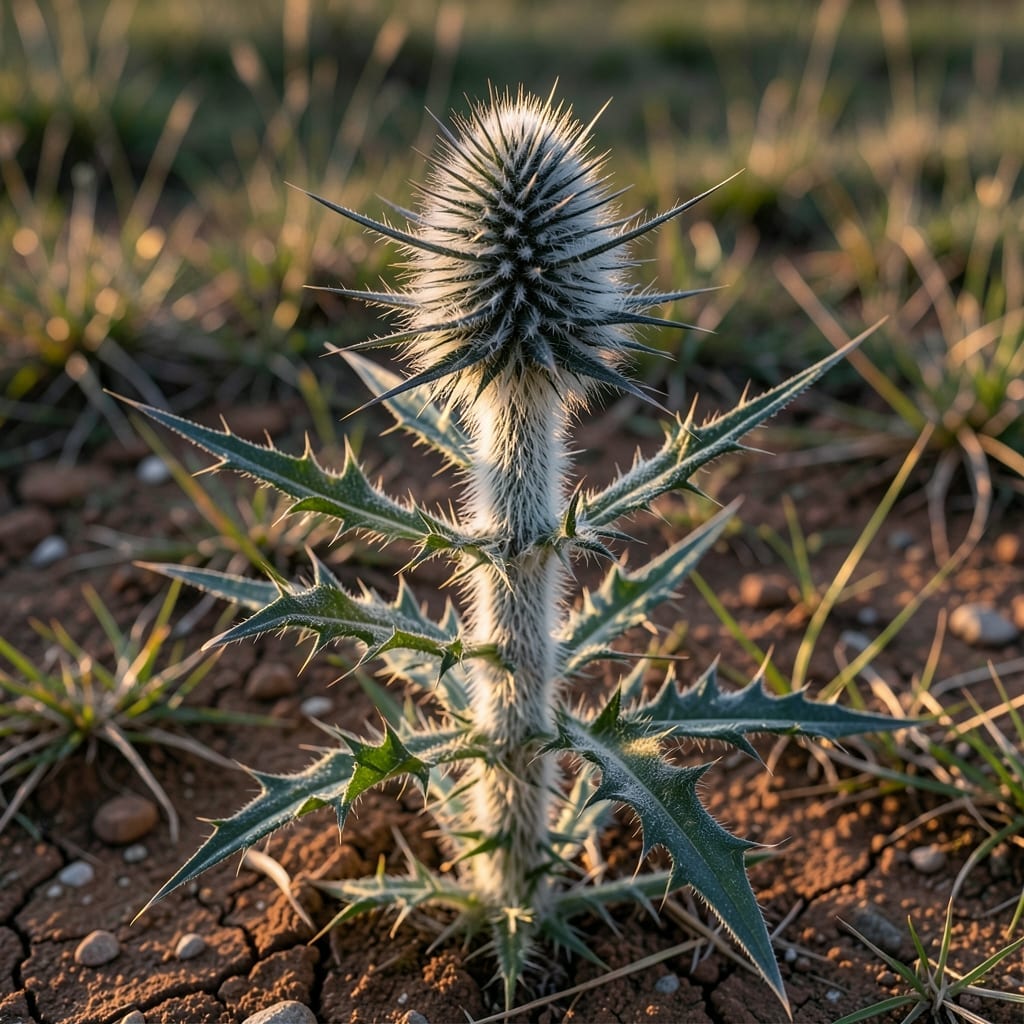
Standing tall with its striking purple flowers, musk thistle may look elegant but its spiny leaves and stems make it a painful nuisance in lawns and pastures.
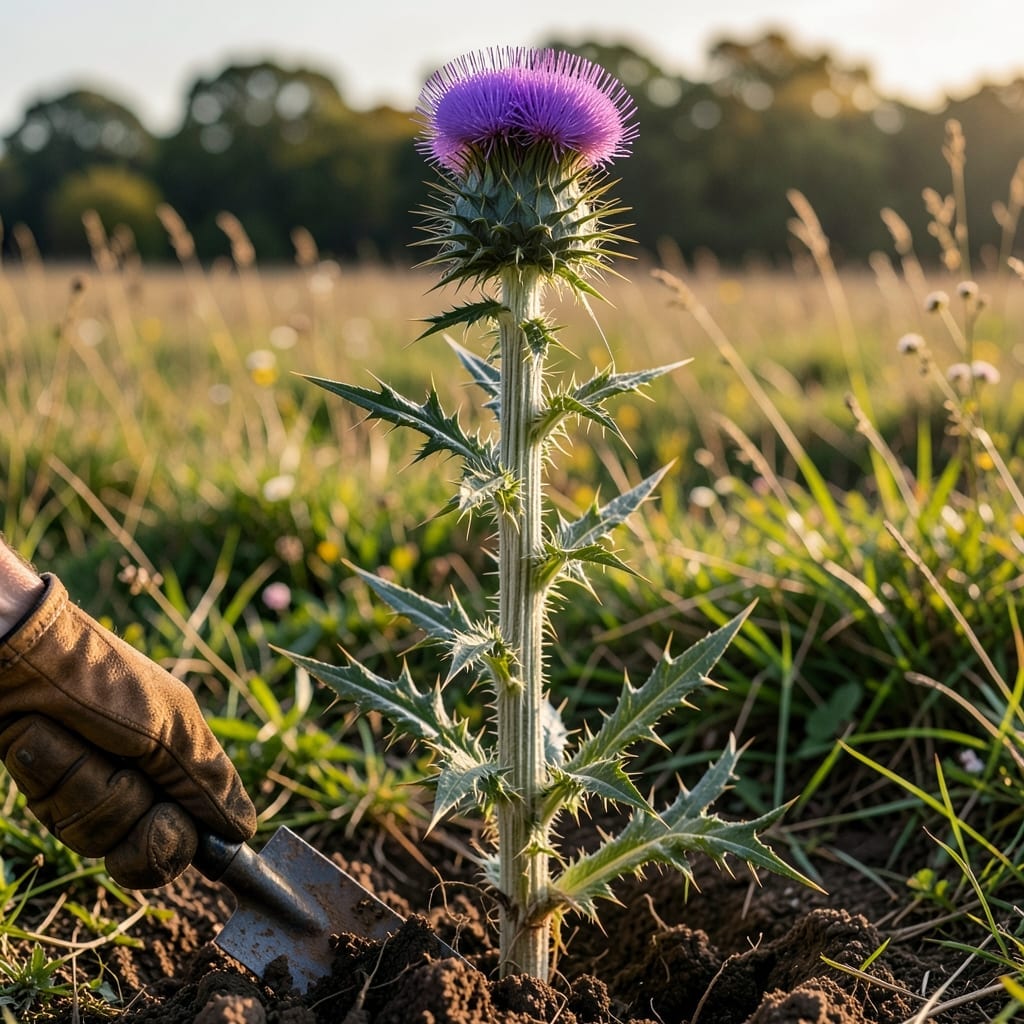
This aggressive plant spreads rapidly, and its deep taproot makes hand-pulling nearly impossible. Early intervention is crucial—use a shovel to remove the entire root before it establishes and produces more prickly offspring.
Pasture owners and lawn enthusiasts should prioritize removing this thistle before it takes over and creates a hazard for animals and barefoot walkers. 🌿
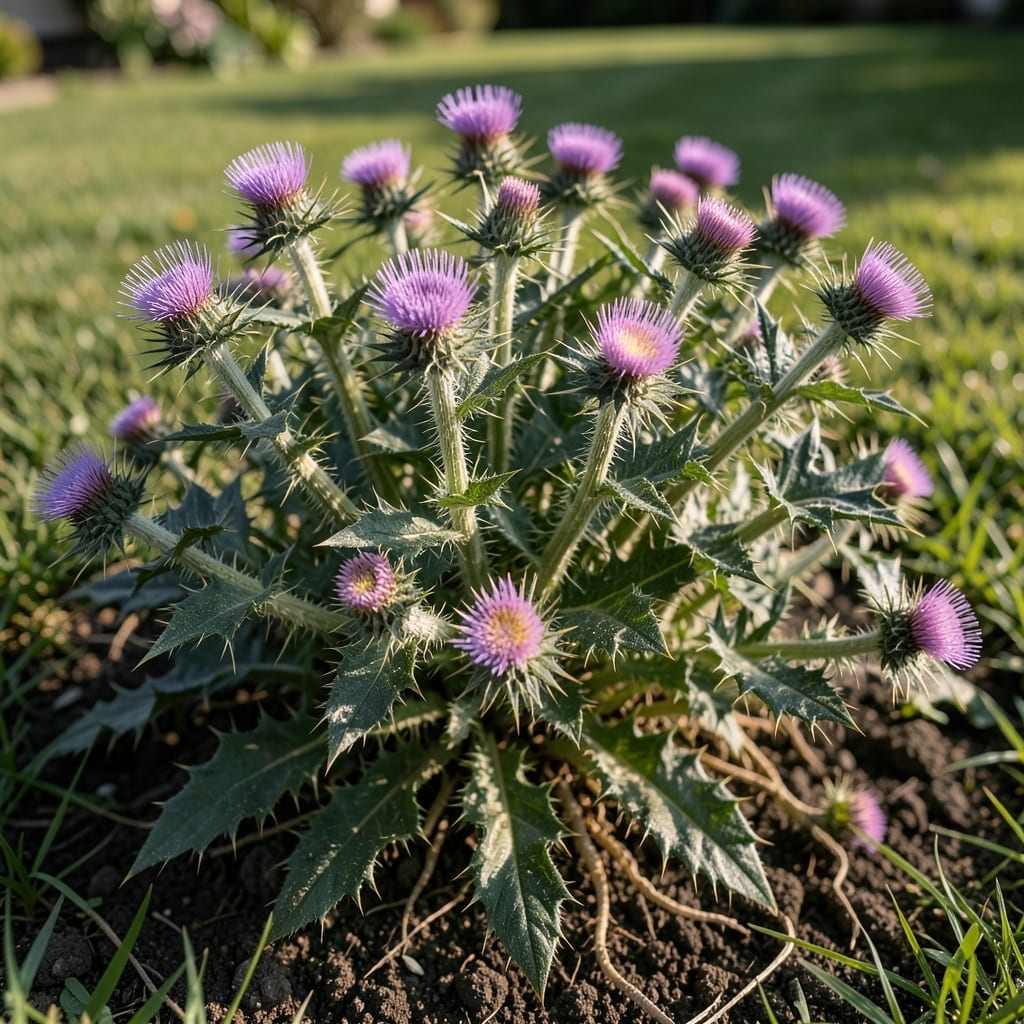
Canada thistle may look harmless with its small purple flowers, but its painful prickles and aggressive nature make it a lawn menace. This perennial spreads rapidly through an extensive underground root system, forming dense patches that choke out grass.
Its leaves are covered in tiny but sharp spines that can irritate skin, and its deep roots make hand-pulling ineffective. To control it, dig out as much of the root as possible or use targeted herbicides in early summer when it’s most vulnerable.
Gardeners battling persistent, prickly invaders should prioritize removing this weed before it establishes a stronghold in their yard. 🌿
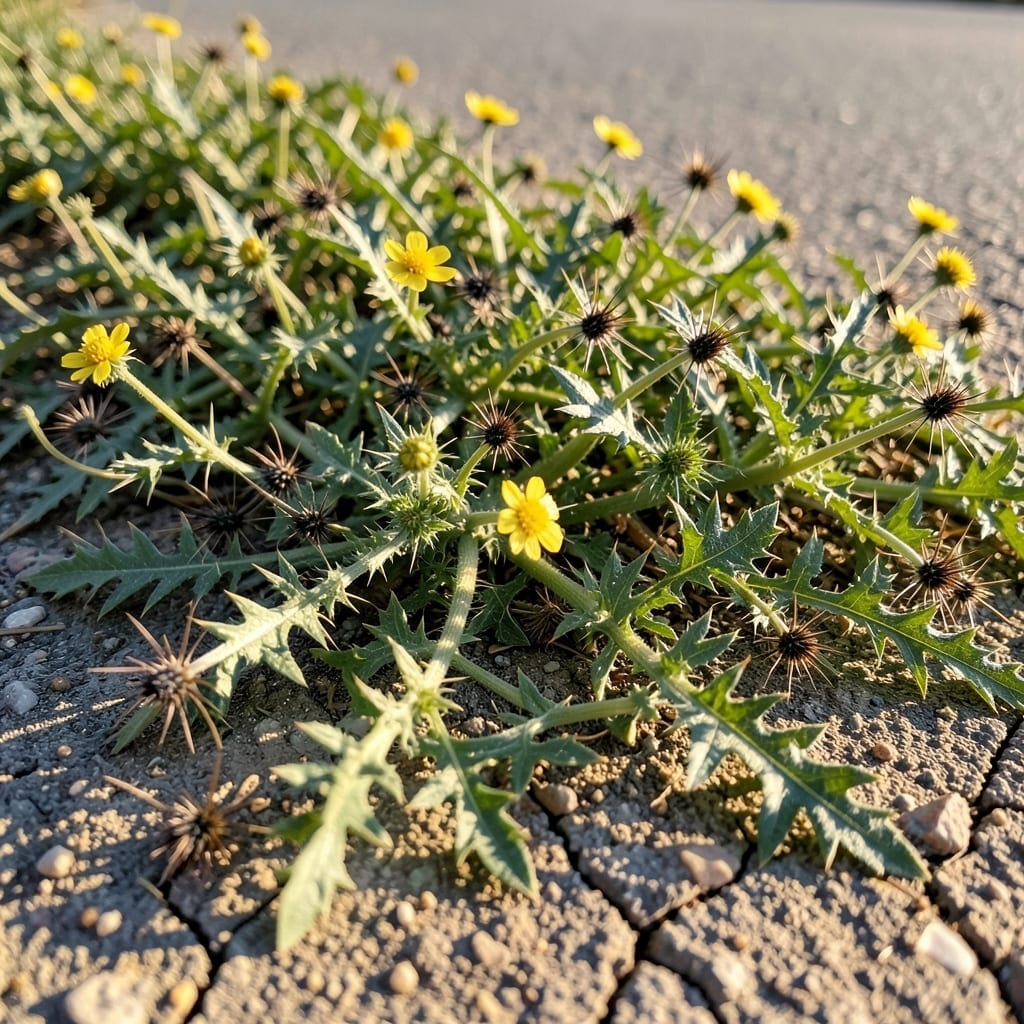
Beware of puncture vine—this low-growing annual might seem harmless until you step on its needle-sharp seed spines. Known for causing flat tires and painful barefoot encounters, it’s a sneaky hazard in driveways and walkways.
This weed thrives in dry, disturbed areas, spreading quickly and producing hardy seeds that can lie dormant for years. Remove it before it sets seed to prevent future problems, using gloves to avoid injury. Early action is key to keeping your yard safe.
Homeowners and cyclists should prioritize eradicating this plant before it becomes a recurring nuisance. 🌿
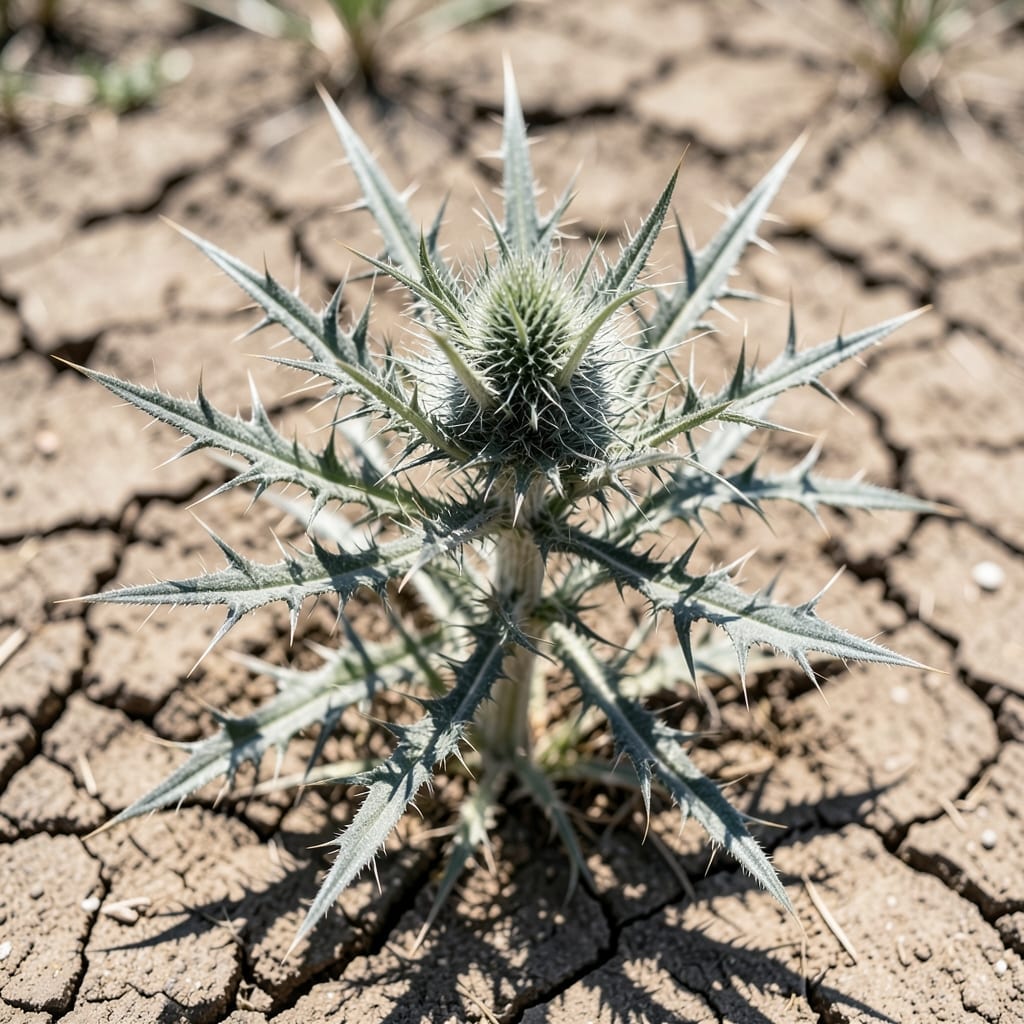
That harmless-looking plant might be Russian thistle—the future tumbleweed causing chaos in your lawn. In its early stages, it sports spiny gray-green leaves that can irritate skin and spread seeds as it breaks away and rolls.
This weed thrives in dry, disturbed soils, often appearing in bare spots or along driveways. Pull it early before it matures, as its brittle stems snap easily, letting it tumble across your yard and beyond. Wear gloves to avoid the prickles.
Homeowners in arid climates should watch for this invader before it becomes a rolling seed-spreading machine. 🌿
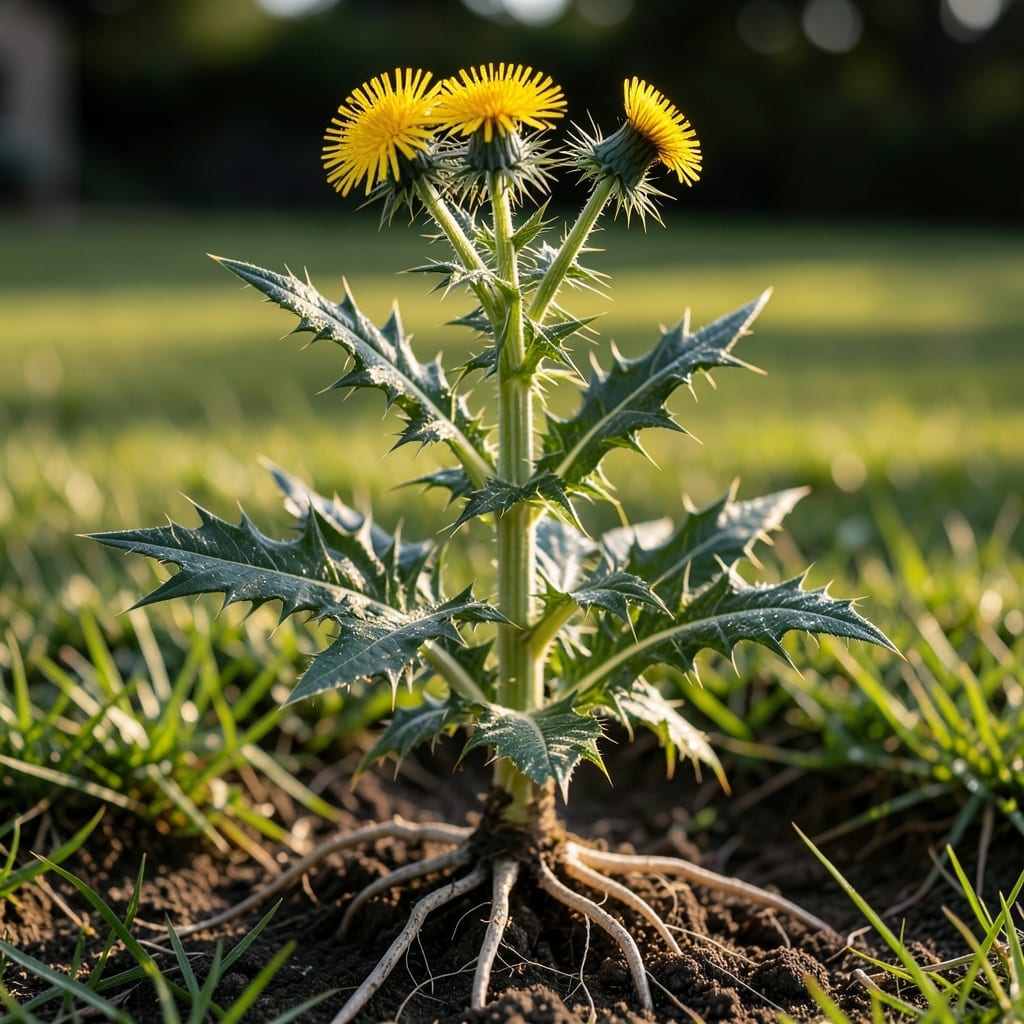
Don’t let its dandelion-like flowers fool you—sow thistle is a prickly imposter with jagged, spiny leaves that can deliver a painful surprise when you reach for it. This weed often blends into lawns, making it hard to spot until it’s too late.
Its deep taproot anchors it firmly in the soil, making hand-pulling nearly impossible without breaking the stem. Use a weeding tool to dig deep and remove the entire root, or target it with herbicide before it spreads. Always wear gloves to protect your hands from the sharp edges.
Gardeners who notice yellow blooms with spiky foliage should act fast to keep this stubborn weed from taking over. 🌿
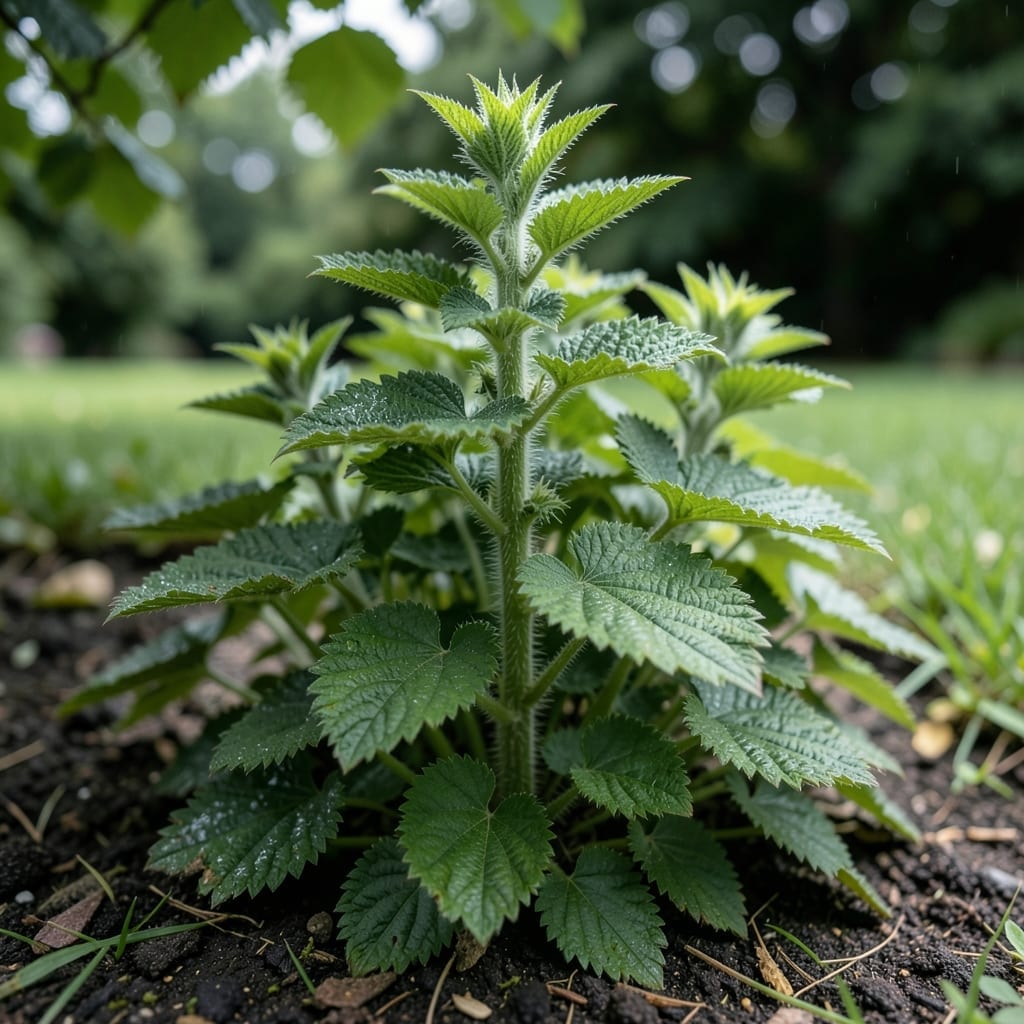
Unlike other prickly weeds, stinging nettle delivers a double dose of trouble with its fine hairs that inject irritants on contact, causing a painful sting that can last for hours.
You’ll often find it in shaded, moist areas of your lawn, where it forms dense patches. Always wear long sleeves and gloves when handling it, and avoid touching your face or skin afterward. Removing it early prevents it from spreading and reduces the risk of painful encounters.
This weed is particularly troublesome for gardeners with pets or children, as its sting can cause significant discomfort. 🌿
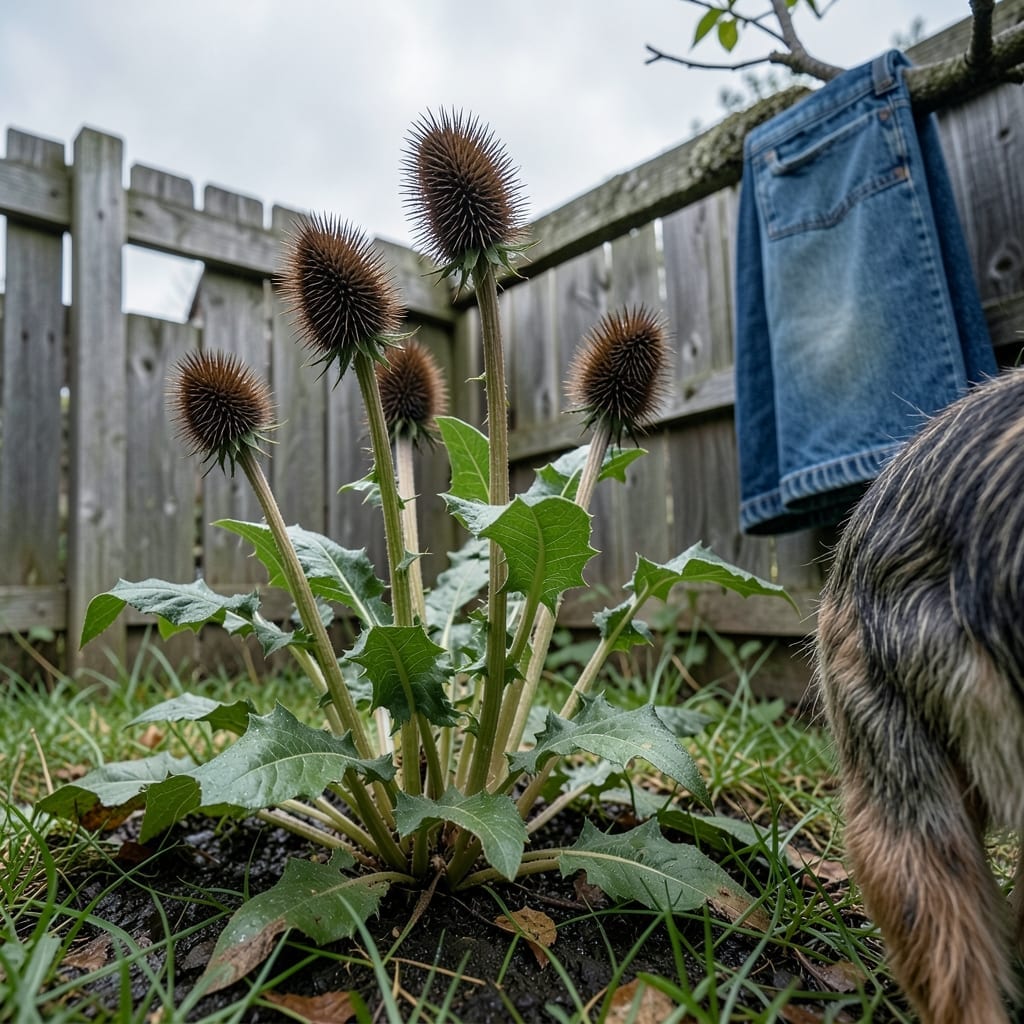
If you’ve ever come inside with mysterious burrs stuck to your clothes or your dog’s fur, you’ve likely encountered burdock. This biennial weed produces large, spiny seed heads that cling tenaciously to fabric and fur.
Burdock thrives in moist areas of lawns and gardens, often appearing near fences or in damp soil. The first year produces large leaves, while the second year brings the infamous burrs. Remove it early to prevent the burrs from forming and spreading.
Pet owners and parents should prioritize removing burdock before those sticky burrs become a nuisance for everyone in the household. 🌿
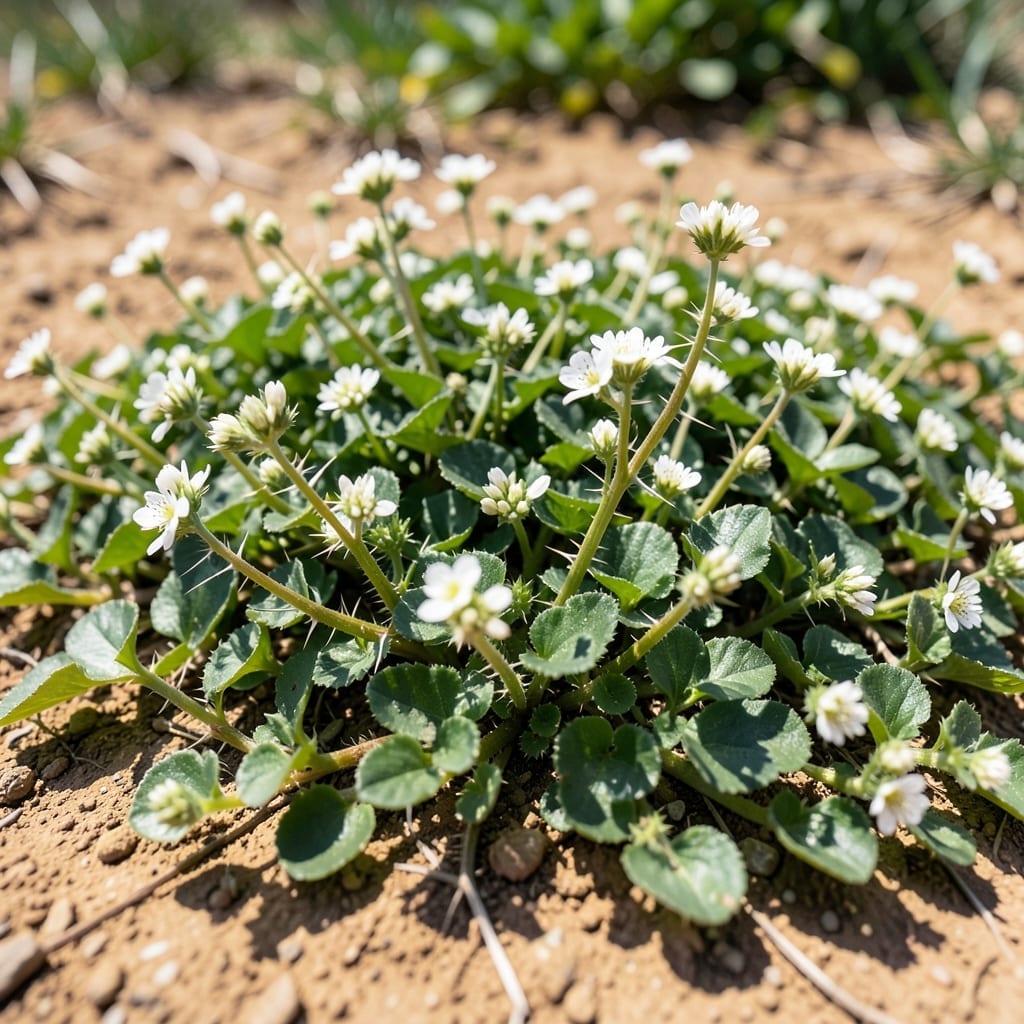
Don’t let its small white flowers deceive you—horseradish weed is a stealthy ground cover that spreads quickly with sharp thorns on its stems and leaves. It often goes unnoticed until you kneel down or walk barefoot, delivering an unexpected and painful prick.
This weed thrives in sunny, open areas, forming dense mats that choke out grass and other plants. Its small but sharp thorns can irritate skin and make removal a challenge, so wear protective gloves and long sleeves when tackling it. Early intervention prevents it from taking over your lawn.
Homeowners with pets or children should prioritize removing this sneaky invader before it becomes a widespread problem. 🌿