
Beautiful Plants For Your Interior
Beautiful Plants For Your Interior
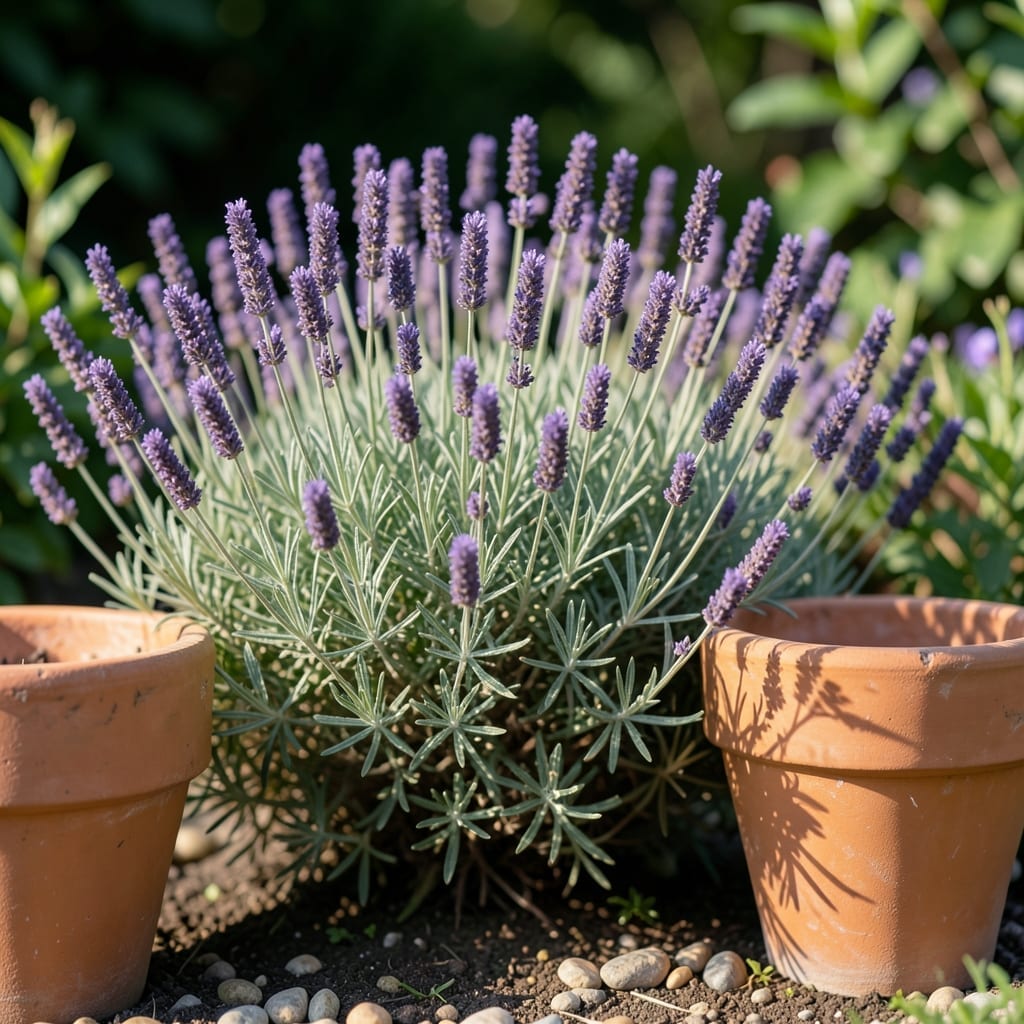
Imagine stepping onto your balcony and being greeted by the soothing scent of 🌿 Lavender. Growing this Mediterranean beauty in pots brings that dream within reach, even for those with limited space.
But here’s the catch: container cultivation demands specific care to help Lavender truly thrive. The right approach transforms your pot into a perfect miniature habitat.
Discover how to create an environment where your potted Lavender doesn’t just survive, but flourishes with vibrant blooms and that signature fragrance we all love.
From selecting the ideal container to mastering watering techniques, I’ll walk you through the essential steps that make all the difference for your potted Lavender.
Success with lavender in pots starts with the container. I always recommend terracotta pots for their breathability, but any material works if it has drainage holes to prevent soggy roots.
Size matters too—aim for a 12-16 inch diameter pot to give roots room without drowning them. Larger containers also help insulate roots from temperature swings.
| Requirement | Specification |
|---|---|
| Pot Material | Terracotta, clay, or plastic with drainage |
| Minimum Size | 12-16 inch diameter |
| Drainage | Essential – multiple holes |
| Soil Type | Sandy, well-draining mix |
| Soil pH | 6.5-8.0 (alkaline preferred) |
The soil mix is just as crucial as the pot. I use a 50-50 blend of potting soil and coarse sand or perlite to ensure excellent drainage that mimics lavender’s native habitat.
Avoid dense, moisture-retaining soils—they’re a death sentence for lavender. Add a handful of lime to boost alkalinity if your water is acidic.
For extra insurance, I place 1-2 inches of gravel or broken pottery at the pot’s base. This creates air pockets that help excess water escape quickly.
Remember that lavender hates wet feet. The soil should dry out between waterings, so a fast-draining mix isn’t optional—it’s essential for survival.
If you’re reusing pots, scrub them thoroughly with bleach solution to eliminate any lingering pathogens. This simple step prevents many common container diseases.
I also recommend elevating pots on feet or bricks. This improves airflow underneath and helps water drain completely, especially during heavy rain periods.
Finally, consider the color of your pot. Dark containers absorb more heat, which can stress roots in hot climates. Light-colored pots stay cooler.
With the right pot and soil, your potted lavender will establish quickly and reward you with years of fragrant blooms 🌿
Caring for lavender in pots is simpler than you might think, but it requires attention to a few key details. This Mediterranean plant thrives on a little neglect, but container growing changes the rules slightly.
I’ve found that the biggest mistake beginners make is overcomplicating the care routine. Instead, focus on creating conditions that mimic its natural, sunny, well-drained habitat.
Sunlight is non-negotiable for potted lavender. I place my containers in the sunniest spot available, typically a south-facing balcony or patio. Without enough light, plants become leggy and fail to bloom.
When it comes to watering lavender in pots, less is definitely more. I check the soil by sticking my finger in – if the top 2 inches are dry, it’s time to water. Always water deeply and let excess drain away.
Pruning keeps your lavender compact and encourages more blooms. I do a light trim after flowering, removing about 1/3 of the growth. Never cut into old wood, as lavender doesn’t regenerate from this.
One of the biggest surprises for new growers is that lavender doesn’t need fertilizer. In fact, too much can reduce its fragrance and flowering. If your plant looks healthy, just leave it be.
☀️