
Beautiful Plants For Your Interior
Beautiful Plants For Your Interior
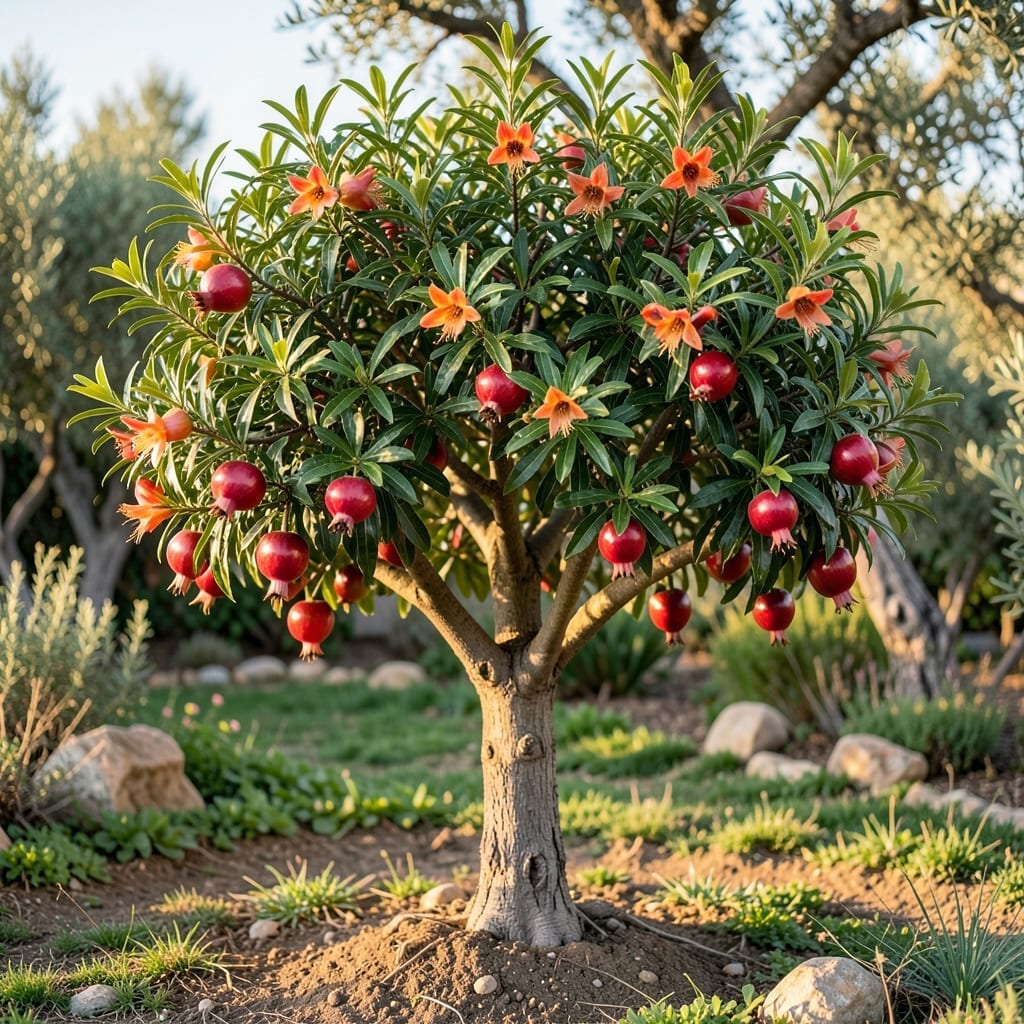
Imagine stepping into your garden to find a majestic 🍇 Pomegranate Tree bursting with vibrant fruit. It’s a sight every gardener dreams of, but without proper care, that dream can quickly turn into a tangled mess.
Pruning isn’t just about keeping your tree looking good—it’s the key to its health and productivity. A well-pruned Pomegranate Tree thrives, yielding more fruit and resisting disease far better than one left to grow wild.
I’ve seen firsthand how a little strategic trimming can transform a struggling tree into a showstopper. Whether you’re new to pruning or just need a refresher, this guide will walk you through every step.
Discover how to shape your tree for success, avoid common pitfalls, and enjoy a bountiful harvest season after season.
Pruning a large pomegranate tree is essential for maintaining its health and productivity. I always recommend timing your pruning in late winter or early spring, just before new growth begins.
This timing helps the tree focus its energy on producing strong, healthy branches and abundant fruit. Proper pruning also improves air circulation and sunlight exposure, which are critical for fruit quality and disease prevention. ✂️
Start by removing any dead or diseased wood, as these can harbor pests and diseases that may spread to healthy parts of the tree. Use clean, sharp tools to make precise cuts just outside the branch collar.
Next, focus on thinning out crowded areas. This step is crucial for improving airflow and light penetration, which helps prevent fungal infections and promotes even fruit ripening.
When shaping the tree, aim for a balanced structure. Remove inward-growing branches and those that cross over each other. This not only enhances the tree’s appearance but also reduces the risk of damage from rubbing branches.
I also recommend making thinning cuts rather than heading cuts. Thinning cuts remove entire branches back to their point of origin, while heading cuts shorten branches. Thinning helps open the canopy without encouraging excessive new growth.
Don’t forget to step back frequently to assess your progress. It’s easy to over-prune, so take it slowly and make deliberate cuts. A good rule of thumb is to never remove more than 25% of the tree in a single pruning session.
Finally, always clean up thoroughly after pruning. Remove all clippings and debris from around the tree to prevent pests and diseases from taking hold. Proper cleanup is just as important as the pruning itself.
With these steps, your large pomegranate tree will not only look beautiful but also produce a bountiful harvest year after year. Happy gardening! 🌳
Pruning a large pomegranate tree can feel intimidating, but avoiding key mistakes keeps it thriving. I’ve seen gardeners accidentally harm their trees by over-pruning or making improper cuts, which stunts growth and invites disease.
One of the biggest errors is removing too much foliage at once, which stresses the tree. Another is ignoring dead or diseased wood, allowing pests to spread unchecked.
⚠️ Avoid These Pruning Blunders
Never remove more than 25% of the canopy in one session. Always sterilize pruning tools to prevent disease spread. Avoid topping the tree, as this encourages weak, spindly growth.
Timing matters too. Pruning during active growth can reduce fruit production. Instead, aim for late winter when the tree is still dormant but about to awaken.
Another common mistake is using dull or dirty tools, which can tear the bark. Sharp, clean cuts heal faster and reduce the risk of infection. I always keep a disinfectant spray handy.
Don’t forget to step back and assess the tree’s shape. Poor symmetry can lead to uneven sunlight exposure, which affects fruit quality. Aim for an open-center structure to improve air circulation.
Finally, avoid pruning in wet conditions, as this can spread fungal diseases. Wait for a dry, sunny day to ensure your cuts heal properly and your tree stays healthy. ✂️