
Beautiful Plants For Your Interior
Beautiful Plants For Your Interior
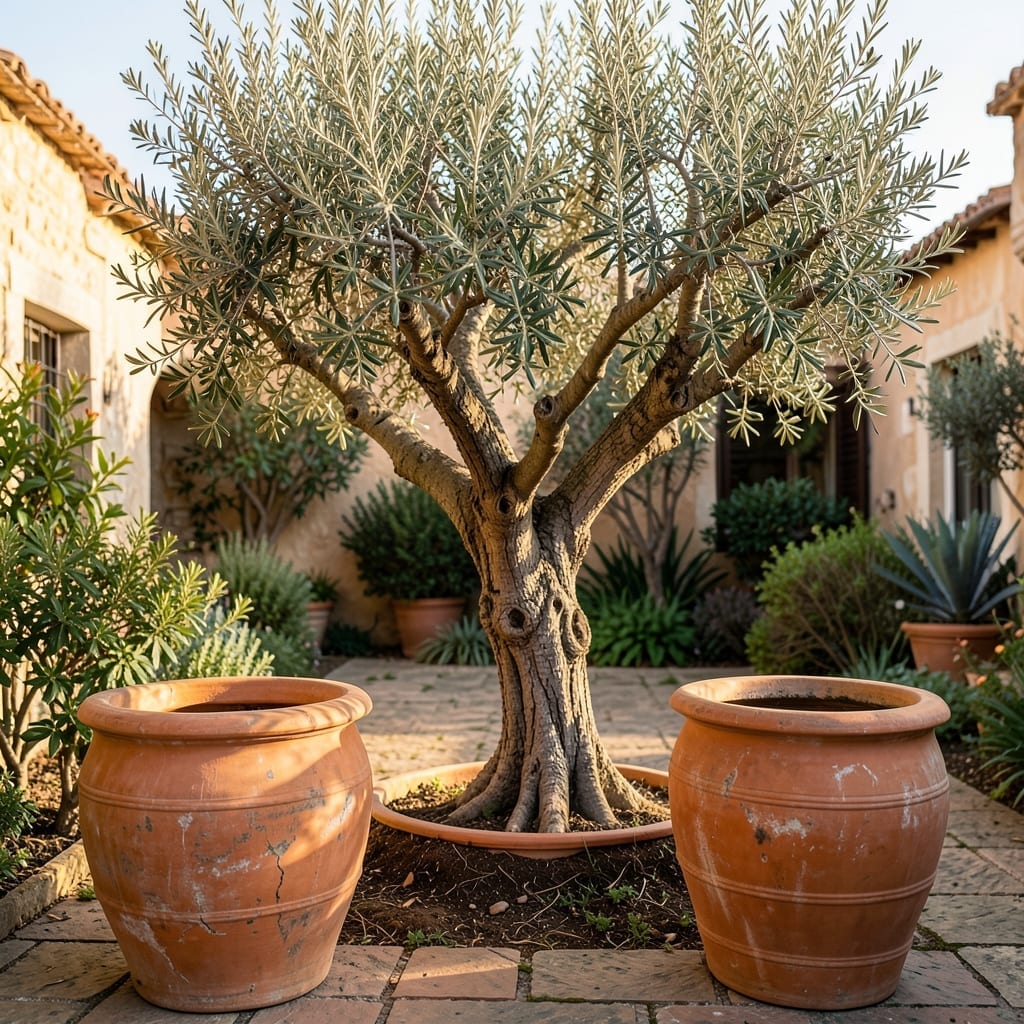
Imagine bringing the timeless beauty of the Mediterranean to your patio or balcony. With 🫒 Olive Trees, even small spaces can host these majestic plants for decades when grown in containers.
I’ve seen firsthand how the right approach transforms a potted Olive Tree from surviving to thriving. The key lies in understanding their unique needs in confined spaces.
Discover how to create the perfect home for your tree, from pot selection to seasonal care. Let’s make your container garden the envy of the neighborhood.
Selecting the perfect container is the foundation for growing large olive trees in pots. These trees need ample root space to thrive, so I always recommend starting with a pot that’s at least 24-36 inches in diameter.
A deep pot is equally important—aim for 20-24 inches in depth to accommodate the extensive root system. Without enough room, the tree becomes root-bound, stunting its growth and health.
| Requirement | Specification |
|---|---|
| Pot Size | 24-36 inches diameter |
| Pot Depth | 20-24 inches |
| Drainage | Multiple drainage holes |
| Material | Terracotta or fabric |
| Soil Mix | Well-draining, sandy loam |
Drainage is non-negotiable for olive trees. I’ve learned the hard way that standing water leads to root rot, so always choose pots with multiple drainage holes. Elevate the pot on bricks or pot feet to ensure water flows freely.
For material, terracotta pots are my top pick because they’re breathable and help wick away excess moisture. Fabric pots are another great option, as they prevent root circling and promote aeration.
The soil mix should mimic the Mediterranean conditions olive trees love. I use a blend of 50% potting mix, 30% perlite, and 20% coarse sand for optimal drainage. Avoid heavy, clay-based soils that retain too much water.
Adding a 2-inch layer of gravel or lava rock at the bottom of the pot further improves drainage. This simple step can make a huge difference in preventing waterlogged roots.
Remember, olive trees are drought-tolerant once established, so overwatering is a bigger risk than underwatering. Let the top 1-2 inches of soil dry out between waterings to encourage deep root growth.
If you’re in a colder climate, consider a light-colored pot to reflect heat and protect roots from freeze-thaw cycles. This small adjustment can help your tree survive harsh winters in containers.
Finally, repotting every 2-3 years keeps your olive tree healthy. Look for signs like roots growing out of drainage holes or slow growth as indicators it’s time for a larger home.
🌳Growing large olive trees in pots requires seasonal attention to keep them thriving. I’ve found that consistent watering is key, especially during hot summers. Aim for deep watering every 7-10 days, letting the top 1-2 inches of soil dry out between sessions.
In spring and fall, adjust to weekly watering, while winter needs are minimal—just enough to prevent the soil from completely drying out. Always water in the early morning to reduce evaporation and fungal risks.
Pruning is essential for potted olive trees. I prune mine in early spring to remove dead or diseased branches and open the canopy for better air circulation. This also helps maintain the tree’s shape and size.
For fertilization, use a 10-10-10 balanced fertilizer every 4-6 weeks during the growing season. In summer, switch to a light feed to avoid stressing the tree during extreme heat.
In colder climates, winter protection is critical. Move pots to a sheltered location, wrap the trunk in burlap, and apply a thick layer of mulch around the base to insulate the roots.
Pest management is simpler than you might think. Olive trees are relatively pest-resistant, but keep an eye out for scale insects or spider mites. A neem oil spray works wonders for prevention and treatment.
🌿