
Beautiful Plants For Your Interior
Beautiful Plants For Your Interior
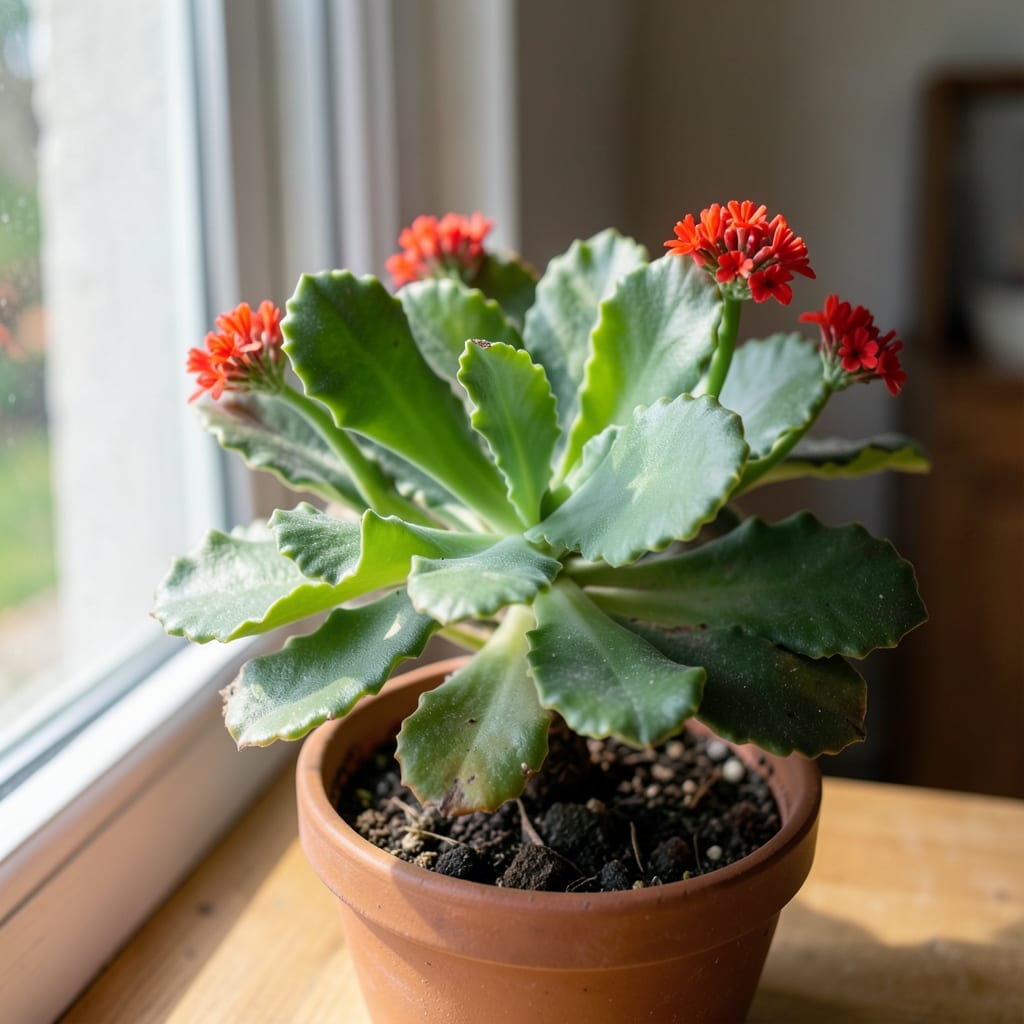
My first kalanchoe nearly died from too much love—I watered it daily like a nervous new plant parent. Turns out, these foolproof succulents thrive on neglect more than attention.
You’ll get vibrant blooms and plump leaves with just bright light, occasional drinks, and well-draining soil. They bounce back from near-death experiences, making them perfect for forgetful gardeners.
📚 In This Guide
This method ensures vibrant blooms and healthy growth with minimal daily attention.
Place your kalanchoe in a location with bright, indirect light for 6-8 hours daily. A south or west-facing window is ideal, but avoid direct afternoon sun that can scorch the leaves. You’ll notice the plant stretching toward the light if it’s not getting enough.
If growing outdoors in warm climates, position it where it receives morning sun and afternoon shade. The leaves will develop a healthy, deep green color with slight red edging when light conditions are perfect. Leggy growth with pale leaves signals insufficient light.
Water only when the top 1-2 inches of soil feel completely dry to the touch. I use the “soak and dry” method: thoroughly saturate the soil until water runs from the drainage hole, then let it dry out completely before watering again. This mimics the natural cycle of their native arid environments.
In cooler months, you may water as infrequently as every 3-4 weeks. Overwatering is the most common mistake—yellowing leaves or a soft, mushy stem are clear signs you’ve been too generous. Always use a pot with drainage holes to prevent root rot.
Kalanchoe thrives in 60-75°F during the day and can tolerate a 10°F drop at night. These plants prefer low humidity, making them perfect for most indoor environments. If your home is particularly dry in winter, don’t worry—this succulent handles arid air better than most houseplants.
Avoid placing it near drafty windows or heating vents. Sudden temperature changes can cause leaf drop. If moving plants outdoors in summer, acclimate them gradually over 7-10 days to prevent shock from the transition.
To trigger flowering, provide 12-14 hours of darkness for 6-8 weeks in fall. This mimics the shorter days of their natural growing season. You can achieve this by placing the plant in a dark closet at night or covering it with a box.
Reduce watering during this period, keeping the soil just barely moist. Once flower buds appear, return to normal light conditions and resume regular watering. Deadhead spent blooms immediately to encourage a second flush of flowers. I’ve found this method produces the most vibrant, long-lasting displays.
Use a balanced, water-soluble fertilizer diluted to half strength, applying it once every 4-6 weeks during spring and summer. Avoid fertilizing in fall and winter when the plant is in its natural resting phase. Too much fertilizer results in excessive leafy growth at the expense of flowers.
Repot every 2-3 years or when you see roots growing from the drainage hole. Choose a pot only 1-2 inches larger in diameter—kalanchoe blooms best when slightly root-bound. Use a well-draining cactus or succulent mix, and wait 1 week after repotting before watering to allow any damaged roots to heal.
These small adjustments make a huge difference in keeping your plant thriving with minimal effort.
Light Exposure Insight: The 6-8 hours of bright, indirect light in Step 1 isn’t just a suggestion—it’s critical. I learned the hard way that leggy growth with pale leaves means your kalanchoe is begging for more light. A sheer curtain can help filter harsh afternoon sun while still delivering those essential hours.
Watering Wisdom: That top 1-2 inches of dry soil check in Step 2 is your best defense against overwatering. Confession: I skipped this step for years and wondered why my plants kept rotting. The “soak and dry” method works because it mimics their native arid environments perfectly.
Temperature Transition Tip: When moving plants outdoors in summer, the 7-10 day acclimation period in Step 3 isn’t optional. Sudden temperature changes can cause leaf drop, and I’ve seen it happen overnight. Start with an hour outside, gradually increasing each day.
Blooming Boost: For Step 4’s darkness requirement, consistency is key. Those 12-14 hours of darkness for 6-8 weeks must be uninterrupted—even a brief light exposure can reset the blooming cycle. A dark closet or box works perfectly for this.
Water every 2-3 weeks, allowing the soil to dry completely between waterings. Overwatering can cause root rot, so err on the side of underwatering.
Yellow leaves often indicate overwatering or poor drainage. Check the soil moisture and ensure your pot has drainage holes to prevent waterlogging.
Yes! Kalanchoe thrives indoors with bright, indirect light. Place it near a sunny window, but avoid direct sunlight for extended periods.
Use a well-draining mix, like cactus or succulent soil. You can also add perlite or sand to improve drainage and prevent soggy roots.
Prune leggy stems to encourage bushier growth. Provide more light to prevent stretching, and rotate the plant occasionally for even exposure.