
Beautiful Plants For Your Interior
Beautiful Plants For Your Interior
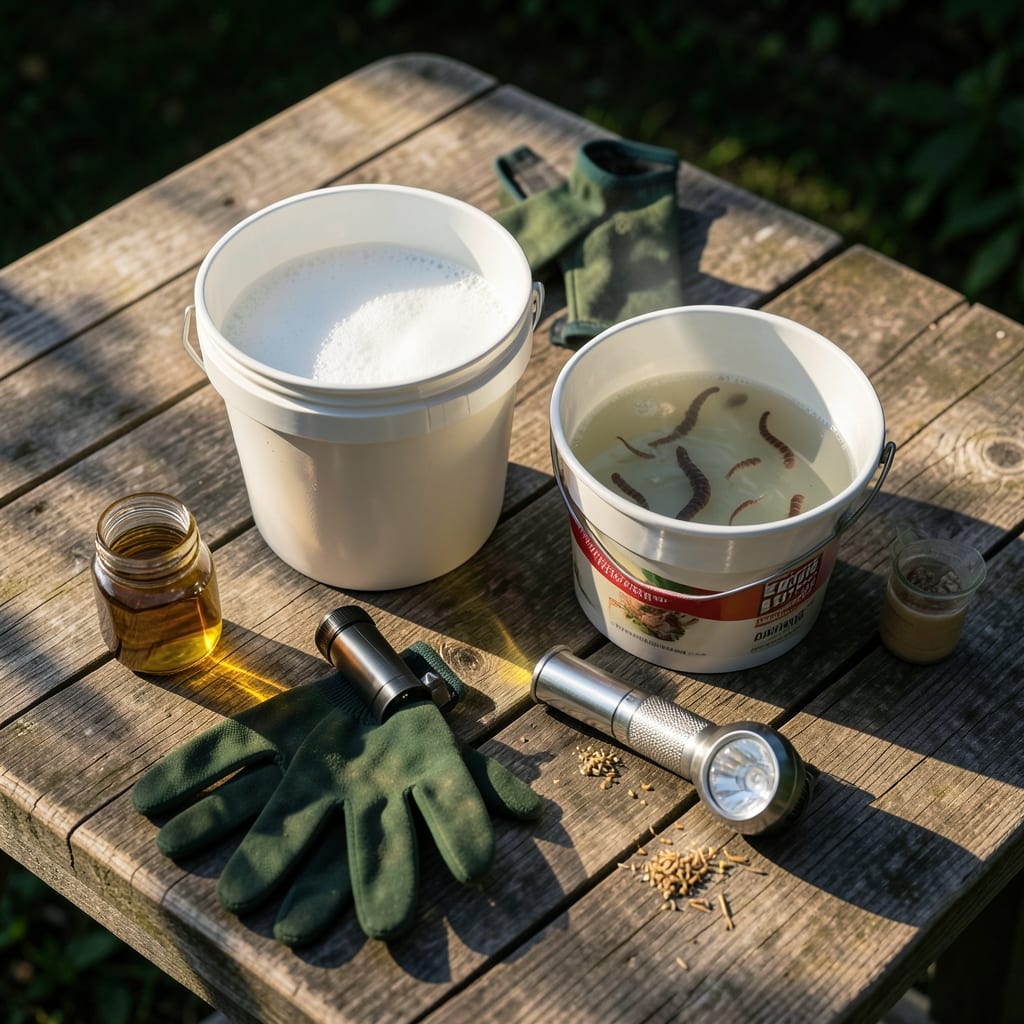
Spotted June bugs chew through lawns and garden plants overnight. I first noticed them when my roses looked like lace, and the damage only got worse with each warm evening.
Early action stops the cycle before grubs hatch and destroy roots. You’ll spot the adults by their brown wings with white spots, clumsy flight, and habit of crashing into porch lights.
Short list handles the problem fast. Most are already in your shed.
| Ingredient | Amount | Notes |
|---|---|---|
| Neem Oil 🌿 | 1 quart | Cold-pressed for best results |
| Insecticidal Soap 💧 | 1 gallon | Ready-to-use spray bottle |
| Beneficial Nematodes 🐜 | 5 million | Hb strain for grubs |
| Garden Gloves 🧤 | 1 piece | Nitrile for chemical handling |
| Flashlight 🔦 | 1 piece | For nighttime inspection |
| Buckets 🪣 | 2 pieces | Soapy water for manual removal |
| Milky Spore Powder 🌾 | 1 lb | For long-term grub control |
| Row Covers 📋 | 1 piece | Lightweight fabric for plants |
[recipeingredientscaler]
Neem oil and insecticidal soap are at every garden center—Home Depot and Lowe’s stock both. Beneficial nematodes need refrigeration until use (the good stuff, not the shelf-stable versions). I grab nematodes from Arbico Organics online for reliable quality. Always check expiration dates on liquids.
Skip neem oil if you have pets—insecticidal soap is safer and works just as well on soft-bodied adults. No nematodes? Milky spore powder is a long-term alternative for grub control. Flashlights can be any household one, but headlamps free both hands for nighttime patrol (worth the extra dollar).
Store liquids in a cool dark place—they degrade in heat. Nematodes last a week in the fridge unopened. I keep leftover milky spore in a sealed container for next season. Row covers wash and reuse for years if stored dry.
Here’s the method I use to tackle this issue effectively without harsh chemicals.
Put on the garden gloves and grab the flashlight—these pests are most active at dusk. Shine the light across your lawn and garden beds, watching for the telltale spotted wings catching the beam. When you spot one, quickly knock it into one of the 2 buckets filled with soapy water.
The soap breaks surface tension, so they sink and drown instead of flying away. I check every 2-3 nights during peak season, which is usually late May through June. You’ll notice fewer each time as the population drops.
Mix the 1 quart neem oil with water according to label instructions, then spray it evenly over affected plants and lawn areas. Neem disrupts their feeding and breeding cycles. For visible adults, use the 1 gallon insecticidal soap as a direct spray—it works on contact.
Apply both in the early evening when temperatures are below 85°F to prevent leaf burn. Reapply the neem oil every 7-10 days or after rain, and the insecticidal soap as needed when you see fresh activity. Watch for wilting leaves as a sign you might be overapplying.
Sprinkle the 1 lb milky spore powder evenly over the lawn using a spreader, then water it in lightly. This creates a natural bacterial presence that targets grub populations. It takes 2-3 weeks to establish but provides 3-5 years of protection once active.
For faster grub control, apply the 5 million beneficial nematodes to moist soil at dusk—they seek out and infect grubs within 24-48 hours. Water the area before and after application to help them move through the soil. You’ll see reduced lawn damage as grubs decline.
Drape the row covers over vulnerable plants, securing the edges with soil or weights. This prevents adults from laying eggs near your vegetables and ornamentals. I use hoops or stakes to keep the fabric from touching leaves, which improves airflow.
Remove covers during the day if temperatures exceed 80°F to prevent heat buildup. Check under the fabric every 3-4 days for trapped pests or moisture issues. The covers also double as protection from other flying insects during peak season.
If you’ve captured or found a june bug with spots for study or removal, store it in an airtight container in the refrigerator for 3-4 days. Use a small, breathable container lined with a damp paper towel to maintain humidity without causing rot. Avoid plastic bags, as they can trap too much moisture and damage the specimen.
For long-term preservation, place the june bug with spots in a sealed, freezer-safe bag or container. Label it clearly and store for up to 2-3 months. To prevent freezer burn, wrap the container in aluminum foil or use a vacuum-sealed bag. This method is ideal for keeping specimens intact for future identification or pest control analysis.
Reheating isn’t applicable for live or preserved june bugs with spots, but if you’re working with cooked or treated specimens (e.g., for pet food or research), use low heat. Warm in an oven at 170°F for 5-10 minutes or microwave in 10-second bursts to avoid over-drying. Never reheat live insects, as this can release harmful odors or toxins.
To maintain the june bug with spots in optimal condition, keep it dry and cool. If thawing a frozen specimen, do so gradually in the refrigerator to prevent condensation, which can degrade its structure. For live bugs, use a ventilated container with a moisture-absorbing substrate like sand or paper towels. Pro tip: Avoid direct sunlight or heat sources to preserve color and form.
