
Beautiful Plants For Your Interior
Beautiful Plants For Your Interior
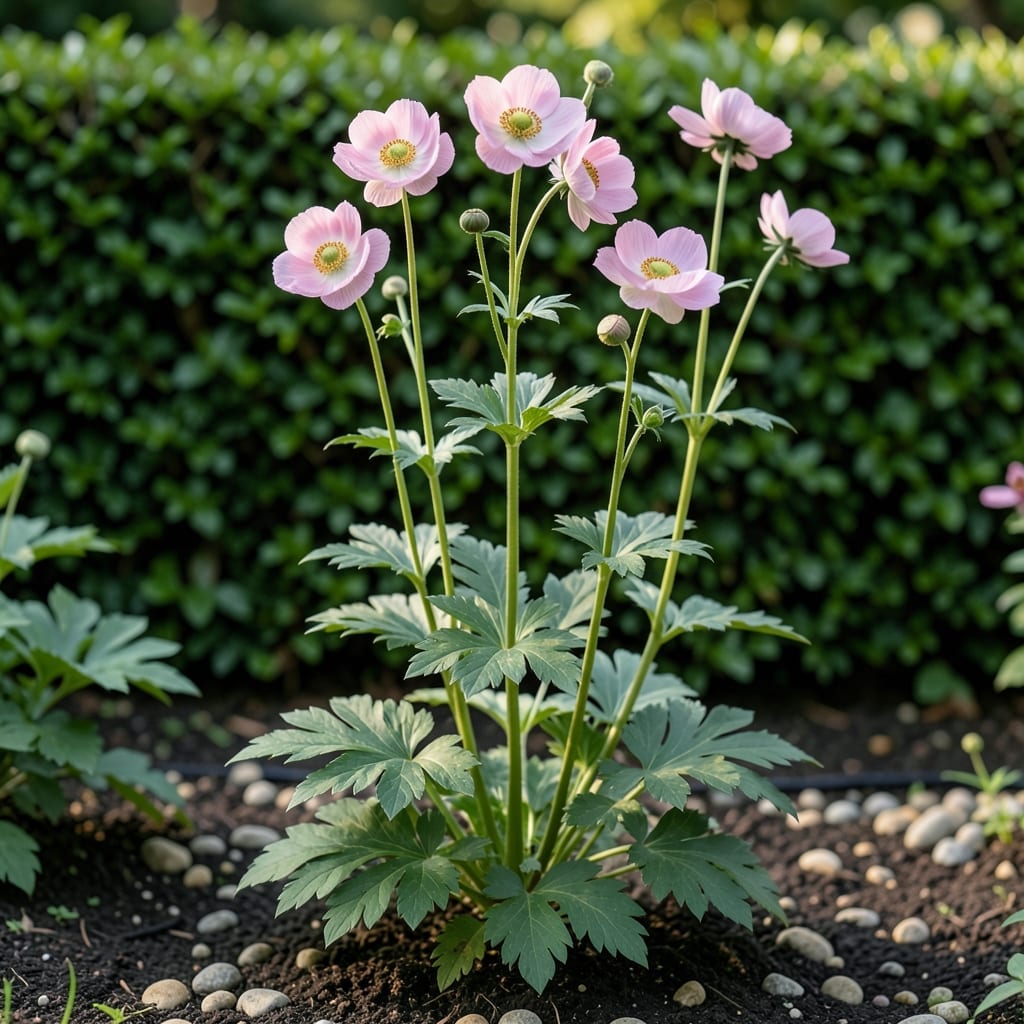
I first planted Japanese anemones along my fence line, expecting modest blooms. What I got were elegant stems rising 3 to 5 feet tall, swaying gracefully in the breeze.
These perennials reach their full height by late summer, with flowers appearing on wiry stems above the foliage. The exact size depends on variety and growing conditions, but most gardeners see 4-foot plants in ideal spots.
Proper spacing prevents overcrowding—give each plant 2 to 3 feet of room. They thrive in partial shade with rich, well-draining soil, rewarding you with weeks of delicate flowers.
Perfect for borders or as a striking backdrop in mixed plantings. Here’s how to help them reach their potential.
The height of Japanese anemones (Anemone × hybrida) can fluctuate due to several environmental and genetic factors. Understanding these causes helps gardeners create optimal conditions for consistent, healthy growth.
Different cultivars of Japanese anemones have inherent height variations. For example, ‘Honorine Jobert’ typically reaches 3–4 feet, while ‘September Charm’ may grow slightly taller. These genetic traits are fixed, so selecting a cultivar aligned with your desired height is the first step in controlling growth.
Insufficient light often leads to leggy, weak stems as the plant stretches toward sunlight, increasing height but reducing stability. Conversely, full sun (6+ hours daily) promotes compact, sturdy growth. Partial shade is tolerable but may result in taller, less bushy plants.
Over- or under-watering can stress the plant, causing irregular growth. Consistent moisture (1–1.5 inches per week) supports steady development. Nutrient deficiencies, particularly nitrogen, can stunt growth, while excess fertilizer may lead to overly tall, floppy stems. A balanced, slow-release fertilizer in spring helps maintain ideal height.
Japanese anemones thrive in USDA zones 4–8. In warmer climates, they may grow taller due to extended growing seasons, while cooler regions might produce shorter, slower-growing plants. Sudden temperature swings or late frosts can also disrupt normal growth patterns.
If your Japanese anemones aren’t reaching their ideal height (typically 2 to 4 feet), these targeted fixes will help you guide their growth. Address the root cause, and you’ll see healthier, properly sized plants in no time.
If your anemones are too short, the soil may lack nutrients or drainage. Fix: Work in compost or well-rotted manure to enrich the soil before planting. For existing plants, apply a balanced, slow-release fertilizer in early spring. Prevention tip: Test soil pH—anemones thrive in slightly acidic to neutral (6.0–7.0). Add lime if too acidic or sulfur if too alkaline.
Leggy stems or plants exceeding 4 feet often result from too much shade or over-fertilizing. Fix: Cut back one-third of the stems in late spring to encourage bushier growth. For floppy varieties, install stakes or plant supports early in the season. Prevention tip: Ensure they get partial sun (4–6 hours daily) to maintain compact, sturdy stems.
Inconsistent moisture can stress plants, stunting their height. Fix: Water deeply once a week (more in extreme heat) to keep soil evenly moist but not soggy. Mulch with organic matter to retain moisture. Prevention tip: Avoid overhead watering to prevent fungal diseases, which can weaken stems.
💡 Pro tip: Divide crowded clumps every 3–4 years to rejuvenate growth and maintain optimal height.
Most varieties reach 3 to 5 feet tall, with some compact cultivars staying around 2 feet. Height depends on growing conditions and cultivar choice.
In ideal conditions with rich soil and partial shade, some may exceed 5 feet. However, overly tall stems often need staking to prevent flopping.
Stunted growth usually signals poor soil, insufficient water, or too much shade. Amend soil with compost and ensure 1–1.5 inches of water weekly.
Yes! For example, ‘Honorine Jobert’ stays around 3–4 feet, while ‘September Charm’ can reach 4–5 feet. Check labels for specifics.