
Beautiful Plants For Your Interior
Beautiful Plants For Your Interior
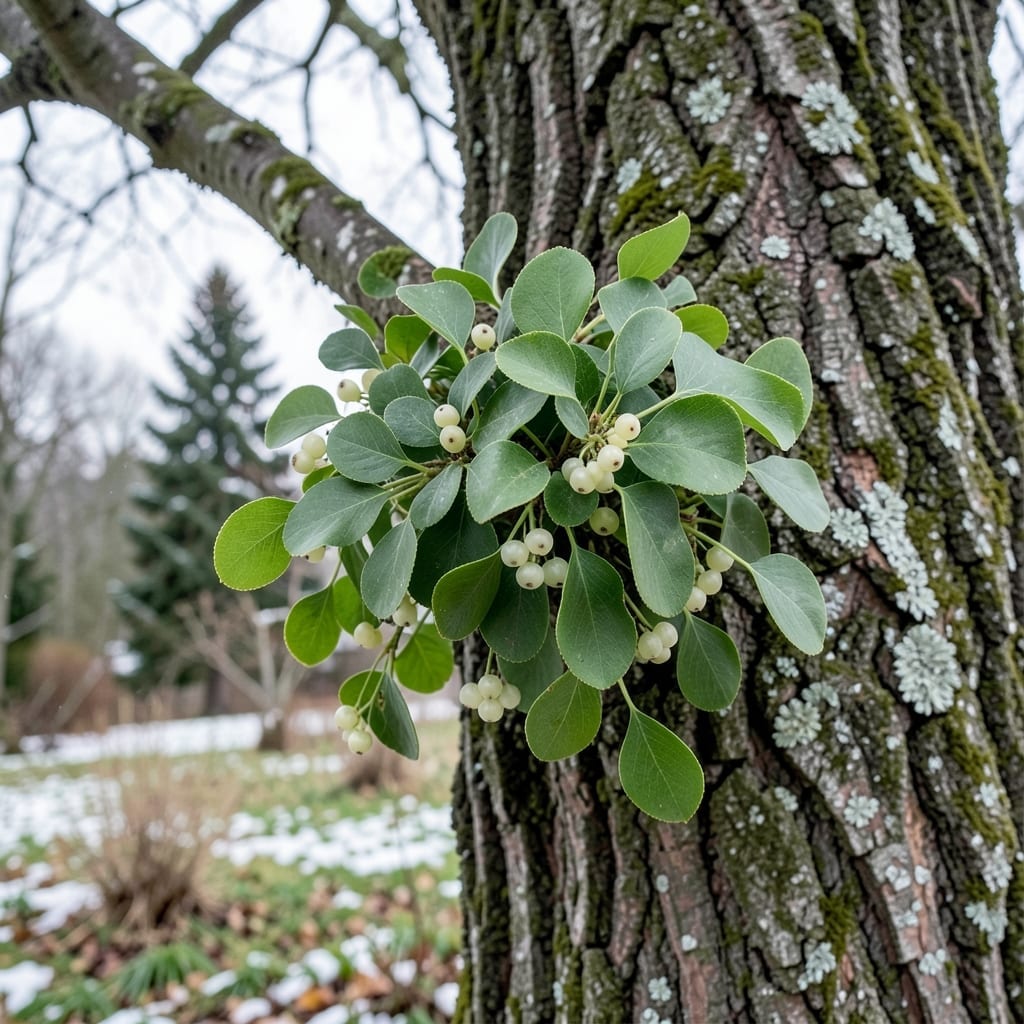
Mistletoe berries are typically white, while the leaves are green. The white berries are a key identifier, though some varieties may have yellowish or translucent berries.
I’ve noticed the berries often look pearlescent due to their waxy outer layer, which helps them stand out against the dark evergreen leaves. This contrast makes mistletoe easier to spot in trees during winter when other plants have lost their foliage. The color can shift slightly depending on the species or stage of ripeness, but the classic white appearance remains its most recognizable trait. ✨
💡 In This Article
The white berries of mistletoe owe their color to a thick, waxy cuticle called pruinose coating. This natural layer reflects light, creating a pearlescent appearance that helps the berries stand out against the plant’s dark green leaves.
The coating also serves a protective function, reducing water loss in the semi-parasitic plant’s harsh growing conditions high in tree canopies. 🔥
Color variations occur due to species differences and ripeness stages. American mistletoe (Phoradendron leucarpum) typically produces opaque white berries, while European mistletoe (Viscum album) may display translucent or yellowish berries.
As they mature, some berries develop a slightly cream or pale yellow tint, but never the deep reds or blues of other holiday plants like holly. ✨
The leaves maintain a consistent deep green year-round because mistletoe is an evergreen hemiparasite. This means it photosynthesizes while also drawing nutrients from its host tree. The leaves’ leathery texture and opposite arrangement help distinguish mistletoe from similar-looking plants.
The contrast between the white berries and green leaves is most striking in winter when deciduous host trees are bare. 🌟
What most people don’t realize is that the white color isn’t pigment-based like other berries. Instead, it’s a structural color created by light scattering through the waxy surface, similar to how a soap bubble appears iridescent. This unique adaptation helps attract birds that spread the seeds through their droppings. 💫
For identification purposes, the white berries remain the most reliable feature across most mistletoe species. Even in varieties with slightly off-white berries, the color stays in the pale spectrum. The berries’ round shape and clustered growth pattern on the plant’s stems provide additional confirmation when observing mistletoe in nature. ⚡
The waxy pruinose coating reflects light, creating that shiny, pearl-like effect. This natural layer also helps reduce water loss in the plant’s high-canopy habitat.
Most do, but European mistletoe may have translucent or pale yellow berries. American mistletoe consistently produces the classic opaque white ones.
Look for white berry clusters in tree canopies with opposite-paired green leaves. Never touch it without gloves, as the berries and sap are toxic.
Winter is ideal, when deciduous host trees are bare. The evergreen leaves and white berries stand out clearly against leafless branches.