
Beautiful Plants For Your Interior
Beautiful Plants For Your Interior
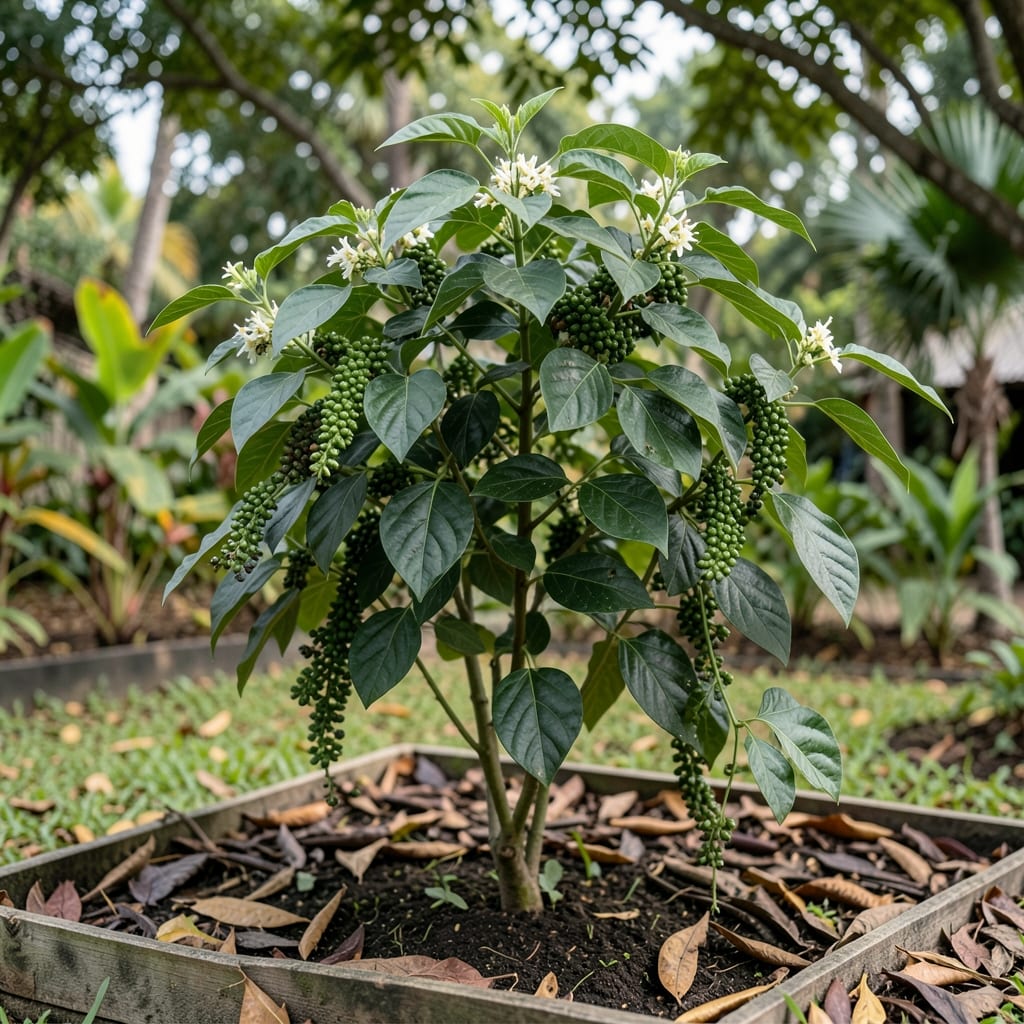
No, black pepper is not a nightshade. It belongs to the Piperaceae family, while nightshades like tomatoes and potatoes are part of the Solanaceae family.
This distinction matters because the Solanaceae family contains compounds like solanine that some people avoid for health reasons. Black pepper, on the other hand, comes from a completely different botanical lineage with its own unique properties. I’ve found this confusion often arises from the word “pepper” in both names, even though they share no botanical relation. 🔥
💡 In This Article
Black pepper comes from the Piper nigrum vine, a climbing plant native to South India. This species belongs to the Piperaceae family, which includes about 3,600 species of herbs, shrubs, and vines.
The berries we grind into pepper grow in dense clusters called catkins, turning from green to red as they ripen before being dried to black. 🔥
The Solanaceae family, by contrast, includes flowering plants with a completely different structure. Nightshades typically produce fruits with seeds surrounded by fleshy tissue, like tomatoes or eggplants. Their leaves often contain alkaloids such as solanine, which can be toxic in large quantities.
Black pepper contains piperine instead, a compound that gives it pungency but lacks the chemical structure of nightshade alkaloids.
Genetically, these families diverged millions of years ago. Piperaceae plants have a unique chromosome count of 26 pairs, while Solanaceae species usually have 12 pairs. This fundamental difference means black pepper shares more DNA with plants like kava than with any nightshade.
The confusion often stems from the word “pepper” appearing in both names, despite their unrelated origins. ✨
Growth patterns also differ dramatically. Black pepper vines require tropical climates and support structures to climb, often reaching 10-15 feet in height. Nightshades like potatoes grow as herbaceous plants or small shrubs, thriving in temperate zones. This distinction in cultivation needs further separates them in both agriculture and botany.
Culinarily, black pepper serves as a spice derived from dried berries, while nightshade “peppers” (like bell peppers) are actually fruits consumed fresh. The flavor compounds differ too: black pepper’s heat comes from piperine, whereas chili peppers get their spiciness from capsaicin—a chemical unique to the Solanaceae family. 💫
The word “pepper” in both names causes the mix-up. Nightshade peppers (like bell peppers) are fruits, while black pepper comes from dried berries of the Piper nigrum vine. They share no botanical relation.
Black pepper contains piperine, which gives it pungency. Nightshades contain alkaloids like solanine or capsaicin, which are chemically distinct and sometimes toxic in large amounts.
Yes! Since black pepper isn’t a nightshade, it’s generally safe for those avoiding Solanaceae plants. However, always check with a doctor for personalized advice.
Look for star-shaped flowers and fruits with seeds in fleshy tissue, like tomatoes or eggplants. Black pepper vines climb and produce small, hard berries—completely different.