
Beautiful Plants For Your Interior
Beautiful Plants For Your Interior
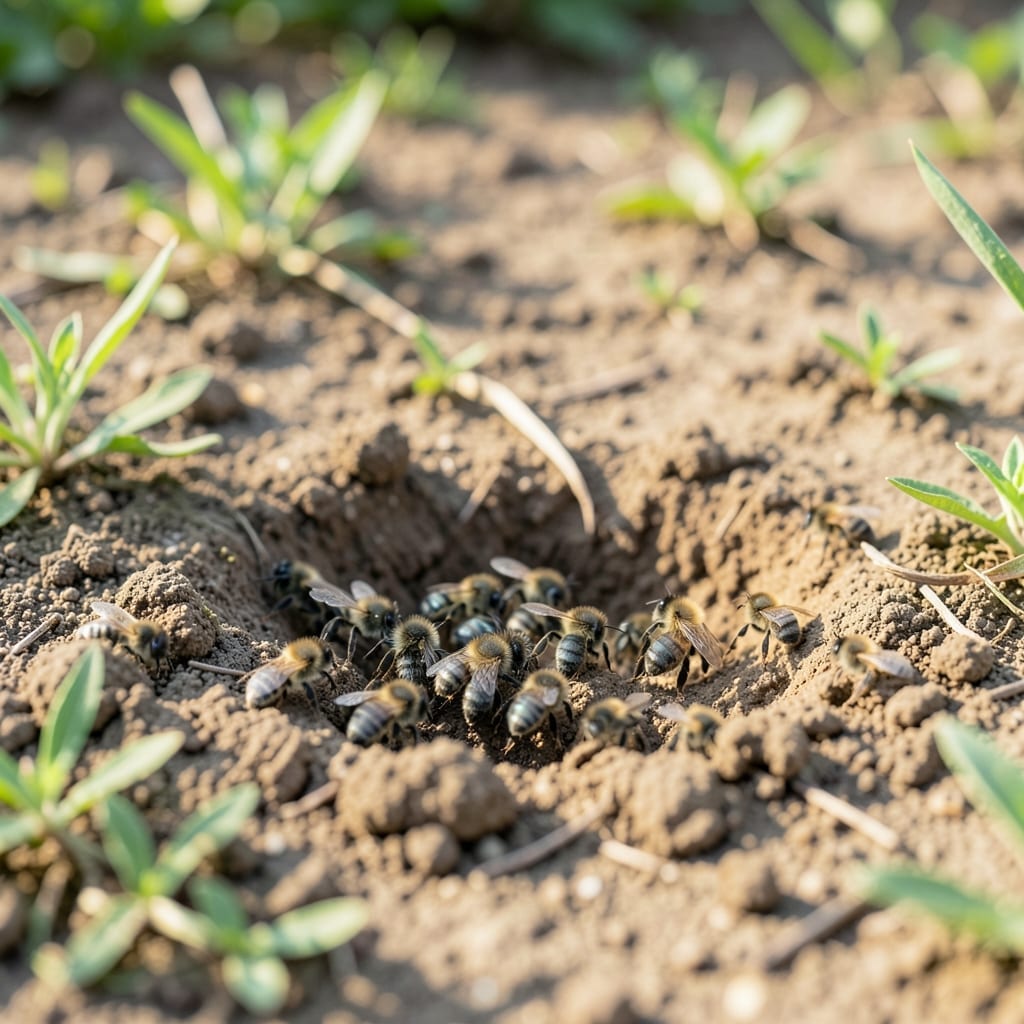
I noticed the first mound of soil in my garden bed last spring. Tiny wings buzzing just above the ground—ground bees had moved in, and honestly, my first instinct was panic.
Here’s the thing—these native pollinators are 100x more effective than honeybees for many plants. They’re not aggressive, they don’t make honey, and they’re crucial for early spring blooms when other pollinators are still dormant.
When their nests get too close to high-traffic areas, you can encourage them to relocate naturally. The key is timing: early morning when they’re sluggish, or evening as temperatures drop.
Works for vegetable gardens, flower beds, or anywhere you want to balance wildlife with your planting plans.
Ground-nesting bees, like solitary Andrena or Halictus species, choose to burrow into soil for critical biological reasons. These behaviors are driven by instinct, environmental cues, and survival needs. Below are the primary causes behind their subterranean lifestyle.
Loose, well-drained soil with minimal vegetation provides the perfect nesting site. Sandy or loamy textures allow bees to dig efficiently, while compacted or waterlogged soil discourages nesting. These bees seek bare patches where they can easily excavate tunnels up to 12 inches deep.
Underground nests offer stable microclimates. Soil buffers temperature extremes, keeping developing larvae warm in spring and cool in summer. Moderate moisture levels also prevent desiccation, ensuring larval survival until they mature.
Burrowing reduces exposure to birds, mammals, and other predators. The hidden entrance and complex tunnel systems make it harder for intruders to access the brood cells, where pollen and nectar are stored as food for the young.
Ground bees often nest near flowering plants, their primary food source. Short foraging distances conserve energy, allowing females to make frequent trips to gather pollen and nectar for their offspring. Gardens and meadows with diverse blooms are prime locations.
Most ground bees are solitary and non-aggressive. Their nesting habits are part of an annual cycle: adults emerge in spring, mate, and females dig nests to lay eggs. After provisioning each cell, they seal it, and the next generation emerges the following year.
Dealing with ground-nesting bees can feel overwhelming, but with the right approach, you can safely manage and prevent future issues. Here’s how to tackle common scenarios:
If bees are nesting in a spot where they pose a risk to people or pets, relocate them rather than kill them. Contact a local beekeeper or pest control professional who specializes in live removal. They’ll safely extract the colony and relocate it to a better environment. Prevention tip: Fill abandoned burrows with soil or sand to discourage new bees from moving in.
Ground bees are often beneficial pollinators, so if they’re not causing harm, consider leaving them be. If you must move them, do so in the evening when they’re less active. Gently cover the nest entrance with a mesh screen or fine netting to encourage them to relocate naturally. Prevention tip: Mulch your garden beds to make the soil less appealing for nesting.
If the bees are aggressive or someone in your household is allergic, do not attempt to handle the nest yourself. Instead, call a professional exterminator who can use targeted treatments to eliminate the threat. Prevention tip: Seal cracks and gaps in your yard’s hard surfaces to reduce potential nesting sites.
Pro tip: 💡 Plant bee-friendly flowers away from high-traffic areas to give ground bees an alternative nesting spot while keeping them at a safe distance.
No, most ground bees are solitary and rarely sting unless provoked. Males can’t sting at all. Females will only defend their nests if stepped on or handled roughly.
Ground bees have fuzzy bodies and are smaller than wasps. Their nests have small soil mounds with 1/4-inch holes. Wasps make larger, more aggressive holes and have smooth, shiny bodies.
They emerge in early spring, typically March through May, coinciding with the first blooms. Activity peaks midday when temperatures reach 65-75°F.
Yes, a 2-3 inch layer of mulch deters them by making soil access difficult. Use organic mulches like wood chips or straw for best results.