
Beautiful Plants For Your Interior
Beautiful Plants For Your Interior
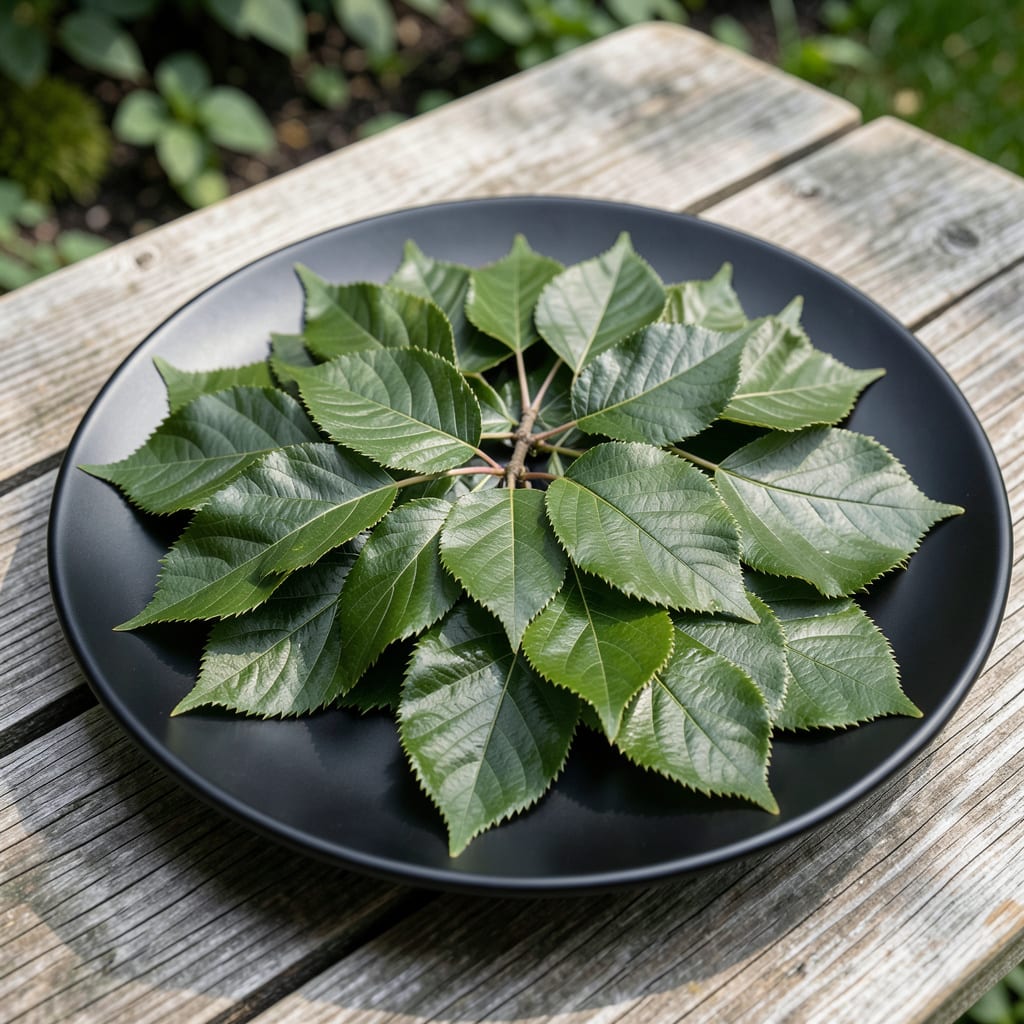
That moment you spot a tree with glossy, serrated leaves and wonder—could this be a cherry? I’ve stood under countless trees, squinting at leaf edges and vein patterns, trying to solve the mystery. Cherry leaves have distinct traits that set them apart once you know what to look for.
From the finely toothed margins to the subtle color shifts between seasons, identifying them becomes second nature. Two simple observations can confirm it: check the leaf shape and look for the tiny glands at the base. Here’s how to spot them with confidence.
📚 In This Guide
Here’s how to recognize these distinct leaves with confidence, using simple visual cues.
Start by looking at the overall outline. Cherry tree leaves are typically oval to lance-shaped with a pointed tip. The edges are the real giveaway—they feature fine, sharp serrations like the teeth of a tiny saw. This is different from the smooth edges of some other fruit trees.
Run your finger gently along the margin. You should feel those distinct little points. If the leaf feels smooth or only has a few large teeth, it’s likely not from a cherry tree. The serrations on cherry leaves are consistent and evenly spaced along the entire edge.
Mature cherry tree leaves usually measure 2 to 5 inches long and 1 to 2.5 inches wide. They’re not the largest leaves you’ll find, but they’re not tiny either. The color is another clue—most cherry tree leaves are a vibrant medium to dark green on top with a slightly lighter underside.
In autumn, they transform into stunning shades of yellow, orange, or red, depending on the variety. If you’re identifying in fall, this seasonal color change can be a dead giveaway. Hold the leaf up to the light to see if it has that classic, glossy appearance.
The veins on a cherry tree leaf are another identifying feature. The central vein (midrib) is prominent, and smaller veins branch off in a feather-like pattern. These lateral veins curve slightly as they extend toward the edge of the leaf.
Examine the base where the leaf attaches to the stem. Cherry tree leaves often have a rounded or slightly heart-shaped base. Some varieties might have a tiny pair of glands at the base of the leaf blade—this is a subtle but telling detail that’s unique to cherries.
Cherry tree leaves grow in an alternate arrangement along the stems. This means they emerge one per node, alternating sides as they spiral up the branch. You won’t find pairs of leaves growing directly across from each other like you might with ash or maple trees.
Look closely at the stems, too. Cherry tree twigs often have a reddish-brown color and may have small, horizontal lines called lenticels. These are tiny pores that allow gas exchange, and they’re more visible on younger branches.
While the leaves are the primary focus, other parts of the tree can help confirm your identification. Cherry trees often have smooth, reddish-brown bark with horizontal lenticels when young, developing a darker, rougher texture as they age. In spring, they produce clusters of white or pink blossoms, which are hard to miss.
If the tree is fruiting, the cherries themselves are a final clue. They grow in clusters and can range from sweet to tart, depending on the variety. But even without fruit or flowers, the leaves alone should give you enough information to identify a cherry tree with confidence.
Small details can make the difference between certainty and confusion when identifying these leaves.
The Edge Detail: The fine, sharp serrations along the margin are the most reliable identifier. I’ve found that running your fingertip along the edge—where you’ll feel those consistent, evenly spaced points—is more telling than just looking. If the leaf feels smooth or has only a few large teeth, it’s likely not cherry.
Seasonal Color Clues: In autumn, the transformation to yellow, orange, or red can be a dead giveaway, but don’t rely on color alone in other seasons. The medium to dark green top with a slightly lighter underside is classic year-round. Hold the leaf up to the light to check for that glossy sheen—it’s a subtle but helpful cue.
Veins and Base: The feather-like vein pattern is unique, but the base of the leaf is often overlooked. Look for that rounded or slightly heart-shaped base where it meets the stem. Some varieties even have tiny glands there—this detail alone can confirm your identification when in doubt.
Cherry leaves have a distinctive serrated edge, pointed tip, and smooth, glossy surface. Unlike peach or plum leaves, they’re often dark green with a subtle sheen and finer teeth along the margins.
Spring to early summer is ideal! Leaves are fully formed, vibrant, and free of seasonal damage. Avoid winter (bare branches) or late fall (discolored or falling leaves).
Yes! Some ornamental varieties, like Prunus serrulata (Japanese cherry), may have smoother edges. Always check for other clues: leaf shape, vein pattern, and the presence of small glands near the stem.
Spots or holes often signal pests (e.g., aphids) or diseases like leaf spot fungus. Compare healthy leaves to your tree—identification is easier with undamaged samples. Treat issues promptly to restore leaf health!
